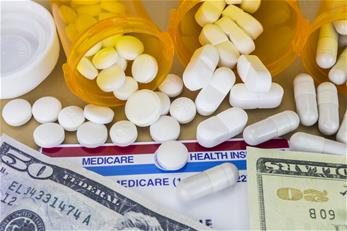
The topic of drug waste is nothing new in healthcare. Over the years, reports have surfaced attempting to put a dollar amount on this waste. In 2017, the Centers for Medicaid and Medicare Services began requiring all physicians, hospitals, and other providers submitting Medicare Part B drug claims to report any discarded amount of a single use vial or other single use package drug on its claim for reimbursement. Based on that information, CMS issues an annual Part B Discarded Drug Units Report that quantifies the annual amount the agency pays for discarded drugs and reports the names of the drugs wasted.
A report from CMS in January 2020 states that $725 million worth of drugs reimbursed by Medicare Part B were discarded in 2018. The top 10 drugs by value of the wasted product accounted for nearly $456 million. Notably, six of these 10 drugs are cancer medications. Collectively, these six drugs accounted for $330 million worth of discarded medication in 2018. More than 26 percent of one medication—the hematologic malignancies drug Velcade—was discarded, accounting for nearly $123 million in waste.
In 2016, researchers at Memorial Sloan Kettering Cancer Center published a study in BMJ in which they found that Medicare and private health insurers combined waste nearly $3 billion worth of cancer drugs each year. The study’s authors stated that these medications are discarded because many pharmaceutical companies distribute them in one-size-fits-all single-use vials that hold too much medication for most patients. When a patient’s weight deviates from the full dose, the remainder is discarded.
“With infusion drugs, they are packaged based on a person’s average body weight, and that can lead to variation in the amount of drug required by individual patients. Uneven dispensing often results,” explains Marc Earl, PharmD, BCOP, Director of Pharmacy at the Cleveland Clinic and member of the ACCC Oncology Pharmacy Education Network (OPEN) Advisory Committee.
Ali McBride, PharmD, MS, BCOP, Clinical Coordinator of Hematology/Oncology at The University of Arizona Cancer Center and Immediate Past President of ACCC, agrees. “Discarding the remaining medicine left over in one-sized vials can be avoided,” explains Dr. McBride. “If we can change the sizes of vials, make them different sizes for different doses, we could significantly affect how much waste we produce.”
Dr. McBride says that the current dosing system could be modified by having pharmaceutical companies replace one-size-fits-all packaging with vial optimization or dose banding. Although he acknowledges that “sometimes you cannot optimize some of the older drug therapies,” Dr. McBride adds that dose banding, which he expects to see more of in the future, will help mitigate waste. “We expect dose rounding policies to reduce drug waste both with infusional chemo and oral oncolytics,” he says.
Another strategy to reduce drug waste, says Dr. McBride, is to more accurately determine the extended stability dating of drugs so providers can safely repurpose the medication remaining in a vial for a subsequent patient(s). According to pharmacy compounding guidelines in the United States Pharmacopeia Chapter <797>, this partial amount can currently be used for another patient only up to six hours after the vial has been opened within an ISO 5 environment. “We need data for determining the extended life of drugs,” says Dr. McBride. “If a drug can be used up to 30 days, that is important to know and helpful to reducing waste.”
Dr. McBride says drug waste is not just confined to infusion drugs; oral oncolytics are also often discarded when prescribers modify drug dosage, strength, or formulation during the course of a patient’s therapy. “The fact that oral therapies are also a source of waste illustrates how much this market is growing,” says Dr. McBride. “This is not just a problem with IVs—it is also a growing issue for the high-cost oral therapies that are starting to be used more.”
The Ohio State University Comprehensive Cancer Center – Arthur G. James Cancer Hospital and Richard J. Solove Research Institute (OSUCCC – James) began addressing the issue of wasted oral cancer therapy drugs in January 2020, when it launched a program enabling cancer patients to donate prescribed oral oncolytics they no longer need for use by other patients who cannot afford their prescribed medications. New rules adopted in October 2019 by the State of Ohio Board of Pharmacy now permit these donations after pharmacists conduct an inspection of the donated drug to ensure it is safe to re-dispense at a future date to patients in need.
Dr. McBride is confident that actions to combat drug waste have the potential to significantly decrease drug costs. “If we can minimize this waste, we can make a make a major dent in the price of these therapies,” he explains. “We need to have an open conversation with pharmacies and generic companies to optimize vial sizes. If we can get this information out there before a drug changes [goes generic], we can dispense drugs with less waste, and that will decrease the cost of care.”
For more information on issues in oncology pharmacy, visit the ACCC Oncology Pharmacy Education Network (OPEN), which brings together education, resources, and peer-to-peer networking for pharmacy professionals.