Through education and advocacy, ACCC seeks to improve cancer outcomes for patients diagnosed with genitourinary cancer.
Genitourinary cancer may include cancers of the urinary system, as well as the reproductive tract. Adrenal, bladder, and kidney (also known as renal) cancers occur in the urinary system, while penile, prostate, and testicular cancers develop in the reproductive tract. Prostate, bladder, and kidney cancers are the most common types of genitourinary cancer, while testicular, penile, and adrenal cancers are the least common.
People who are at higher risk of genitourinary cancer may have a family history of this type of disease. Smoking, age, race/ethnicity, chemical exposures, diet, high blood pressure, and the use of certain medicines or herbal supplements can also increase a person’s risk for certain types of genitourinary cancers.
While some genitourinary cancers have obvious symptoms, others do not. For example, prostate cancer is often referred to as a "silent killer" since some patients do not report having any symptoms prior to diagnosis. However, routine physicals and screenings can help providers find and diagnose these types of cancers early.
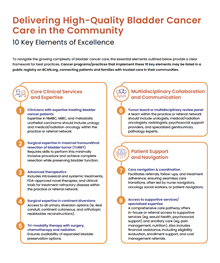
Navigate the growing complexity of bladder cancer care using a framework for best practices developed by ACCC and the Bladder Cancer Advocacy Network (BCAN). Qualifying cancer programs/practices may join a public registry on BCAN.org.
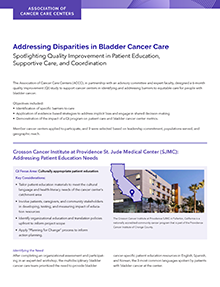
Explore the stories and project aims of 3 cancer centers who participated in ACCC’s quality improvement initiative to address disparities in bladder cancer care through pre-assessments, multidisciplinary workshops, and ongoing follow-ups.

With September being National Prostate Cancer Awareness Month, it's important to recognize one of the most prevalent malignancies affecting men worldwide.

ACCC recognizes April as National Cancer Prevention and Early Detection Month.

This May, ACCC is recognizing Bladder Cancer Awareness Month with a message highlighting the importance of awareness, patient education, and support.
Navigating the growing complexity of bladder cancer care is essential to improving patient access and treatment closer to home. In this episode, CANCER BUZZ speaks with Suzanne Merrill, MD, urologic oncologist at Colorado Urology about barriers and solutions to delivering high-quality bladder cancer care in community settings. CANCER BUZZ also speaks with Patrick Hensley, MD, urologist at University of Kentucky Markey Cancer Center, about implementing the Delivering High-Quality Bladder Cancer Care infographic in the community setting. Created by ACCC and BCAN, the infographic describes the 10 elements of excellent bladder cancer care. Cancer programs that align their practices with these guidelines can join a public registry so that patients and caregivers can identify quality bladder cancer care close to where they live.
Bladder cancer remains a prevalent disease with significant disparities in care, particularly in underserved populations. To address this, ACCC launched a national quality improvement initiative in three phases: 1. assessment and preparation, 2. action plan implementation, and 3. monitoring for continuous improvement. Dr. Samuel Washington, from the University of California, San Francisco, discussed the initiative’s early findings, highlighting site-specific approaches.
An interdisciplinary team of genitourinary service line leaders, pharmacy representatives, clinical nurse leaders, financial counselors, and urologic oncologists helped Fox Chase Cancer Center to pilot a novel treatment for bladder cancer.

In 2019 the Association of Community Cancer Centers developed an education program to provide all members of the multidisciplinary care team knowledge and resources to help successfully integrate immunotherapies into the treatment of patients with RCC.

The challenge providers face is to screen and detect “smarter” in order to minimize the burden of unnecessary biopsy and treatment. Ideally, the goal is to identify men who would benefit from aggressive therapy.
This is a visual representation of an online publication from the American Society of Clinical Oncology 2022 Annual Meeting, June 3 - 7, 2022.