ACCC association of cancer care centers
Join/Renew
Login
Join/Renew
Login
Education & Resources
ACCC eXchange LogInCorporate Member Sponsored ResourcesPresentations & AbstractsPresident's ThemeACCC Connect eLearning LogIn
Publications
Oncology IssuesPatient Assistance & Reimbursement GuideTrending Now in Cancer Care
Events
2026 ACCC Leadership SummitAnnual Meeting & Cancer Center Business SummitCapitol Hill DayNational Oncology ConferenceOncology Reimbursement MeetingsOncology State Society Meetings
Policy & Advocacy
2024 Policy Wrap-Up and ACCC 2025 Policy PrioritiesLetters & StatementsAccess, Payment & Reimbursement ReformWhite Bagging & Brown BaggingAdvocacy ResourcesCancer Moonshot
Membership
Join | RenewWho We AreMembership Types & BenefitsCorporate MembersACCC Member Portal FAQMember Directory
Partners
Oncology State SocietiesPartner OrganizationsCME
News
News ReleasesAdvocacy News ReleasesOncology News
About ACCC
Timeline / 50th Anniversary2025 Impact ReportACCC Innovator AwardsACCC FellowsACCC Senior Staff
Breast CancerMetastatic Breast Cancer
Gastrointestinal CancerBiliary Tract CancerColorectal CancerGastric CancerLiver Cancer
Genitourinary CancerBladder CancerProstate CancerRenal Cell Carcinoma
Gynecologic CancerOvarian Cancer
Head & Neck Cancer
Hematologic MalignanciesAcute Lymphocytic Leukemia (ALL)Acute Myeloid Leukemia (AML)Chronic Lymphocytic Leukemia (CLL)Mantle Cell Lymphoma (MCL)Multiple Myeloma (MM)Myelodysplastic Syndromes (MDS)
Lung CancerNon-Small Cell Lung Cancer (NSCLC)Small Cell Lung Cancer (SCLC)
Sarcoma
Skin CancerMelanomaNon-Melanoma Skin Cancers (NMSC)
Clinical Practice & TreatmentCancer DiagnosticsCare CoordinationEHR Integration for Biomarker TestingQuality Improvement Collaboration: Integration of Precision Medicine in Community OncologyTreatment
Financial NavigationFAN Boot CampFinancial Advocacy Network (FAN) Resource LibraryPatient Assistance & Reimbursement GuidePrior Authorization
Health Equity & Access3, 2, 1, Go! Practical Solutions for Addressing Cancer Care DisparitiesAppalachian Community Cancer AllianceOncology Advanced PractitionersPersonalizing Care for Patients of All BackgroundsSocial Drivers of Health
Patient-Centered CareAddressing Care Disparities for VeteransAdolescent and Young Adult (AYA)Care Action Plans for People with CancerDermatologic ToxicitiesEmpowering CaregiversGeriatric OncologyHealth LiteracyNutritionOncology PharmacyPatient NavigationPsychosocial Care in OncologyShared Decision-MakingSupportive CareSurvivorship Care
Practice Management & OperationsCancer Program FundamentalsLeadership Sustainment and Engagement VideosOncology Practice Transformation and Integration CenterOncology Team Resiliency
ResearchACCC Community Oncology Research Institute (ACORI)
Technology & InnovationTelehealth & Digital Medicine
ACCCBuzz Blog
CANCER BUZZ Podcast
Oncology Issues
Join/Renew
Login
Breast CancerMetastatic Breast Cancer
Gastrointestinal CancerBiliary Tract CancerColorectal CancerGastric CancerLiver Cancer
Genitourinary CancerBladder CancerProstate CancerRenal Cell Carcinoma
Gynecologic CancerOvarian Cancer
Head & Neck Cancer
Hematologic MalignanciesAcute Lymphocytic Leukemia (ALL)Acute Myeloid Leukemia (AML)Chronic Lymphocytic Leukemia (CLL)Mantle Cell Lymphoma (MCL)Multiple Myeloma (MM)Myelodysplastic Syndromes (MDS)
Lung CancerNon-Small Cell Lung Cancer (NSCLC)Small Cell Lung Cancer (SCLC)
Sarcoma
Skin CancerMelanomaNon-Melanoma Skin Cancers (NMSC)
Clinical Practice & TreatmentCancer DiagnosticsCare CoordinationEHR Integration for Biomarker TestingQuality Improvement Collaboration: Integration of Precision Medicine in Community OncologyTreatment
Financial NavigationFAN Boot CampFinancial Advocacy Network (FAN) Resource LibraryPatient Assistance & Reimbursement GuidePrior Authorization
Health Equity & Access3, 2, 1, Go! Practical Solutions for Addressing Cancer Care DisparitiesAppalachian Community Cancer AllianceOncology Advanced PractitionersPersonalizing Care for Patients of All BackgroundsSocial Drivers of Health
Patient-Centered CareAddressing Care Disparities for VeteransAdolescent and Young Adult (AYA)Care Action Plans for People with CancerDermatologic ToxicitiesEmpowering CaregiversGeriatric OncologyHealth LiteracyNutritionOncology PharmacyPatient NavigationPsychosocial Care in OncologyShared Decision-MakingSupportive CareSurvivorship Care
Practice Management & OperationsCancer Program FundamentalsLeadership Sustainment and Engagement VideosOncology Practice Transformation and Integration CenterOncology Team Resiliency
ResearchACCC Community Oncology Research Institute (ACORI)
Technology & InnovationTelehealth & Digital Medicine
ACCCBuzz Blog
CANCER BUZZ Podcast
Oncology Issues
    • Education & Resources
    • Publications
    • Events
    • Policy & Advocacy
    • Membership
    • Partners
    • News
    • About ACCC
ACCC association of cancer care centers
1801 Research Boulevard, Suite 400, Rockville, MD 20850
Tel: 301.984.9496 Fax: 301.770.1949 Email Us
Contact UsVolunteers
Advertise
Career Center
Terms and Conditions
Privacy Policy
ACCC Rebranding
Copyright © 2026 Association of Cancer Care Centers. All Rights Reserved.
Advertisement
Home / Education And Resources / Financial Navigation / Prior Authorization Clinic

PRIOR AUTHORIZATION CLINIC

Health care costs in the United States are unsustainable. In 2020, health care expenditures rose starkly to $4.1 trillion1. For years, utilization management techniques have been used to control the cost of care. Though presented in different forms, utilization management seeks to influence decisions about patient care (appropriateness) including drugs, procedures, imaging, etc. Such measures have had both positive and negative consequences, such as enhancing the patient experience, or impacting access to care and contributing to provider burden.

One such utilization management technique is prior authorizations. Health insurance providers (commercial and public) use prior authorization as a method to verify that a treatment (e.g., drug, procedure, or service) is medically necessary before it is done2. However, for oncologists and many other providers, the burden of seeking permission to give patients the best care possible, paperwork to fight denials, or the time necessary to educate medical reviewers on why the therapies are needed is too much. And the burden is only increasing.

A recent oncology study found that payer strains with prior authorizations are the most-cited source of provider stress3.

ACCC is developing an educational program titled, “Prior Authorization Clinic,” that will foster discussions on how to ease provider burden and ensure the best quality care for the patient.

The aims of this educational program include:

  • Reducing the administrative burden of prior authorization processes by sharing best practices
  • Addressing key areas of prior authorization, including new technologies or areas where there are high errors in billing and coding resulting in high denials
  • Providing examples of standardized criteria for ordering and prescribing services that align with evidence-based guidelines
  • Developing a series of case-based prior authorization scenarios that cancer programs can utilize in advocating for change, locally and nationally, at their cancer program
  • Showcasing successful methods to track prior authorizations and results for pertinent members of the multidisciplinary cancer care team

“As a community-based cancer center, a lot of our patients deal with financial toxicity, and do not have access to certain medications or funds. We are currently trying to define how to stretch expertise and resources to manage patients across all sites as efficiently as possible.”
Andre Harvin, PharmD, MS
Cone Health


“As a clinician, I am really concerned about getting treatment delivered to patients in a timely fashion, and in a way where they feel confident in the system and that all the resources have been obtained.”
Richard Ingram, MD
Shenandoah Oncology


“From a psychosocial perspective, we hear and deal with a lot of clients when they receive a denial, and even when they just start the process with health literacy issues.”
Vilmarie Rodriguez, LCSW
CancerCare

Improving the Prior Authorization Process

With ever increasing payer strains, how can the prior authorization process be improved? In this resource, three focus groups discussed barriers and challenges they regularly experience, and subsequently, generated potential solutions to help overcome these mounting strains. Read what they uncovered and learn what measures you may take now.

Download


Impact of Prior Authorizations Beyond Health Insurer Cost Savings

Prior authorizations are a burden to timely health care delivery. ACCC has put together a resource to help you maximize efficiency.

Download

Featured Resources

1/5

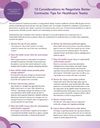
10 Considerations to Negotiate Better Contracts: Tips for Healthcare Teams

Healthcare contracts often contain complicated provisions that can delay patient care. This resource lists ten considerations healthcare teams should keep in mind when negotiating contracts with insurance payers.

Download
10 Considerations to Negotiate Better Contracts: Tips for Healthcare Teams

On-Demand Webinars

Proactive Interventions for the Prior Authorization Process

Jul 1st 2023

Learn more about how to navigate these specific challenges by viewing the on-demand webinars in this informative six-part series, titled: "Proactive Interventions for the Prior Authorization Process."

How to Prepare for the Prior Authorization Blizzard

Jun 1st 2023

In the first webinar, we will hear from Sarah Hudson-DiSalle, PharmD, Rph, Pharmacy Manager, from The James Cancer Hospital, and Jordan Karwedsky, Financial Counselor from Green Bay Oncology. In this webinar, we discuss ACCC Prior Authorization Focus Group findings, payer recommendations, and how to best prepare for the prior authorization "blizzard" for next year.

How to Make the Pharmacy Your Prior Authorization Ally

May 1st 2023

In the second webinar, we will hear from Andre D. Harvin, PharmD, MS, Executive Director of Pharmacy for Oncology at Cone Health. We will discuss how your pharmacy team can be a major ally and support in obtaining prior authorizations, help navigate biosimilar changes, and address medical necessity.

Addressing the High Cost of Radiology Services

Apr 1st 2023

In the third webinar, we will hear from Jennifer Paquet, RN, BSN, Financial Assistance Patient Care Coordinator Supervisor from Bassett Cancer Institute and Aimee Hoch, MSW, LSW, Oncology Financial Navigator from Grand View Health Cancer Center. We will discuss barriers to radiology prior authorizations and provide insights on how to address them.

Navigating Radiation Authorizations and Denials

Mar 1st 2023

In the fourth webinar, we will hear from Gretchen Van Dyck, Financial Counselor from St. Vincent Hospital Regional Cancer Center and Rachelle Gill, Program/Department Coordinator II for Proton Therapy Appeals at Fred Hutchinson Cancer Center. Join us as we discuss radiation authorization submissions before treatment and strategies on how to work radiation authorization denials and appeals after treatment.

Putting "Necessity" in Medical Necessity: How To Ensure You Are Maximizing Reimbursement

Feb 1st 2023

In the fifth webinar, we will hear from Angie Santiago, CRCS, Manager of Oncology Financial Advocacy, Sidney Kimmel Cancer Center at the Thomas Jefferson University Health System, and Chair of ACCC’s Financial Advocacy Network, and Sarah Shaw, Oncology Program Manager at St. Luke’s Cancer Institute in Boise, ID. Join us as we discuss importance of medical necessity in oncology and how clear denial data can help maximize reimbursement.

Utilizing Biomarkers in Cancer Care: Who Has It, Who Needs It, and How To Access It

Jan 1st 2023

In this final webinar, hear from our experts Jordan Karwedsky, Financial Counselor, Green Bay Oncology, Wendi Waugh, BS, RT(R)(T), CMD, CRT, Administrative Director of SOMC Cancer Services & Ambulatory Infusion, Southern Ohio Medical Center, and Dr. Michael R. Gieske, Director of Lung Cancer Screening. Join us as we discuss prior authorization challenges in biomarker testing, importance of providing access to biomarker testing for underserved populations, how biomarkers are shaping the future of medicine, as well as what can be done at the policy level to allow for more access.

Our Supporters

This project is made possible by support from: Amgen, Genentech and Seagen

Genentech
Amgen
seagen

Our Partners

cancer care

References

  1. Centers for Medicare & Medicaid Services. National Health Expenditure Data: Historical. 2021. Retrieved July 14, 2022, from https://www.cms.gov/Research-Statistics-Data-and-Systems/Statistics-Trends-and-Reports/NationalHealthExpendData/NationalHealthAccountsHistorical#:~:text=U.S.%20health%20care%20spending%20grew,For%20additional%20information%2C%20see%20below.
  2. American Cancer Society. Getting Medical Pre-approval or Prior Authorization. 2019. Retrieved July 14, 2022, from https://www.cancer.org/treatment/finding-and-paying-for-treatment/managing-health-insurance/getting-medical-pre-approval-or-prior-authorization.html
  3. Kirkwood, M.K., Hanley, A., Bruinooge, S.S., Garrett-Mayer, E., Levit, L.A., Schenkel, C., Seid, J.E., Polite, B.N., & Schilsky, R.L. The State of Oncology Practice in America, 2018: Results of the ASCO Practice Census Survey. Journal of Oncology Practice 2018 14:7, e412-e420