ACCC association of cancer care centers
Join/Renew
Login
Join/Renew
Login
Education & Resources
ACCC eXchange LogInCorporate Member Sponsored ResourcesPresentations & AbstractsPresident's ThemeACCC Connect eLearning LogIn
Publications
Oncology IssuesPatient Assistance & Reimbursement GuideTrending Now in Cancer Care
Events
2026 ACCC Leadership SummitAnnual Meeting & Cancer Center Business SummitCapitol Hill DayNational Oncology ConferenceOncology Reimbursement MeetingsOncology State Society Meetings
Policy & Advocacy
2024 Policy Wrap-Up and ACCC 2025 Policy PrioritiesLetters & StatementsAccess, Payment & Reimbursement ReformWhite Bagging & Brown BaggingAdvocacy ResourcesCancer Moonshot
Membership
Join | RenewWho We AreMembership Types & BenefitsCorporate MembersACCC Member Portal FAQMember Directory
Partners
Oncology State SocietiesPartner OrganizationsCME
News
News ReleasesAdvocacy News ReleasesOncology News
About ACCC
Timeline / 50th Anniversary2025 Impact ReportACCC Innovator AwardsACCC FellowsACCC Senior Staff
Breast CancerMetastatic Breast Cancer
Gastrointestinal CancerBiliary Tract CancerColorectal CancerGastric CancerLiver Cancer
Genitourinary CancerBladder CancerProstate CancerRenal Cell Carcinoma
Gynecologic CancerOvarian Cancer
Head & Neck Cancer
Hematologic MalignanciesAcute Lymphocytic Leukemia (ALL)Acute Myeloid Leukemia (AML)Chronic Lymphocytic Leukemia (CLL)Mantle Cell Lymphoma (MCL)Multiple Myeloma (MM)Myelodysplastic Syndromes (MDS)
Lung CancerNon-Small Cell Lung Cancer (NSCLC)Small Cell Lung Cancer (SCLC)
Sarcoma
Skin CancerMelanomaNon-Melanoma Skin Cancers (NMSC)
Clinical Practice & TreatmentCancer DiagnosticsCare CoordinationEHR Integration for Biomarker TestingQuality Improvement Collaboration: Integration of Precision Medicine in Community OncologyTreatment
Financial NavigationFAN Boot CampFinancial Advocacy Network (FAN) Resource LibraryPatient Assistance & Reimbursement GuidePrior Authorization
Health Equity & Access3, 2, 1, Go! Practical Solutions for Addressing Cancer Care DisparitiesAppalachian Community Cancer AllianceOncology Advanced PractitionersPersonalizing Care for Patients of All BackgroundsSocial Drivers of Health
Patient-Centered CareAddressing Care Disparities for VeteransAdolescent and Young Adult (AYA)Care Action Plans for People with CancerDermatologic ToxicitiesEmpowering CaregiversGeriatric OncologyHealth LiteracyNutritionOncology PharmacyPatient NavigationPsychosocial Care in OncologyShared Decision-MakingSupportive CareSurvivorship Care
Practice Management & OperationsCancer Program FundamentalsLeadership Sustainment and Engagement VideosOncology Practice Transformation and Integration CenterOncology Team Resiliency
ResearchACCC Community Oncology Research Institute (ACORI)
Technology & InnovationTelehealth & Digital Medicine
ACCCBuzz Blog
CANCER BUZZ Podcast
Oncology Issues
Join/Renew
Login
Breast CancerMetastatic Breast Cancer
Gastrointestinal CancerBiliary Tract CancerColorectal CancerGastric CancerLiver Cancer
Genitourinary CancerBladder CancerProstate CancerRenal Cell Carcinoma
Gynecologic CancerOvarian Cancer
Head & Neck Cancer
Hematologic MalignanciesAcute Lymphocytic Leukemia (ALL)Acute Myeloid Leukemia (AML)Chronic Lymphocytic Leukemia (CLL)Mantle Cell Lymphoma (MCL)Multiple Myeloma (MM)Myelodysplastic Syndromes (MDS)
Lung CancerNon-Small Cell Lung Cancer (NSCLC)Small Cell Lung Cancer (SCLC)
Sarcoma
Skin CancerMelanomaNon-Melanoma Skin Cancers (NMSC)
Clinical Practice & TreatmentCancer DiagnosticsCare CoordinationEHR Integration for Biomarker TestingQuality Improvement Collaboration: Integration of Precision Medicine in Community OncologyTreatment
Financial NavigationFAN Boot CampFinancial Advocacy Network (FAN) Resource LibraryPatient Assistance & Reimbursement GuidePrior Authorization
Health Equity & Access3, 2, 1, Go! Practical Solutions for Addressing Cancer Care DisparitiesAppalachian Community Cancer AllianceOncology Advanced PractitionersPersonalizing Care for Patients of All BackgroundsSocial Drivers of Health
Patient-Centered CareAddressing Care Disparities for VeteransAdolescent and Young Adult (AYA)Care Action Plans for People with CancerDermatologic ToxicitiesEmpowering CaregiversGeriatric OncologyHealth LiteracyNutritionOncology PharmacyPatient NavigationPsychosocial Care in OncologyShared Decision-MakingSupportive CareSurvivorship Care
Practice Management & OperationsCancer Program FundamentalsLeadership Sustainment and Engagement VideosOncology Practice Transformation and Integration CenterOncology Team Resiliency
ResearchACCC Community Oncology Research Institute (ACORI)
Technology & InnovationTelehealth & Digital Medicine
ACCCBuzz Blog
CANCER BUZZ Podcast
Oncology Issues
    • Education & Resources
    • Publications
    • Events
    • Policy & Advocacy
    • Membership
    • Partners
    • News
    • About ACCC
ACCC association of cancer care centers
1801 Research Boulevard, Suite 400, Rockville, MD 20850
Tel: 301.984.9496 Fax: 301.770.1949 Email Us
Contact UsVolunteers
Advertise
Career Center
Terms and Conditions
Privacy Policy
ACCC Rebranding
Copyright © 2026 Association of Cancer Care Centers. All Rights Reserved.
Advertisement

Blog

Article

October 23, 2017

National Oncology Conference - What's New About How To?

by Amanda Patton, ACCC Communications

National Oncology Conference - What's New About How To?

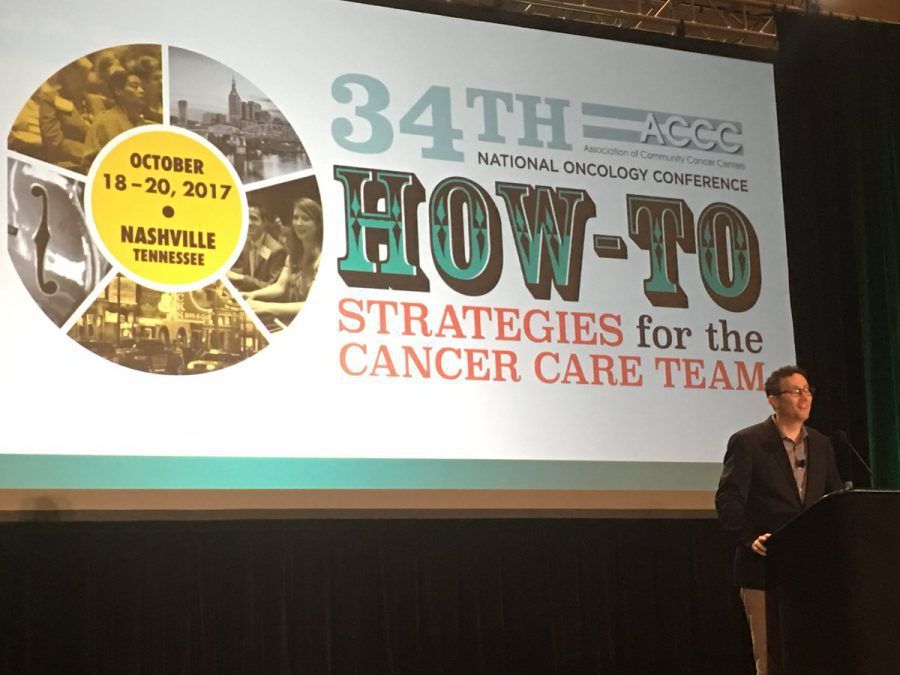
Something exceptional happened at last week’s ACCC 34th National Oncology Conference.

No, not the exceptional conference attendance of nearly 800 multidisciplinary oncology professionals for a “how to” focus on cancer care delivery.

No, not the exceptional sessions with practical “how to’s” for improving processes, patient satisfaction, quality reporting, data collection, and workflow. And no, not the stellar 2017 Innovator Award winner presentations with their exceptional solutions and actionable takeaways for advancing patient care in the community. And not the Spotlight Sessions, with peer-to-peer sharing of quick-takes on exceptional “how to’s” addressing hot topic issues in oncology care delivery.

The “exceptional” we’re referring to is something else: A theme heard across multiple conference sessions. Something connecting the past, the present, and the future of cancer care delivery.

What’s New about “How To”?
In this blog post, ACCCBuzz is talking about an “exceptional” theme that surfaced in session after session of the ACCC 34th National Oncology Conference: Improving connections between the “art” and the “science” of medicine to improve care delivery.

At this “exceptional” time in healthcare—with unprecedented uncertainty on ACA reform, payment models, and costs, along with exponential scientific advancement and information overload—during last week’s conference, presenter after presenter touched on the compelling need to humanize medicine to help both providers and their patients. A number of speakers described how a new strategy, program initiative, workflow, or process change grew from an “Aha” moment triggered by an encounter with or experience of a single patient. An interaction that stopped them in their tracks and connected them to new ways of thinking about care delivery.

One step toward humanizing medicine that echoed across sessions was the power of stories. For many of the presenters, either listening to or sharing a story, led to change. Attendees learned firsthand how sharing your story can empower cancer programs, providers, and patients.

For cancer programs, telling your story is at the heart of advocacy efforts, Tennessee Oncology CEO Jeffrey Patton, MD, told attendees, in welcoming them to Nashville. In today’s swiftly shifting healthcare environment, it’s critical for community oncology to have a voice. “No one is going to tell our story for us,” he said, reminding attendees that their experiences need to be included in the healthcare reform conversations occurring both locally and nationally.


For cancer care providers, sharing a story, an anecdote, or even a favorite song can be a simple step toward humanizing the provider-patient relationship. Featured speaker medical oncologist and “song-cologist” Steven Eisenberg, DO, California Cancer Associates for Research & Excellence, told how a pivotal interaction with Flavvy, an 80-year-old stage IV cancer patient who refused to let her medical problems diminish her vibrant love of life, changed his life and his approach to practicing medicine. “It freed me up to be a doctor who was in partnership with my patients. Rather than being separate from them, I started working with them,” he said.

By telling their story, cancer patients can help themselves, help others facing cancer, and help their care team understand who they are and what is important to them. Breast cancer survivor Brianne Joseph, LPI, owner of Sly Fox Investigations and author of Punk Azz Cancer, How Dare You! How to Turn Your Pain into Power, shared her story as a young adult breast cancer survivor, and included the voices of other young women survivors in her down-to-earth talk. “Everyone can see the scars from the mastectomy, but the scars that are the hardest to heal are the ones you can’t see,” she reminded attendees, urging better support for and communications with patients.

In Friday’s final conference session, the “art” and “science” of medicine were brought together in a powerful documentary, “Intentional Healing,” produced by Vanderbilt-Ingram Cancer Center radiation oncologist Mark Stavas, MD. The film follows famed Nashville music producer Jesse Boyce as he contemplates his own mortality after a diagnosis of terminal prostate cancer. Through the film we see how his art—creating music—was one of the ways Mr. Boyce pursued “intentional healing.” Afterward, an attendee asked how Dr. Stavas, whose practice is palliative radiation oncology, handles burnout and loss in his professional life. Making the film, sharing the patient’s story through art, has helped him to heal, Dr. Stavas said.

“Medicine cures, but art nourishes the soul.”

Exceptional.

Stay tuned to ACCCBuzz for more highlights from select ACCC 34th National Oncology Conference sessions.