Hear how malnutrition affects people with cancer in different ways, even impacting cancer treatment plans.




This first of a three-part series on “changing the culture of oncology,” offers a brief look at how treatment has evolved with precision medicine, targeted therapies, and the activation of our own immune systems to destroy cancerous cells. Dr. Sanjay Juneja also explores how—with many cancers now being treated like a chronic disease—it may be time to cancel the term “a cure for cancer.”
Guests:
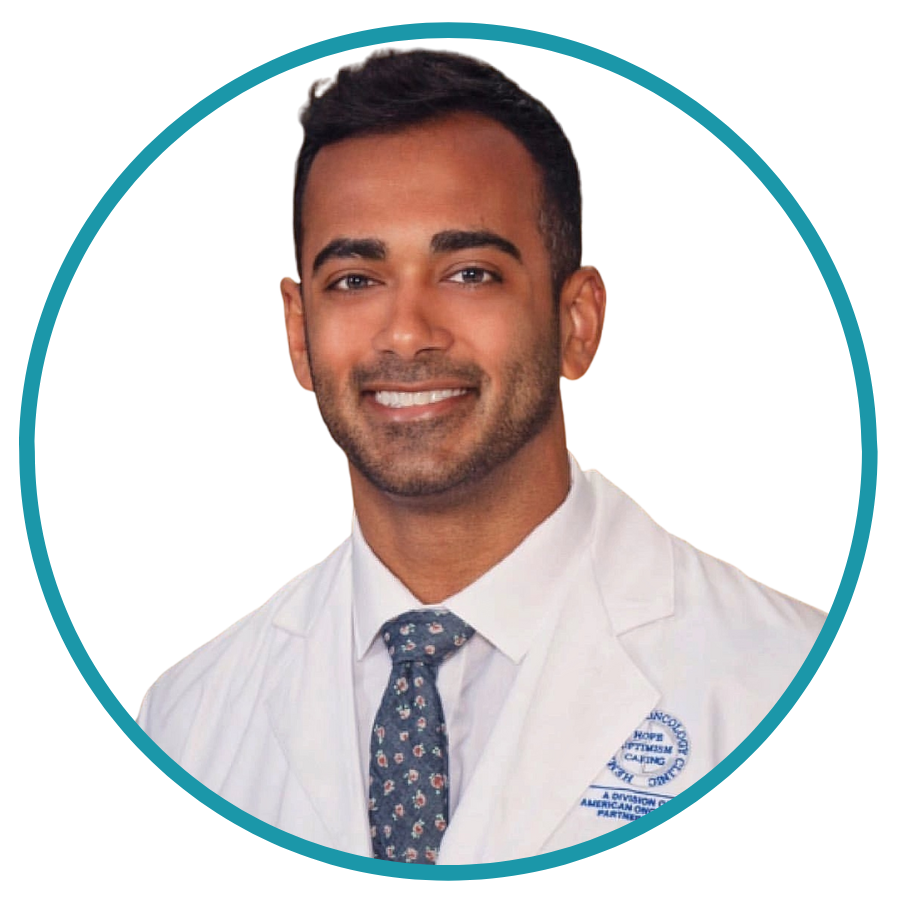
Sanjay Juneja, MD
Chief of Oncology Service
Baton Rouge Medical Center
Baton Rouge, LA
Board Member of the Louisiana Oncology Society
“It’s all about getting rid of the term ‘a cure for cancer’ because it’s not just going to be one cure to cure the hundreds of cancers and cancer variations.”

Resources:
CANCER BUZZ: Welcome back to CANCER BUZZ TV. I'm your host, Summer Johnson. This is the first episode of a 3-part series CANCER BUZZ is running to explore the changing culture of oncology. Today, we're speaking with a medical oncologist about precision medicine and the evolving landscape of cancer care. With cancer increasingly being treated as a chronic disease, our guest today says it may be time to cancel the expression, “a cure for cancer.”
Sanjay Juneja, MD is a medical oncologist and hematologist and Chief of Oncology Service at Baton Rouge Medical Center. He's also a board member of the Louisiana Oncology Society. Thank you so much for speaking with us today, Dr. Juneja. Now the treatment has advanced so much. What does it mean to be diagnosed with cancer in 2022?
Sanjay Juneja, MD: So now, chemotherapy still definitely plays a role that probably won't go anywhere because it's effective. So when you're going for this curative intent, right, semantics are all, is it cured, is it in remission? But the point is, if you're trying to make it never come back, CYAC chemo has a big role and probably won't go away because it works. The difference is when you're in a stage four metastatic setting and that's where it becomes challenging because technically, most of stage four metastatic cancers we can't cure, but we know we can keep people alive a long time.
But the question is, are you keeping people alive with a good quality of life? That's very important. And if your doctor doesn't stress that, that's something you should ask them about, you know, or, or make sure that you talk about. And by that, oftentimes we mean what are the side effects of treatment? And so when we get into this whole targeted precision therapy and things that aren't the necessarily the chemo, usually the side effects are way less. And oftentimes, you know, people can't even tell you're on treatment for cancer. The easiest way to think about that, which we've had for a long time, is hormone positive breast cancer, right? Or prostate cancer.
In those circumstances, we figured out, well there are these, you know, receptors that basically they want to eat the testosterone, not literally, or the estrogen. And if we starve them of that, then they start to shrivel up and they lose their energy. So that works and it's great. It's great to, to a degree, but you know, cutting out all testosterones and estrogen can definitely have its side effects. But take that concept to basically saying, this is the tool it uses and if you can introduce a treatment to basically attack that specific tool, then the side effects can be less.
And because we've isolated that tool precisely, the control rates for how long that cancer can be under control are just longer. And that's what all that research that you hear about in the trials, that's what it's for. What which of those tools can we still attack and learn about? And then also there's immune-therapy. We said earlier in the podcast that immune-therapy or your immune system is keeping the cells that look bad or sketchy, they destroy them.
The immune system has done that your whole life, but the cancer cell has become unregulated, meaning like the immune system doesn't see it. So now there's a whole bunch of immunity stuff and what that basically means is how can we re-enable the immune system to do what it's always been doing, which is killing these cells that potentially could go rogue and go bad.
CANCER BUZZ: With many cancers now treated like chronic diseases, you've said we should change the way we talk about cancer. Can you explain that to us?
Sanjay Juneja, MD: It's all about getting rid of the term, “a cure for cancer.” Because it's not going to be one cure to cure the hundreds of cancers and cancer variations really. You know, I personally think it's fine to say the cures for all cancers because that would be, in an ideal world, amazing. But a cure is deceptive because a lot of people, I think and rightfully so, are afraid to check things out, right? Or even get their screening because they're like, I know what cancer treatment looks like.
The truth is even regular, not regular amazing doctors, but that are not cancer doctors, have not the first clue on what targeted and precision medications look like and what it means for the cancer type. You can't look at a scan anymore and say, “this is bad, you don't have long to live,” without knowing what it is and what properties it has. The things can melt away with treatments now that aren't the chemo that you might think about with hair loss and everything like that. So in that regard, it would be multiple cures or all the cures for all the cancers. But the other part is it's unlikely to be one treatment.
What we're learning is it's like you want to attack it from all ends. You want to disable it from the tool it uses to grow. So you attack something in that manner. You want to be able to up-regulate or just enable your immune system to attack it. So you'll add immune therapy, which we've been doing for a couple years. You want to do it from all targets. So you know, on my podcast I had Dr. Siddhartha Mukherjee, who was the Pulitzer Prize winner that wrote, The Emperor of All Maladies, and he's studying now to add to immune therapy and to cytotoxic chemo. He's adding nutritional changes in pancreatic cancer because he's, his evidence in his team has found that if you starve just a couple of amino acids specifically, that is another way then you can get on top of the cancer.
And so that's, can cancer be cured? And again, it's a semantics word. We cure cancer all the time. Testicular cancer can be somewhere else, and it's still not stage four because it just gets cured so, usually, nicely with chemotherapy. But can you have sustained remissions for pretty much until the end of your life, which would be of average duration? Very much, yes. And those are the things we're learning about when we do this kind of stuff, like trials and targeted therapy and precision.
CANCER BUZZ: Thank you, Dr. Juneja. If you'd like to learn more about precision care, you could check out the resources and tools available through ACCC'S precision medicine initiative, Transforming Complex to Clear. And you can look for that in the show notes. This show is a resource of the Association of Cancer Care Centers (ACCC) developed to bring cancer care professionals, the latest news and fresh perspectives in oncology, and this episode was made possible through partnership with the Louisiana Oncology Society.
Stay tuned for the next episode in this series with Dr. Juneja. On behalf of all of us here at CANCER BUZZ TV, thank you for watching; I'm Summer Johnson.
The views and opinions expressed herein are those of the author(s)/faculty member(s) and do not reflect the official policy or position of their employer(s) or the Association of Cancer Care Centers.