ACCC association of cancer care centers
Join/Renew
Login
Join/Renew
Login
Education & Resources
ACCC eXchange LogInSponsored Education from ACCC Corporate PartnersACCC eLearning LogInPresentations & Abstracts
Publications
Oncology IssuesPatient Assistance & Reimbursement GuideTrending Now in Cancer CareBusiness Case Studies for Hiring New Staff
Events
2026 ACCC Leadership SummitAnnual Meeting & Cancer Center Business SummitCapitol Hill DayNational Oncology ConferenceOncology Reimbursement MeetingsOncology State Society Meetings
Policy & Advocacy
ACCC 2026 Policy PrioritiesLetters & StatementsAccess, Payment & Reimbursement ReformWhite Bagging & Brown BaggingAdvocacy ResourcesCancer Moonshot
Membership
Join | RenewWho We AreMembership Types & BenefitsCorporate MembersACCC Member Portal FAQMember Directory
Partners
Oncology State SocietiesPartner OrganizationsCME
News
News ReleasesAdvocacy News ReleasesOncology News
About ACCC
Timeline / 50th Anniversary2025 Impact ReportPresident's ThemeACCC Innovator AwardsACCC FellowsBoard of TrusteesACCC Senior Staff
Breast CancerMetastatic Breast Cancer
Gastrointestinal CancerBiliary Tract CancerColorectal CancerGastric CancerLiver Cancer
Genitourinary CancerBladder CancerProstate CancerRenal Cell Carcinoma
Gynecologic Cancer
Head & Neck Cancer
Hematologic MalignanciesAcute Lymphocytic Leukemia (ALL)Acute Myeloid Leukemia (AML)Chronic Lymphocytic Leukemia (CLL)Mantle Cell Lymphoma (MCL)Multiple Myeloma (MM)Myelodysplastic Syndromes (MDS)
Lung CancerNon-Small Cell Lung Cancer (NSCLC)Small Cell Lung Cancer (SCLC)
Sarcoma
Skin CancerMelanomaNon-Melanoma Skin Cancers (NMSC)
Clinical Practice & TreatmentCancer DiagnosticsCare CoordinationEHR Integration for Biomarker TestingQuality Improvement Collaboration: Integration of Precision Medicine in Community OncologyTreatment
Financial NavigationFAN Boot CampFinancial Advocacy Network (FAN) Resource LibraryPatient Assistance & Reimbursement GuidePrior Authorization
Health Equity & Access3, 2, 1, Go! Practical Solutions for Addressing Cancer Care DisparitiesAppalachian Community Cancer AllianceOncology Advanced PractitionersPersonalizing Care for Patients of All BackgroundsSocial Drivers of Health
Patient-Centered CareAddressing Care Disparities for VeteransAdolescent and Young Adult (AYA)Care Action Plans for People with CancerDermatologic ToxicitiesEmpowering CaregiversGeriatric OncologyHealth LiteracyNutritionOncology PharmacyPatient NavigationPsychosocial Care in OncologyShared Decision-MakingSupportive CareSurvivorship Care
Practice Management & OperationsCancer Program FundamentalsLeadership Sustainment and Engagement VideosOncology Practice Transformation and Integration CenterOncology Team Resiliency
ResearchACCC Community Oncology Research Institute (ACORI)
Technology & InnovationTelehealth & Digital Medicine
ACCCBuzz Blog
CANCER BUZZ Podcast
Oncology Issues
Join/Renew
Login
Breast CancerMetastatic Breast Cancer
Gastrointestinal CancerBiliary Tract CancerColorectal CancerGastric CancerLiver Cancer
Genitourinary CancerBladder CancerProstate CancerRenal Cell Carcinoma
Gynecologic Cancer
Head & Neck Cancer
Hematologic MalignanciesAcute Lymphocytic Leukemia (ALL)Acute Myeloid Leukemia (AML)Chronic Lymphocytic Leukemia (CLL)Mantle Cell Lymphoma (MCL)Multiple Myeloma (MM)Myelodysplastic Syndromes (MDS)
Lung CancerNon-Small Cell Lung Cancer (NSCLC)Small Cell Lung Cancer (SCLC)
Sarcoma
Skin CancerMelanomaNon-Melanoma Skin Cancers (NMSC)
Clinical Practice & TreatmentCancer DiagnosticsCare CoordinationEHR Integration for Biomarker TestingQuality Improvement Collaboration: Integration of Precision Medicine in Community OncologyTreatment
Financial NavigationFAN Boot CampFinancial Advocacy Network (FAN) Resource LibraryPatient Assistance & Reimbursement GuidePrior Authorization
Health Equity & Access3, 2, 1, Go! Practical Solutions for Addressing Cancer Care DisparitiesAppalachian Community Cancer AllianceOncology Advanced PractitionersPersonalizing Care for Patients of All BackgroundsSocial Drivers of Health
Patient-Centered CareAddressing Care Disparities for VeteransAdolescent and Young Adult (AYA)Care Action Plans for People with CancerDermatologic ToxicitiesEmpowering CaregiversGeriatric OncologyHealth LiteracyNutritionOncology PharmacyPatient NavigationPsychosocial Care in OncologyShared Decision-MakingSupportive CareSurvivorship Care
Practice Management & OperationsCancer Program FundamentalsLeadership Sustainment and Engagement VideosOncology Practice Transformation and Integration CenterOncology Team Resiliency
ResearchACCC Community Oncology Research Institute (ACORI)
Technology & InnovationTelehealth & Digital Medicine
ACCCBuzz Blog
CANCER BUZZ Podcast
Oncology Issues
    • Education & Resources
    • Publications
    • Events
    • Policy & Advocacy
    • Membership
    • Partners
    • News
    • About ACCC
ACCC association of cancer care centers
5425 Wisconsin Ave #600, Chevy Chase, MD 20815
Tel: 301.984.9496 Email Us
Contact UsVolunteers
Advertise
Career Center
Terms and Conditions
Privacy Policy
ACCC Rebranding
Copyright © 2026 Association of Cancer Care Centers. All Rights Reserved.
HomePublicationsOncology Issues

From Fatigue to Function: Redefining Rural Cancer Care Through Exercise Oncology

October 13, 2025
Oncology Issues
October 2025
Volume 40
Issue 5

Author(s):

Joanna Metzner-Sadurski, MD
Ruiling Yuan, MD

From Fatigue to Function: Redefining Rural Cancer Care Through Exercise Oncology
Download Issue PDFDownload PDF

Across rural America, patients with cancer face more than just the burden of disease. They battle isolation, long travel distances, fragmented services, and limited access to rehabilitative care. At Self Regional Healthcare in Greenwood, South Carolina, we saw an opportunity to transform survivorship by integrating exercise into the cancer journey. Our Exercise Oncology Rehabilitation Program began as a fellowship project and has evolved into a scalable model of patient-centered, data-driven care that supports healing, strength, and dignity.

Begin With the Patient: A Story That Sparked a Movement

In 2015, a woman in her mid-60s was diagnosed with HER2-positive breast cancer. After completing chemotherapy and treatment with trastuzumab (Herceptin), she experienced profound fatigue. “I beat cancer,” she often said. “But I never got my life back.” Her cancer returned in 2019 with brain metastases, and during treatment, she became one of the first participants in our newly launched exercise oncology pilot.

Over the course of 3 months, she progressed from walking laps to using battle ropes. Her voice echoed through our clinic halls. “I feel like myself again.” She ultimately passed away 2 years later, but not before dancing at her granddaughter’s wedding and urging others to embrace movement. “I did more in those 2 years than I did after my first cancer treatment. Exercise gave me my life back.”

Why It Matters: Beyond Survival, Toward Strength and Dignity

Older patients with cancer are more likely to experience frailty, functional decline, and sarcopenia (loss of muscle tissue). In rural communities, these challenges are amplified by logistical and financial constraints. While the oncology field has made progress in survival, survivorship alone is no longer enough. Exercise interventions improve treatment tolerance, reduce toxicity, enhance mental health, and restore independence. These interventions represent a critical, underutilized pillar of cancer care, particularly in medically underserved settings.

Specifically, these studies offer strong data to support the integration of exercise in oncology:

  • A 2023 study by Yanjiao and colleagues found that for older adults with sarcopenia, doing resistance exercises—especially when combined with aerobic and balance training—was the most effective way to improve their quality of life (QOL).1
  • Another 2023 study by Coma et al reported that exercise reduces mortality and cardiotoxicity in cancer patients.2
  • The CHALLENGE trial (NCT00819208) reported a 7% improvement in disease-free survival in colon cancer with structured exercise.3

The Innovation: From Fellowship Project to Institutional Program

We launched the program as part of a 2019 International Society of Geriatric Oncology training in Treviso, Italy, which focused on comprehensive education in the care of older adults with cancer. During that training, significant emphasis was placed on sarcopenia—its impact on patients’ QOL, treatment tolerability, and clinical outcomes—and on strategies to improve these, including early screening, nutritional support, and structured exercise interventions.

What began with just 2 patients quickly demonstrated promise: the model integrated strength, balance, and cardiovascular training alongside oncology treatment. Even in this early phase, patients reported meaningful improvements in mobility, flexibility, energy levels, and confidence—pushing us to make these services a part of cancer care at our institution.

Encouraged by this finding, the pilot program expanded to include patients across the cancer care continuum—from prehabilitation before surgery to patients in active treatment and to those in recovery. Referrals to these services more than doubled in 1 year, from 91 referrals in 2023 to 194 referrals in 2024, and 65 patients with cancer participating in “exercise prescriptions.” The model of care is now an integrated part of Self Regional’s cancer care service line and infrastructure.

How It Works: Program Design and Implementation

Patients are referred early, ideally at the time of diagnosis or first oncology appointment. In 2025, we incorporated a touchpoint within our multidisciplinary breast clinic, allowing patients to meet a trainer during their initial visit—reducing dropout and increasing trust. We also changed the name of our program at the end of 2024 from transitional rehab to exercise oncology, which met with much higher interest from patients. We are collecting data on why patients do not finish the program and what prevents them from participating in it. We also collect QOL data based on the EORTC QLG Core Questionnaire (EORTC QLQ-C30), a 30-item instrument designed to measure QOL in all patients with cancer.

Physical therapists assess patients in 3 domains: hand grip strength,4-7 range of motion, and the Timed Up and Go test, which evaluates a person’s gait, balance, and overall physical function. Patients are then stratified into 1 of 3 regimens:

  • Chair-based strength and stretching
  • Progressive resistance and balance
  • Full-body strength with endurance circuits.

The program consists of 36 1-hour sessions over 12 weeks, coordinated with treatment schedules to avoid chemotherapy weeks. Sessions occur at our community-based partner facility, Optimum Life.

Functional metrics are recorded before, during, and after the program. Patient-reported outcomes are gathered through standardized surveys.

COVID-19 and Rural Recovery

The COVID-19 pandemic disrupted referrals and delivery of these critical services. Yet 2024 marked a resurgence in interest and patient engagement. With support from the Self Regional Foundation, we expanded subsidies, improved workflows, and recommitted to accessibility. Despite these efforts, over 50% of referred patients do not complete the 12-week course. Common reasons include:

  • Transportation barriers
  • Out-of-pocket costs (even at a reduced cost of $85)
  • Lack of caregiver availability
  • Unfamiliarity with PT-led programs in oncology.

Clinical and Functional Outcomes

Among patients with complete data, range of motion and mobility improved across all cohorts. We saw a 7.3% improvement in handgrip strength; scores increased by 3.7 pounds. Patients have reported less fatigue and breathlessness, improved balance and confidence, and resumption of meaningful activities like gardening, attending church, and participating in social outings. Patients have shared these comments:

  • “Why didn’t you send me earlier?”
  • “I can finally tie my shoes again.”
  • “I want to thrive, not just survive.

Dissemination and Validation

In 2025, we submitted a poster to the Rural Oncology Conference in Kansas, highlighting our pilot study on structured exercise for patients with cancer in a rural setting.8 Coincidentally, that same week, the CHALLENGE trial results were published in the New England Journal of Medicine, reinforcing the impact of exercise on disease-free survival in patients with colon cancer.3 This phase 3 randomized study demonstrated that a 3-year structured exercise program initiated shortly after adjuvant chemotherapy significantly improved disease-free survival in patients with resected colon cancer. While presenting our work, an attendee reflected, “I used to see patients struggling with fatigue and weight gain during treatment, and I would tell them, ‘Just finish treatment—exercise if you can.’ But now, after seeing these data, I realize it’s no longer optional. It’s our duty to help patients achieve this as part of their care.” This comment captured a paradigm shift: exercise is not an add-on, it’s a standard of care—one that must be accessible, actionable, and equitable, especially in rural communities.

Equity in Action: Rural Impact and Sustainability

Our Exercise Oncology Rehabilitation Program brings high-value supportive care to a population that is often left behind. The majority of our patients live in medically underserved zip codes. Many face food insecurity, low health literacy, and limited access to physical therapy or fitness services. Through partnerships with the Self Regional Foundation, we have reduced the financial burden. In 2024, twenty patients received care at no cost. However, long-term sustainability requires broader systemic support and payer recognition of the critical needs for these services.

Our workforce model is also built around a train-here-stay-here approach. Our Exercise Oncology Rehabilitation Program trains and retains local students through mentorship and hands-on experience. This initiative fosters a rural oncology rehabilitation workforce rooted in empathy and community ties. And we have plans to expand through:

  • Tele-exercise, launching hybrid, in-person, and remote options for patients with transportation challenges
  • AI-enhanced personalization, using algorithms to adjust plans based on biometric and functional data
  • Integrated EHR tracking, integrating patient outcomes into survivorship care plans
  • Randomized clinical trials, researching and comparing gym-based vs home-based exercise models
  • Legislative advocacy, building the case for reimbursement of exercise oncology services.

A Model for Rural Replication

Our Exercise Oncology Rehabilitation Program is not just a service—it’s a reimagining of what survivorship looks like in rural communities. Through personalized care, data collection, and community partnerships, we empower patients to regain strength, reduce recurrence risk, and live with purpose. Our vision is simple but bold: No patient with cancer should be too far, too frail, or too forgotten to benefit from movement. We hope our model can help benefit patients across the country.

Joanna Metzner-Sadurski, MD, is director of Medical Oncology, Cancer Center and Director, Medical Oncology Laboratory at Self Regional Healthcare in Greenwood, South Carolina. She is also an assistant professor in the Department of Medicine at the Medical University of South Carolina; assistant professor, Department of Internal Medicine at the Edward Via College of Osteopathic Medicine – Carolinas Campus; and preceptor, Physician Assistant Program at Presbyterian College. Dr. Metzner-Sadurski is the principal investigator of the Self Regional NCORP Site. She is also a board member of the Self Regional Healthcare Foundation Board of Trustees and a board member of the South Carolina Oncology Society. Ruiling Yuan, MD, MSc, is dyad director of cancer services at Self Regional Healthcare in Greenwood, South Carolina. She is also an assistant professor in the Department of Medicine at the Medical University of South Carolina; an assistant professor of Internal Medicine at the Edward Via College of Osteopathic Medicine; and a clinical preceptor of the Physician Assistant Program at Presbyterian College. Dr. Yuan is a board member of the South Carolina Oncology Society.

Special thanks to Stephen Shenal, CPT, whose vision and dedication helped launch the Exercise Oncology Program at Self Regional Healthcare, and who continues to play a pivotal role in its ongoing success and patient impact.

References

  1. Yanjiao S, Shi Q, Nong K, et al. Exercise for sarcopenia in older people: a systematic review and network meta-analysis. J Cachexia Sarcopenia Muscle. 2023;14(3):1199-1211. doi:10.1002/jcsm.13225
  2. Coma N,2, Moral S, Ballesteros E, et al. The benefit of exercise in cancer patients: effects on cardiovascular mortality, cardiotoxicity, and quality of life. Rev Cardiovasc Med. 2023;24(6):160. doi:10.31083/j.rcm2406160
  3. Courneya KS, Vardy JL, O’Callaghan CJ, et al. Effect of structured exercise on disease-free survival in colon cancer survivors: the CHALLENGE randomized clinical trial. N Engl J Med. 2025;392(6):512-522. doi:10.1056/NEJMoa2502760
  4. Vaishya R, Misra A, Vaish A, Ursino N, D’Ambrosi R. Hand grip strength as a proposed new vital sign of health: a narrative review of evidence.
    J Health Popul Nutr. 2024;43:7. doi:10.1186/s41043-024-00500-y
  5. Tatsuma S, Maeda K, Takeuchi T, et al. Low handgrip strength as a marker of severity in the diagnostic criteria for cancer cachexia. Clin Nutr ESPEN. 2024;64:435-440. doi:10.1016/j.clnesp.2024.10.162
  6. Kanna ST, Saxena S, Rejiet R, et al. The clinical relevance of grip strength: a narrative exploration. Bioinformation. 2024;20(10):1291-1294.
    doi:10.6026/9732063002001291
  7. Sebag P, Villain C, Lebaubeet S, et al. Association between low handgrip strength and mortality in older inpatients with cancer: a post hoc analysis of a cross-sectional randomized study. J Geriatr Oncol. 2025;16(7):102312. doi:10.1016/j.jgo.2025.102312
  8. Metzner-Sadurski J, et al. Pilot study of an exercise program for oncology patients in a rural setting. Poster presented at the 2025 Rural Oncology Conference; June 6-7, 2025; Kansas City, Kansas
Articles in this issue

The Weight of Waiting: Humanizing Cancer Care in Times of Transition
Building the Future of Oncology Through Innovation and Equity
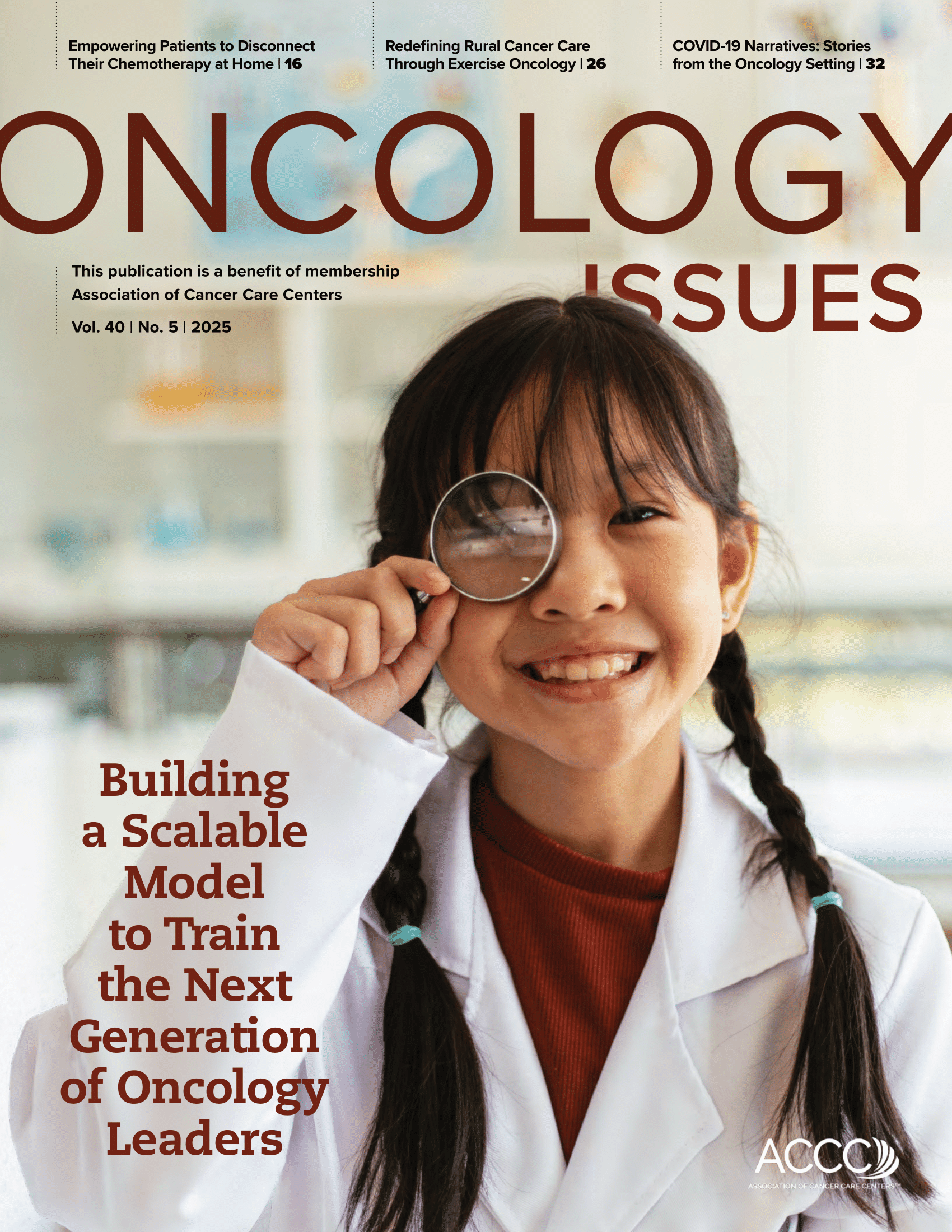
Building a Scalable Model to Train the Next Generation of Oncology Leaders
Empowering Patients to Disconnect Their Chemotherapy at Home
One Purpose, One Passion, 2 Directions:   How to Bring Together Clinical and Administrative Leaders
One Purpose, One Passion, 2 Directions: How to Bring Together Clinical and Administrative Leaders
From Fatigue to Function: Redefining Rural Cancer Care Through Exercise Oncology
COVID-19 Narratives: Stories from the Oncology Setting
Unlocking the Conversation: Navigating 𝘌𝘚𝘙1 Mutations in Metastatic Breast Cancer
Multidisciplinary Approaches to Treating Patients With Relapsed/Refractory Follicular Lymphoma
Fast Facts Vol 40, No. 5
Policy Town Hall: Advancing Care Through State-Level Advocacy
Highlights from CY 2026 MPFS and HOPPS Proposed Rules
Pocket Nodules: Encouraging Self-Efficacy Through Interactive Patient Education
Southern Cancer Center, Huntsville, Alabama
Action: Vol 40, No. 5

Upcoming Events

ACCC 43rd National Oncology Conference

ACCC 43rd National Oncology Conference

In Person October 21, 2026 at 8:00 AM EDT450 Summer St, Boston, MA 02210, USAOmni Boston Hotel at the Seaport, Boston
Register Now!
ACCC Oncology Reimbursement Meeting | Reno

ACCC Oncology Reimbursement Meeting | Reno

In Person November 4, 2026 at 8:00 AM EST255 North Virginia Street, Reno, NV, USAWhitney Peak Hotel Reno, Tapestry Collection by Hilton,
Register Now!
ACCC Oncology Reimbursement Meeting | Providence

ACCC Oncology Reimbursement Meeting | Providence

In Person November 10, 2026 at 8:00 AM EST5 Avenue of the Arts, Providence, RI, USARenaissance Providence Downtown Hotel,
Register Now!
NMSCO 2026 Fall Conference
Oncology

NMSCO 2026 Fall Conference

In Person Conference & ConventionSeptember 12, 2026 at 7:30 AM MDT2101 Louisiana Boulevard NE Albuquerque, NM, 87110Marriott Albuquerque, Albuquerque
Register Now!
TxSCO 2026 Annual Conference
Oncology

TxSCO 2026 Annual Conference

In Person Conference & ConventionSeptember 18, 2026 at 6:00 PM CDT501 Gaylord Trail, Grapevine, TX, USAGaylord Texan Resort & Convention Center, Grapevine
Register Now!
KYSCO 2026 Fall Oncology Review
Oncology

KYSCO 2026 Fall Oncology Review

In Person Conference & ConventionSeptember 19, 2026 at 7:00 AM EDT500 S 4th St, Louisville, KY, USAThe Seelbach Hilton Louisville, Louisville
Register Now!
ESHOS Horizons 2026
Oncology

ESHOS Horizons 2026

In Person Conference & ConventionSeptember 19, 2026 at 7:30 AM EDT1 Liberty Street, New York, NY, USAConvene at One Liberty Plaza, New York
Register Now!
MSOS 2026 Bozeman Meeting
Oncology

MSOS 2026 Bozeman Meeting

In Person Meeting & NetworkingSeptember 22, 2026 at 5:30 PM EDT5 W Mendenhall St suite 102, Bozeman, MT 59715, USA Urban Kitchen, Bozeman
Register Now!
MSCO 2026 Fall Conference
Oncology

MSCO 2026 Fall Conference

In Person Conference & ConventionSeptember 22, 2026 at 5:00 PM CDT1500 Park Pl Blvd, Minneapolis, MN, USADoubleTree by Hilton Hotel Minneapolis - Park Place, Minneapolis
Register Now!
HSCO 2026 September Dinner Symposium
Oncology

HSCO 2026 September Dinner Symposium

In Person Conference & ConventionSeptember 23, 2026 at 5:30 PM HST3660 Waialae Ave, Honolulu, HI, USA3660 On The Rise, Honolulu
Register Now!
Advertisement
Advertisement

Trending Now on
ACCCBuzz Blog

Highlights From Volume 41, Number 4 Oncology Issues

Highlights From Volume 41, Number 4 Oncology Issues

From precision medicine to psychosocial care to navigation for a diverse population, the latest issue Oncology Issues brings insights into not just institutional and administrative barriers to treatment, but areas of care that directly impact the lived experience of those navigating the cancer care continuum.

Transforming Access to Care Through Pre-Intake Navigation

Transforming Access to Care Through Pre-Intake Navigation

The University of Texas MD Anderson Cancer Center in Houston, Texas, developed a novel Pre-Intake Navigation (PIN) program, which identifies and resolves early financial and insurance barriers, enabling patients to access timely, high-quality cancer care with less anxiety and fewer delays. PIN shifts financial navigation from a late-stage, reactive task to an early, standardized, patient‑centered process embedded in the call center workflow.

An APP-Led Outpatient Bispecific Antibody Clinic

An APP-Led Outpatient Bispecific Antibody Clinic

Understanding both the benefits to be had from offering BsAb therapy to its community and the scope of this undertaking, Vanderbilt-Ingram Cancer Center took a novel approach with its APP-led BsAb step-up dosing clinic, which won the program a 2026 ACCC Innovator Award.

Advancing Critical Priorities at the State Level: Louisiana, Iowa, and Washington Awarded for Their Efforts at 2026 ASCO Annual Meeting

Advancing Critical Priorities at the State Level: Louisiana, Iowa, and Washington Awarded for Their Efforts at 2026 ASCO Annual Meeting

At the 2026 ASCO Annual Meeting, the Louisiana Oncology Society received the ASCO Jeffrey C Ward Affiliate Advocacy Award for advancing critical advocacy priorities that have translated into meaningful legislative victories. The Iowa Oncology Society and Washington State Medical Oncology Society were also recognized for their advocacy efforts in 2025 at the meeting, receiving second place awards.

View All ACCCBuzz Blogs

Recently Heard on
CANCER BUZZ Podcast

From Reactive to Proactive: Improving Access to Cancer Care Through Pre-Intake Navigation - [Podcast] Ep. 240

Real-World Oncology Decentralized Trials - [Video Podcast] Ep. 65

The Real Cost of Cancer: Financial Toxicity, Transportation Challenges, and Access Gaps – [Video Podcast] Ep. 65

Closing the Gap in Medical Necessity Review With a Clinical Documentation Integrity Registered Nurse - [Mini Podcast] Ep. 239

View All Podcasts

Latest from Oncology Issues

August 2026
August 2026
June 2026
April 2026
February 2026
December 2025
View All Oncology Issues

Join the Conversation

ACCC eXchange Digital Banner
Login