How does one go about eating an elephant? One bite at a time.
- Desmond Tutu, Nobel Laureate
The SARS-CoV-2 epidemic has illustrated to us the life and death consequences of unequal access to healthcare and the racial disparities in treatment outcomes in the U.S.
In the oncology community, efforts to identify, address, and eliminate disparities and inequities in cancer care are ongoing. With the increasing sophistication, complexity, and costs associated with cancer screening and treatment, achieving a measurable, sustainable decrease in race-based health disparities can seem overwhelmingly difficult. And yet—as with “eating an elephant”—each bite out of the problem brings you closer to the end goal.
Lung cancer remains the second-leading cause of cancer death in the U.S. Despite a 26-year decline in overall cancer death and substantial progress in reducing deaths from lung cancer in particular—attributed to a decrease in smoking and advances in early detection and treatment—this progress is not benefitting the population equally. Trends in lung cancer 5-year relative survival rates continue to reveal disparity between non-Hispanic white and black Americans.1,2 Rates of smoking cessation are lower among non-Hispanic blacks compared to non-Hispanic whites and Hispanics, and quit rates for the non-Hispanic black population remained unchanged from 2002 to 2016, while rates in the other two groups increased.3
Many factors contribute to racial and ethnic disparities in cancer care. Among these are insufficient or lack of health insurance, economic and structural obstacles to care access, cultural barriers, implicit and explicit bias, low health literacy, and—above all—a disproportionate share of the burden of poverty. In 2018, the U.S. Census Bureau reported 21 percent of blacks and 18 percent of Hispanics/Latinos were living below the poverty line. By comparison, for non-Hispanic whites and Asians, the figures were 8 percent and 10 percent, respectively.3 Our most vulnerable patient populations—those covered by Medicaid and those who are uninsured—often are diagnosed with lung cancer at a late stage, have access to fewer treatment options, and experience poorer outcomes from the disease.
Bite by Bite
In June 2020, the Association of Cancer Care Centers launched a framework—or model—for improving the care coordination of lung cancer patients covered by Medicaid. The model can help cancer care providers to gradually “eat the elephant” by evaluating their lung cancer care delivery across 12 assessment areas.* The model is designed for cancer programs of all sizes and resource levels. It enables cancer programs to focus on quality improvement in a single assessment area or—for programs interested in taking a bigger “bite” out of the problem—multiple areas.
ACCC developed this care coordination model for patients with lung cancer through a three-year iterative process guided by an expert multidisciplinary expert multidisciplinary advisory committee and a technical expert panel. Serving as co-principal investigators were Randall A. Oyer, MD, Medical Director of the Oncology Program at Penn Medicine Lancaster General Health, and Christopher S. Lathan, MD, MS, MPH, Faculty Director for Cancer Care Equity at the Dana-Farber Cancer Institute; Medical Director of the Dana-Farber at St. Elizabeth’s Medical Center; and Assistant Professor of Medicine at Harvard Medical School.
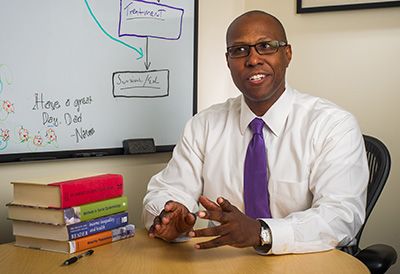
ACCCBuzz spoke with Dr. Lathan about the model’s development and utility for cancer programs seeking to promote health equity and to reduce disparities in care for vulnerable patient populations.
ACCCBuzz: Why did you choose to participate in this effort?
Dr. Lathan: I got involved because my interest—both clinically and academically—has been access to care for underserved populations. As a lung cancer specialist, it became very clear to me early in my career that it was difficult for these patients—the poorest with the least amount of resources—to obtain the highest quality of care. The folks with the least amount of resources often have the highest burden of disease, and that dichotomy was something that was important to me early on.
[With this project], the work of Dr. Osarogiagbon (Raymond Uyiosa Osarogiagbon, MD, FACP, project lead consultant)and ACCC has been to improve the quality of patient care. But we recognized that before you can do that, you have to actually measure it and have some quantifiable steps. So [this project] really brought that together. My interest is to ensure that those with the highest burden of lung cancer are able to receive the highest quality of care.
ACCCBuzz: What potential does the model have to impact the persistent disparities in these most vulnerable patient populations?
Dr. Lathan: This is not the first assessment model or optimal care coordination model. But it is focused specifically on Medicaid patients [and] underserved patients with lung cancer. By using this model to assess where you [currently] are, you can improve care. . . With the amount of testing we did and the amount of real-world information that we used to augment the model that ACCC has developed over time, we hope people can use it as a way to ask themselves several questions: Are you doing what you think you are doing? Are you really able to think about your patients’ care holistically? What are you doing for survivorship? What are you doing for end-of-life care? What are you doing for multidisciplinary care? [Using the model], you can see where your practice might fit, and [this] allows you to direct resources to improve care.
We found when we were developing the model that every clinician really feels, “We’re doing the best we can; we’re doing a great job.” And it’s not until you ask [the questions] and do the assessment that you find that you really can do better. We’re hoping that programs can use the model to figure out where they need to improve.
At this time, when we’re talking more about [disparities], and people are focused on racial inequity and are thinking about underserved and vulnerable patient populations, I hope that this model can also serve as a way to approach thinking about equity. That’s what we really want, to achieve equity. To assess where we are and make sure we enable our folks and our resources to provide the most equitable, high-level care possible.
ACCCBuzz: Do you believe that improved care coordination can lead to earlier diagnoses?
Dr. Lathan: With lung cancer, in particular, if you’re going to see people at earlier stages of cancer, it is through lung cancer screening.
But I would say, [regarding] the diagnostic part, [improved care coordination may help in] finding people at stage 3, before they get to stage 4, so there is an opportunity to not just ameliorate disease, but perhaps to cure the disease as well.
More important than the expediency is making sure you have the appropriate treatment, because some work has found that we focus on the time [to treatment], but if you don’t have the molecular sequencing—if you’re not treating with the appropriate chemotherapeutic or molecularly targeted agents—then you are not actually giving the patient the best opportunity. So while I do think [diagnosis at] an earlier stage is important, I think that comes mostly from the screening process. The diagnostic process should be expedient, but it should also be accurate. And making sure you’re treating people and supporting people appropriately so that they can complete their therapy is even more important than the expediency.
ACCCBuzz: Why should health systems and hospitals consider utilizing the model to evaluate their lung cancer services?
Dr. Lathan: I think all clinicians and all cancer centers desire to provide the highest quality care to their patients, and I think that alone should be [sufficient motivation for assessing care coordination].
But if that’s not enough, if you’re thinking about equity and about a cancer that is disproportionately affecting working poor and poorer folks, lung cancer is the one.
I think the equity and social justice issues we’re seeing should really push cancer programs to ask—as they are asking themselves—what can we do about injustice? What can we do about racial injustice? What can we do about equity? Well here is an area where you have a model that’s specifically looking at underserved patient populations, Medicaid patients, who do disproportionately tend to be poorer folks, Black and Brown communities, vulnerable patient populations, and immigrant patient populations. The dissemination of all these incredible improvements in care we’ve made in lung cancer are not necessarily getting out into different communities, especially to our poorer communities.
ACCCBuzz: Any closing thoughts on the experience of working on the model?
Dr. Lathan: I was just a very small part of this. I work at an NCI-designated cancer center, but a lot of my work has also been in outreach. But working on the model, we were thinking about this [care coordination] from many different angles. Not just from the academic side and the community cancer treatment center side, but also from nursing, pathology, really looking at the problem from multiple viewpoints.
All of us, whether we’re providers or academics, we all have a tendency to look at this [problem] from whatever angle we’re coming from—and that’s the only angle that’s important. What was beautiful about working on the model was bringing in all of these different voices and then listening. Not just implementing, but also listening to the community cancer centers’ feedback. And actually, one of most important things we found is that communities need resources to ask and answer these questions. Even asking the questions requires time, effort, and resources, and we hope that the model is a resource that does some of that work for them.
*Editor’s note: The model’s 12 assessment areas are 1. patient access to a lung program; 2. multidisciplinary treatment planning; 3. clinical trials; 4. supportive care; 5. survivorship care; 6. finances, transportation, and housing; 7. tobacco education; 8. navigation; 9. treatment team integration; 10. physician engagement; 11. EHRs and patient access to information; and 12. quality measurement and improvement. Learn more.
References