Author(s):
The second day of the National Oncology Conference was centered around the 2024 ACCC Innovator Award winners, community engagement, and achieving equity in cancer care through a variety of sessions.

The second day of the National Oncology Conference opened with an enlightening keynote address by Kevin Fiori, MD, MPH, MSc, FAAP, director of the Community Health Systems Lab, associate professor of Pediatrics and Family and Social Medicine, director of Social Determinants of Health, Office of Community and Population Health at Albert Einstein College of Medicine, and the director of the Community Health Worker Institute at Montefiore Medical Center. Through optimizing the integration of community health workers within clinical teams, the Community Health Worker Institute at Montefiore, established in 2022 in partnership with Albert Einstein College of Medicine, leveraged the science of implementation research and the expertise of communities to reimagine how health care can be delivered. “The sweet spot in optimizing health care delivery is the intersection of learning, research, and community,” Dr. Fiori noted.
Dr. Fiori described the Institute's experience in leveraging community expertise and global best practices across the largest health system in Bronx County, New York. “Health is driven by more than just health care,” he stated. “Socioeconomic factors make up 40% of a person’s health; we need to integrate social care into medical care.” He also stressed the vital role of community health workers: “These are people who have walked in the shoes of your patients. They bring greater understanding to your health system.”
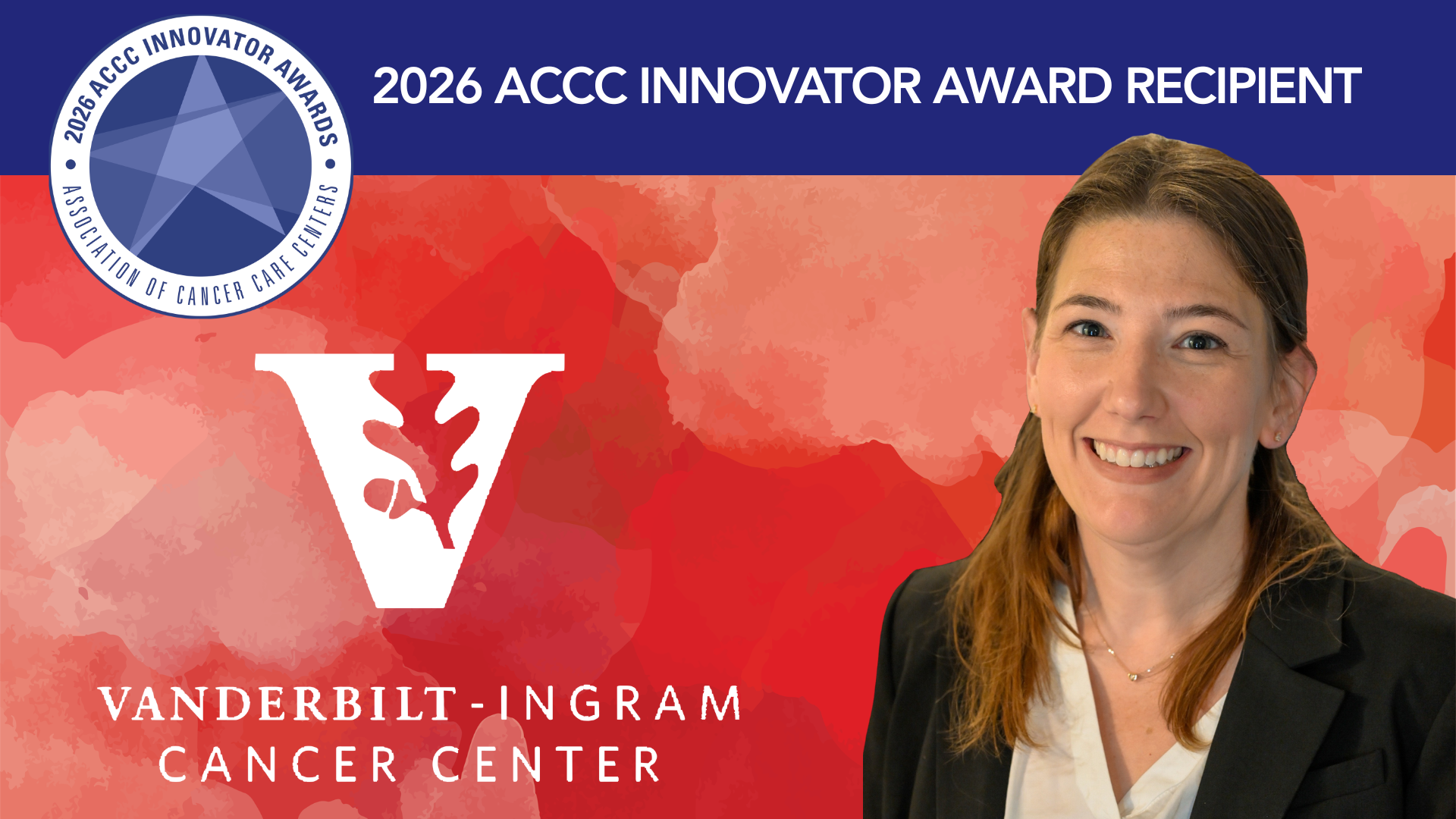
ACCC President Nadine J. Barrett, PhD, MA, MS then introduced the 2024 ACCC Innovator Award winners: Russell Langan, MD, FACS, FSSO, Rutgers Cancer Institute of New Jersey; Courtney VanHouzen, PharmD, Cowell Family Cancer Center; Karl Yaeger, MD, St. Luke's Cancer Care; Nina Thomas, MD, University of Colorado Cancer Center; Sarah Hudson-DiSalle, PharmD, RPh, FACCC, The Ohio State University Comprehensive Cancer Center; and Michelle Eichelmann, Mercy Oncology Services.
In their sessions, this year’s winners provided attendees with information on identifying and implementing creative solutions to common challenges, including lessons learned, and tools that they can take home and use in their cancer program or practice. More information on this year’s ACCC Innovator Award winners can be found on the ACCC website.
Next, Dr. Langan described his center’s AI-driven incidental findings program which identifies and then monitors pancreatic abnormalities to improve the quality of care for patients who are at increased risk for developing pancreatic cancer. To do so, the patient management software integrates with the electronic health record and facilitates patient identification, risk assessment, care plan tracking, patient and provider communication, outcomes recording, and registry functionality. In the 2 years following program implementation, 82 pancreatic cancers were detected from incidental findings with 65% of patients being diagnosed in earlier stages, as well as instances of ampullary cancer, gallbladder cancer, and gastric cancer.
Community cancer centers, especially those in rural areas, often face unique challenges in providing the most up-to-date and high-quality care for patients due to having fewer resources than large centers. Despite these challenges, Cowell Family Cancer Center successfully developed a comprehensive bispecific antibody program including policy development, toxicity management, creation of patient and staff education documents, creation of clinician tools, and a monitoring system to safely transition patients from inpatient to outpatient care. “When patients have to travel 4 hours away for treatment and stay in hotels, they’re away from their support system. So we really want to treat them in their community if possible,” said Dr. VanHouzen.
St. Luke’s Cancer Care created an accelerated delivery platform to improve clinic workflow and speed up breast cancer diagnosis and treatment planning. “We took a process that was typically performed in a series and tried to do multiple patient care items at the same time whenever possible,” explained Dr. Yaeger. From screening mammogram, a clinical pathway flags patients who meet One-Stop Breast Clinic criteria, eliminating the traditional “first come, first served” scheduling model. To date, more than 300 patients have benefited from this rapid diagnostic approach, receiving their diagnosis in 3 to 7 days, far below the national average of 26 days. “All this reduces a patient’s anxiety and wait time, and supports sooner surgical intervention,” Dr. Yaeger said.
With this model, enterprise intelligence software analyzes imaging results of all patients treated at UCHealth to identify and stratify patients with high-risk findings. When a concerning abnormality is found, patients and providers are alerted to the finding, and patients are referred for additional follow-up. After this system-wide approach led to a 2514% increase in actively managed patients, a centralized care management function was implemented to streamline processes, reducing the time-to recommend next steps from 34 to 5 days. “Follow up of incidental pulmonary nodules is poor,” explained Dr. Thomas. “Only 38% of patients receive appropriate follow up care and only 5.6% of patients who qualify for lung cancer screening receive it. There are so many barriers for patients, and we want to remove them as much as possible.”
Dr. Hudson-DiSalle described a rule-based informatics solution that pulls from the electronic health record to automate the election of an appropriate biosimilar therapy based on the patient’s insurance and hospital formulary preferences, streamlining prior authorization and approval processes. “Prior authorization is reported to be the largest administrative burden for healthcare professionals today,” she noted. “So we made it our mission to reduce administrative burden, improve utilization of biosimilars, and leverage the EHR to do so.” This e-tool significantly decreased administrative burden to providers, pharmacists, and prior authorization specialists and increased biosimilar utilization by 21.9%.
The sixth and final 2024 Innovator Award went to Mercy Oncology services for their machine learning algorithm that runs nightly and is linked to a smart texting application that goes out to patients every morning for 7 days following chemotherapy, asking about symptoms like diarrhea, fever, nausea, vomiting, and pain. Patients reporting severe or worsening symptoms have the smart text escalated to the oncology clinic where they received chemotherapy. This initiative began when Mercy looked at their own patient data comprised of over 8000 patients and found that within 30 days of an infusion encounter, 16% had an in-patient admission and 12% had an emergency department visit (EDVs). Initial analysis revealed that EDVs decreased to 5.7% of patients for those that responded to texts compared to 6.7% for non-responders. Across the health system, about 30 responders are added daily to the program. “We use this model to proactively address patient side effects and symptoms, thus reducing inpatient admissions and emergency department visits,” said Eichelmann. “To truly improve the patient experience, we must understand the patient perspective.”
The afternoon sessions were split into 2 tracks, 1 of which embodied the 2023-2024 President’s Theme: Reimagining Community Engagement and Equity in Cancer.
In 2022, the Markey Cancer Center’s Community Impact Office launched a Research Advocacy Program modeled on the success of its longstanding Patient Advisory Group. Terry Keys, research advocacy manager, described the aims of this initiative to involve cancer survivors and caregivers as active partners in research teams, emphasizing enhanced community engagement in both basic and clinical research. “Our goal is to get the direct involvement of cancer survivors and caregivers in research and infuse the patient experience throughout the research process,” Keys said. “Our advocates act as full partners in the research project, contributing lived experiences, perspectives, and opinions and giving feedback on specific aspects of the study.”
Jennifer Bires, MSW, LCSW, OSW-C, FACCC; Laura Matthews, MBA, MPH; and Rebecca Kaltman, MD of the Inova Schar Cancer Institute described how the Inova Saville Cancer Screening and Prevention Center partners with local nonprofits and community organizations to host outreach activities for at-risk populations including firefighters and first responders. The center also hosts education events, like the Inova Saville Cancer Screening Health Fair, to engage with their communities and help ensure equitable care for all. “We strive to give patients at every stage in the cancer care continuum a place to go with this program,” Dr. Kaltman said.
With its unique catchment area and diverse patient population, the University of Hawai’i Cancer Center faces unique challenges, such as geographic isolation, socioeconomic disadvantages, health disparities, and limited clinical trial access, according to Naoto T. Ueno, MD, PhD, FACP, director of Clinical Research. In response, a collaborative network of healthcare and community partners was created to ensure underrepresented populations have equitable access to oncology clinical trials. In this model, the cancer center relies extensively on its partner network to administer clinical trials effectively and provide high-quality cancer care tailored to meet the specific needs of underserved patients, including Native Hawaiians, Pacific Islanders, and Filipinos. The Consortium does so with a comprehensive 4-prong strategy of enhanced communication, workforce expansion, business services optimization, and clinician engagement. “We’re positioned to address cancer disparity by understanding every layer of our community, and our program structure is designed to promote collaboration and translation for interventions,” said Dr. Ueno.
With the understanding that a traditional “one size fits all” survivorship model creates barriers for many racial and ethnic populations, Atrium Health Levine Cancer/Wake Forest Baptist Comprehensive Cancer Center launched Renacer, a culturally tailored, community-based Latino support program. Translated to “rebirth,” Renacer is structured around 5 key areas: recurrence prevention, nutrition, physical activity, health screenings, and emotional support. Led by an experienced bilingual Community Health Liaison in centralized locations frequented by the Latino community, this program was designed intentionally to eliminate barriers to survivorship care such as language, transportation, and lack of culturally relevant health education. In 2023, a record 2,814 participants attended Renacer offerings, which include activities such as Zumba, bibliotherapy, yoga, nutrition, art therapy, and cardiosalsa. “Our objective was to design a model to eliminate barriers to survivorship care by providing resources directly in the community where people are living, working, and playing,” said Mellisa Wheeler, BSW, MHA, administrative director of Disparities & Outreach.
Health care literacy is an ongoing challenge and has been demonstrated to be a barrier to seeking care for low-income, Hispanic, and Black patients, contributing to a greater disease burden for these populations. Worse still, the disparities in skin cancer awareness and prevention are alarming with regard to people of color. Learn 2 Derm, an ongoing interactive educational program, seeks to address these gaps by providing tailored education and fostering physician-community engagement. Sarah Millan, MD at Georgetown University/MedStar Washington Hospital Center spoke to the program’s mission to debunk misunderstandings surrounding skin cancer and other skin ailments through building strong relationships with community organizations.



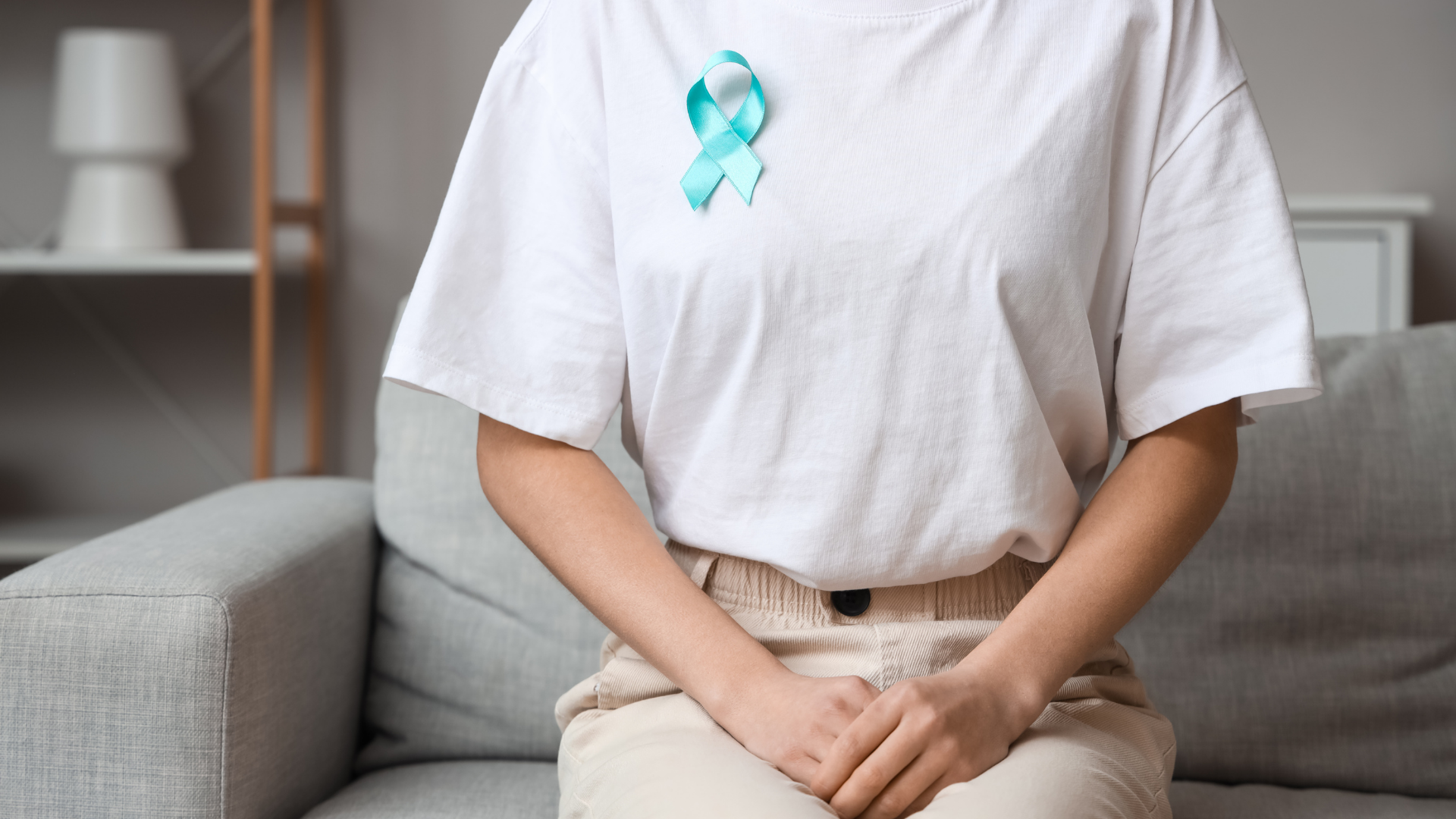
An at-home option for cervical cancer screening breaks down barriers to care and offers the same level of precision as screening in the clinic.