ACCC association of cancer care centers
Join/Renew
Login
Join/Renew
Login
Education & Resources
ACCC eXchange LogInCorporate Member Sponsored ResourcesPresentations & AbstractsPresident's ThemeACCC Connect eLearning LogIn
Publications
Oncology IssuesPatient Assistance & Reimbursement GuideTrending Now in Cancer Care
Events
2026 ACCC Leadership SummitAnnual Meeting & Cancer Center Business SummitCapitol Hill DayNational Oncology ConferenceOncology Reimbursement MeetingsOncology State Society Meetings
Policy & Advocacy
2024 Policy Wrap-Up and ACCC 2025 Policy PrioritiesLetters & StatementsAccess, Payment & Reimbursement ReformWhite Bagging & Brown BaggingAdvocacy ResourcesCancer Moonshot
Membership
Join | RenewWho We AreMembership Types & BenefitsCorporate MembersACCC Member Portal FAQMember Directory
Partners
Oncology State SocietiesPartner OrganizationsCME
News
News ReleasesAdvocacy News ReleasesOncology News
About ACCC
Timeline / 50th Anniversary2025 Impact ReportACCC Innovator AwardsACCC FellowsACCC Senior Staff
Breast CancerMetastatic Breast Cancer
Gastrointestinal CancerBiliary Tract CancerColorectal CancerGastric CancerLiver Cancer
Genitourinary CancerBladder CancerProstate CancerRenal Cell Carcinoma
Gynecologic CancerOvarian Cancer
Head & Neck Cancer
Hematologic MalignanciesAcute Lymphocytic Leukemia (ALL)Acute Myeloid Leukemia (AML)Chronic Lymphocytic Leukemia (CLL)Mantle Cell Lymphoma (MCL)Multiple Myeloma (MM)Myelodysplastic Syndromes (MDS)
Lung CancerNon-Small Cell Lung Cancer (NSCLC)Small Cell Lung Cancer (SCLC)
Sarcoma
Skin CancerMelanomaNon-Melanoma Skin Cancers (NMSC)
Clinical Practice & TreatmentCancer DiagnosticsCare CoordinationEHR Integration for Biomarker TestingQuality Improvement Collaboration: Integration of Precision Medicine in Community OncologyTreatment
Financial NavigationFAN Boot CampFinancial Advocacy Network (FAN) Resource LibraryPatient Assistance & Reimbursement GuidePrior Authorization
Health Equity & Access3, 2, 1, Go! Practical Solutions for Addressing Cancer Care DisparitiesAppalachian Community Cancer AllianceOncology Advanced PractitionersPersonalizing Care for Patients of All BackgroundsSocial Drivers of Health
Patient-Centered CareAddressing Care Disparities for VeteransAdolescent and Young Adult (AYA)Care Action Plans for People with CancerDermatologic ToxicitiesEmpowering CaregiversGeriatric OncologyHealth LiteracyNutritionOncology PharmacyPatient NavigationPsychosocial Care in OncologyShared Decision-MakingSupportive CareSurvivorship Care
Practice Management & OperationsCancer Program FundamentalsLeadership Sustainment and Engagement VideosOncology Practice Transformation and Integration CenterOncology Team Resiliency
ResearchACCC Community Oncology Research Institute (ACORI)
Technology & InnovationTelehealth & Digital Medicine
ACCCBuzz Blog
CANCER BUZZ Podcast
Oncology Issues
Join/Renew
Login
Breast CancerMetastatic Breast Cancer
Gastrointestinal CancerBiliary Tract CancerColorectal CancerGastric CancerLiver Cancer
Genitourinary CancerBladder CancerProstate CancerRenal Cell Carcinoma
Gynecologic CancerOvarian Cancer
Head & Neck Cancer
Hematologic MalignanciesAcute Lymphocytic Leukemia (ALL)Acute Myeloid Leukemia (AML)Chronic Lymphocytic Leukemia (CLL)Mantle Cell Lymphoma (MCL)Multiple Myeloma (MM)Myelodysplastic Syndromes (MDS)
Lung CancerNon-Small Cell Lung Cancer (NSCLC)Small Cell Lung Cancer (SCLC)
Sarcoma
Skin CancerMelanomaNon-Melanoma Skin Cancers (NMSC)
Clinical Practice & TreatmentCancer DiagnosticsCare CoordinationEHR Integration for Biomarker TestingQuality Improvement Collaboration: Integration of Precision Medicine in Community OncologyTreatment
Financial NavigationFAN Boot CampFinancial Advocacy Network (FAN) Resource LibraryPatient Assistance & Reimbursement GuidePrior Authorization
Health Equity & Access3, 2, 1, Go! Practical Solutions for Addressing Cancer Care DisparitiesAppalachian Community Cancer AllianceOncology Advanced PractitionersPersonalizing Care for Patients of All BackgroundsSocial Drivers of Health
Patient-Centered CareAddressing Care Disparities for VeteransAdolescent and Young Adult (AYA)Care Action Plans for People with CancerDermatologic ToxicitiesEmpowering CaregiversGeriatric OncologyHealth LiteracyNutritionOncology PharmacyPatient NavigationPsychosocial Care in OncologyShared Decision-MakingSupportive CareSurvivorship Care
Practice Management & OperationsCancer Program FundamentalsLeadership Sustainment and Engagement VideosOncology Practice Transformation and Integration CenterOncology Team Resiliency
ResearchACCC Community Oncology Research Institute (ACORI)
Technology & InnovationTelehealth & Digital Medicine
ACCCBuzz Blog
CANCER BUZZ Podcast
Oncology Issues
    • Education & Resources
    • Publications
    • Events
    • Policy & Advocacy
    • Membership
    • Partners
    • News
    • About ACCC
ACCC association of cancer care centers
1801 Research Boulevard, Suite 400, Rockville, MD 20850
Tel: 301.984.9496 Fax: 301.770.1949 Email Us
Contact UsVolunteers
Advertise
Career Center
Terms and Conditions
Privacy Policy
ACCC Rebranding
Copyright © 2026 Association of Cancer Care Centers. All Rights Reserved.
Advertisement

Blog

Article

November 5, 2019

Why the Stories We Tell Matter

Why the Stories We Tell Matter

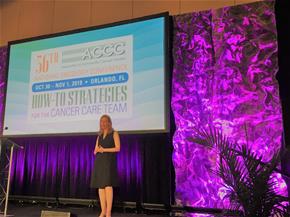
ACCC 36th National Oncology Conference featured speaker author and journalist Mary Elizabeth Williams held the packed room rapt with the story of her patient experience. She was diagnosed and treated for stage II melanoma in 2010. One year later, the cancer returned. This time the melanoma was stage IV. At that time, patients with stage IV melanoma had about a five percent chance of surviving five years, Williams said.

And yet, nine years later (including two years on a clinical trial) Mary Elizabeth Williams told attendees she remains cancer-free. In a frank and down-to-earth talk titled, “Results Not Typical,” Williams shared her experiences of going through treatment as a mother with young children and one of the first patients recruited for an immuno-oncology combination drug therapy clinical trial. “I’m still considered an exceptional responder, which I love because I’m Type A,” said Williams. But she added, “I hope and pray that there will come a day very soon that what happened to me won’t be considered exceptional.”

“How did I win the cancer Powerball?” asked Williams. “I’m white. I’m college educated. I live in Manhattan, a subway ride away from one of the best cancer facilities in the world. I had no other pre-existing conditions. I’m in great health. I trained for and ran a marathon while I was in treatment. I’m a journalist trained for asking questions [as part of my profession] with a flexible job and a supportive husband. I was in a checkpoint inhibitor trial under the direction of a physician who is a Nobel Prize winner. I’m not the norm.”

Results that are not typical bring responsibility, Williams said. One responsibility that she and oncology care providers have to remember: “I don’t represent the patient population. I don’t represent the patient experience. Not even close. Not at all.”

Williams was reluctant, at first, to join a support group. But conversation with a friend led to the realization that she wasn’t the only family member who might need “not to be fine” all the time. As a member of Gilda’s Club, Williams listened to patients’ stories about how long it took to get to treatment and about spouses getting fired for taking too much time off work. “Stories about raising your kids, taking care of your parents, and trying to hang on to your job,” she said. “And if you’re interested in clinical trials, [the struggle to] just find out about them.”

While Williams is incredibly grateful for the care she received and the scientific advances and clinical trial opportunity that led to “results not typical,” she closed out her remarks with a heartfelt reminder that “the first line of defense [against cancer] is going to be communication.”

“We’re hyped up about data, genetic testing, AI, and I’m totally down for all that,” affirmed Williams. “But I also know at the base of everything we need to be looking at the patients, the real patients.” For clinical trials to become more inclusive, the barriers to access must come down: patient distrust or wariness of clinical trials, cumbersome and lengthy enrollment processes, and lack of sufficient support on both the patient and clinical level.

“I had a great team of the best physicians in the world, and I was completely overwhelmed by my 23-page consent form. I signed that document, and I barely knew what it meant. . . so talking to patients in their own language is so important.”

In the end, Williams says communication boils down to “making sure patients and providers are on the same page. Telling the same stories, because stories are how we make decisions. Communication is about empathy and being clear. It’s not optional.”
_________________________________________________
Mary Elizabeth Williams is author of A Series of Catastrophes and Miracles: A True Story of Love, Science, and Cancer, part memoir and part a behind-the-scenes look at the new world of scientific research.