
As it did other healthcare systems, the COVID-19 pandemic hit ChristianaCare unexpectedly. But the members of ChristianaCare’s Community Health Outreach and Education team had already laid critical groundwork that enabled them to quickly reach local at-risk and vulnerable populations when they needed it most.
Reaching the Underserved
ChristianaCare’s Community Health Outreach and Education Program brings to the population it serves community-based cancer education, awareness, and screening. Serving the state of Delaware and its surrounding areas for more than 15 years, the program’s focus is on bringing cancer awareness to local racial and ethnic minorities, increasing cancer screenings, and enabling access to local cancer support programs.
Multicultural and bilingual outreach staff at ChristianaCare provide cancer control programs to individuals at various community spaces, including a farmer’s market, faith-based and community centers, schools, camps, and health fairs. Each year, the program reaches more than 15,000 individuals through evidence-based or best practice model programs.
Pivoting From Cancer to COVID-19
Nora C. Katurakes, RN, MSN, OCN, is the manager of Community Health Outreach and Education at the Helen F. Graham Cancer Center & Research Institute at ChristianaCare.

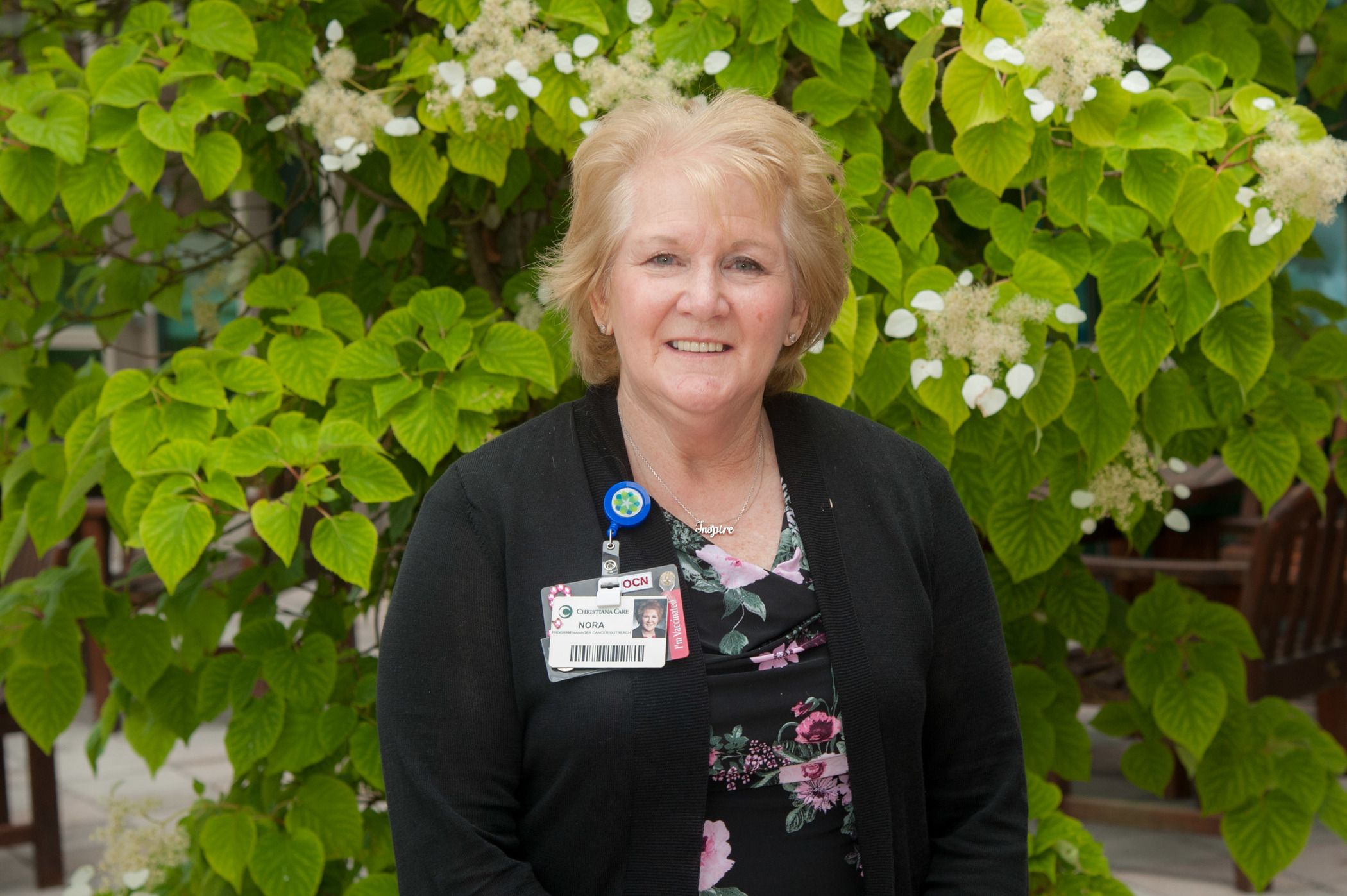
Nora C. Katurakes, RN, MSN, OCN—manager of Community Health Outreach and Education at the Helen F. Graham Cancer Center & Research Institute at ChristianaCare in Newark, Del.—leads a team of nine that includes oncology nurse navigators, bilingual lay navigators, community health advocates, and cancer prevention experts.
As the COVID-19 pandemic began to take the form of a major health crisis, the outreach team at ChristianaCare shifted its focus from its cancer-related programs to COVID-19-related management, prevention, and community outreach. Some on Katurakes’ team—experienced nurses and prevention experts—were moved to other areas of the hospital that were now under-resourced to provide temporary support for daily operations, and the hospital ultimately had to cancel all community events for the foreseeable future. The local Newcastle Farmer’s Market—which had served as a reliable outpost for providing cancer prevention and screening services to local African-American, Hispanic, and Asian communities—was also shuttered for most of April and May. When it reopened, Katurakes delivered flyers translated into Spanish and Mandarin Chinese addressing COVID-19—rather than cancer—prevention practices.
Determining Community Needs
The outreach team worked with ChristianaCare’s Office of Health Equity to proactively contact at-risk patients. They asked these patients specific questions to determine current critical needs, prioritize cancer care, and gather data to support providing additional resources. “We needed to provide access and connect these populations to resources in the community,” says Katurakes.
Team members began by calling patients who were already undergoing cancer treatment and had appointments scheduled, who had missed an appointment, or who were enrolled in one of ChristianaCare’s outreach programs. They asked patients a series of basic questions to determine their most pressing needs: a specific or urgent health concern, a cancer screening, food, or perhaps even diapers. Patients were told how to prepare for upcoming appointments, taught COVID-19 prevention measures, and were instructed how to connect with other resources in the community if needed.
Leveraging Existing Channels
The pandemic has made ChristianaCare’s social media channels increasingly important for disseminating to local Spanish- and Mandarin Chinese-speaking populations both culturally appropriate updates on cancer programs and information about COVID-19. Luisa E. Ortiz-Marquez, manager of the Healthy LatinX Families program at ChristianaCare, leveraged the Facebook group she had created for the local Spanish-speaking community and for “promotoras”—trained, Spanish-speaking health promoters—to distribute COVID-19 prevention information translated into Spanish.
Another patient navigator on the outreach team, Xiangfen Gu, who is fluent in English and Mandarin Chinese, use WeChat—a preferred social media platform within the Asian community—to disseminate both cancer education and COVID-19 prevention information. Members of the outreach and education team also used ChristianaCare’s existing Facebook page to communicate the location of food banks, churches that provide school supplies, information on meal pick-ups, and—when they became available—COVID-19 testing sites.
Circling Back to Cancer Outreach
Like many others, Katurakes did not expect the pandemic to persist as long as it has. Now her team is reexamining how they will move forward, while also circling back to the priorities that existed before the pandemic: providing multicultural cancer awareness and prevention services to the community.
As in every other healthcare setting, screenings are down at ChristianaCare. Katurakes says she is concerned about patients missing appointments and about reaching those most at risk during the pandemic. For example, African-Americans in Delaware are at increased risk of mortality from triple-negative breast cancer. A free educational program focusing on the disease and its impact on the African-American community, “The Story of Brenda,” was set to launch this year. ChristianaCare has decided to move ahead with a virtual education pilot.
However, while the community at large is using virtual tools more than ever, not everyone has access to them, particularly those specifically targeted by many of these programs. “If people are living in a tech desert in the city of Wilmington, or if they don’t have a cell phone, you’re not going to be able to reach them,” says Katurakes.
The focus of outreach and education programs at cancer centers across the country will continue to shift and evolve as the pandemic progresses. As virtual tools and telehealth become more the norm rather than the exception, those in underserved and at-risk communities who are unable to access these technologies will continue to face barriers to quality cancer care, and to healthcare overall. Outreach and education teams that are already deeply connected to underserved multicultural communities will likely have increasingly pivotal roles in working toward bridging the racial, ethnic, and cultural divides that exist in healthcare delivery today.