Oncology nurses strive to reduce the burden placed on patients during care, stretching out a hand when they can to help patients navigate care. Robin Atkins, RN, OCN, is a symptom management triage nurse, who works tirelessly over the telephone to help patients get the support they need.
Nothing is more distressing to an oncology nurse than to realize an opportunity was missed to improve an unfortunate patient experience. Oncology nurses are in tune to many nuances that concern each of our patients: those who are in denial about their medical circumstances, who are tearful at each visit, whose caregiver is waiting in the lobby, who need transportation assistance, who are food insecure, who are going through a divorce, or who are struggling with maintaining their role in their home or within society.
This perceptive knowledge is inherently holistic and incorporated into the nursing care plan—a care plan underway whether patients are present in the office or not. To discover something formerly unknown is immediately followed by the thought, “If I had known that, I would have….” What we discern through our patient encounters factors into how we interact with them, how we phrase our words, and how much and what kind of time we invest into each visit and into the relationship. To discover too late that an inaction or delayed response made a patient experience worse creates moral distress. Is it unrealistic to expect to be there to soften every blow for patients? Maybe not. But as oncology nurses, we hold ourselves accountable to the highest form of presence. When our hands do not reach, we let our patients and ourselves down.
On Call
As a symptom management oncology triage nurse, my work is done over the telephone. Even after I hang up, many patients remain on my mind. Each day, I create a follow-up list of patients and/or caregivers who would benefit from check-in call later. Many of these calls are for psychosocial support; most folks know that I’m going to call because I established this plan when last speaking with them. Some express their appreciation that their circumstances matter to me enough to call seemingly out of the blue.
However, for those individuals who are expecting my call, they are very grateful that I keep my word and often will say to me, “People say they are going to call you back but never do.” And I believe them. What a despairing thing to hear. It would be easy to concede to time constraints and do only what your time will allow. But as a wise former nursing director once said to me, “You make time for what matters to you.” I would say that in this case, we make time for what matters to our patients because our patients matter to us.
Patient Navigation
Oncology nurse navigators (ONNs) provide an enormous amount of psychosocial support to those in the outpatient setting. Patients and their caregivers are reassured when they have an assigned nurse who is there for them and whose direct phone number is available to call for any needs. I, too, give my direct number out to those who require frequent triage encounters for toxicity issues, self-care support, and education needs. By doing this, patients feel like they’ve been given a lifeline.
Otherwise, it can be overwhelming to patients when they have to go through multiple automated greetings and option choices to reach a provider, thus leading them to not want to reach out to their care team when in need. At Virginia Oncology Associates, ONNs are vital to cohesive continuity of care because they bridge the gap between the cancer care team (e.g., medical oncologists and oncology nurses in the office) and the patient and caregiver at home. These nurse navigators work collaboratively with social workers, triage nurses, in-office dispensary, the home health or hospice agency, and other outpatient liaisons. As a triage nurse, I depend on ONNs’ relationships with these entities to facilitate care provisions as quickly as possible, especially when a patient is transitioning to hospice care.
A Patient Story
Despite our best intentions, there are times when a patient’s need goes unmet. An example from my past clinical experience occurred when a patient needed urgent hospice care, but the attending provider identified the wrong patient in their notification to the ONN. In coordinating the care, the ONN did not realize that the patient they were calling was the wrong patient who needed to be transferred. Even though the provider made an honest mistake, the consequences were devastating to all.
In the end, the patient who was in need of hospice care died without it, and the patient who was incorrectly identified was horrified when informed by the ONN that their provider ordered hospice for them. The ONN was deeply distressed and shaken by these outcomes—an experience which impacts them to this day.
There are many reasons for missed care. But for an oncology nurse, no reason will truly alleviate the moral distress that’s created by such circumstances, even when those circumstances are beyond our control. Grieving occurs in the spirit of the oncology nurse and is shared by colleagues and the profession. Unfortunately, it’s not a matter of if such situations will occur, but rather when.
In today’s very busy outpatient cancer treatment centers, nursing and administrative leadership’s awareness of such risks can result in better support for the oncology nurses who are managing multiple aspects of patients’ care. In turn, this will hopefully lead to a work environment designed to minimize the potential for missed care events and maximize the patient experience.
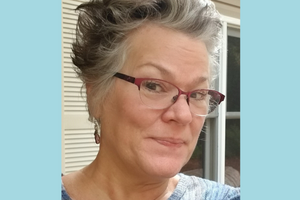
Robin Atkins, RN, OCN, is a symptom management triage nurse with Virginia Oncology Associates in Norfolk. She is a self-identified southern Virginian and proud baby boomer. Atkins graduated from Riverside School of Professional Nursing in 1985, where she received her RN, and has worked in outpatient oncology since 1988. She and her husband have two adult children, seven grandchildren, and two cats, Gracie and Annie. She enjoys the serenity of living in the country, RV camping with friends in Virginia’s state parks, and canoeing.
More From Robin's Notes on Nursing Series: