
ACCC association of cancer care centers
Join/Renew
Login
Join/Renew
Login
Education & Resources
ACCC eXchange LogInCorporate Member Sponsored ResourcesPresentations & AbstractsPresident's ThemeACCC Connect eLearning LogIn
Publications
Oncology IssuesPatient Assistance & Reimbursement GuideTrending Now in Cancer Care
Events
2026 ACCC Leadership SummitAnnual Meeting & Cancer Center Business SummitCapitol Hill DayNational Oncology ConferenceOncology Reimbursement MeetingsOncology State Society Meetings
Policy & Advocacy
2024 Policy Wrap-Up and ACCC 2025 Policy PrioritiesLetters & StatementsAccess, Payment & Reimbursement ReformWhite Bagging & Brown BaggingAdvocacy ResourcesCancer Moonshot
Membership
Join | RenewWho We AreMembership Types & BenefitsCorporate MembersACCC Member Portal FAQMember Directory
Partners
Oncology State SocietiesPartner OrganizationsCME
News
News ReleasesAdvocacy News ReleasesOncology News
About ACCC
Timeline / 50th Anniversary2025 Impact ReportACCC Innovator AwardsACCC FellowsACCC Senior Staff
Breast CancerMetastatic Breast Cancer
Gastrointestinal CancerBiliary Tract CancerColorectal CancerGastric CancerLiver Cancer
Genitourinary CancerBladder CancerProstate CancerRenal Cell Carcinoma
Gynecologic CancerOvarian Cancer
Head & Neck Cancer
Hematologic MalignanciesAcute Lymphocytic Leukemia (ALL)Acute Myeloid Leukemia (AML)Chronic Lymphocytic Leukemia (CLL)Mantle Cell Lymphoma (MCL)Multiple Myeloma (MM)Myelodysplastic Syndromes (MDS)
Lung CancerNon-Small Cell Lung Cancer (NSCLC)Small Cell Lung Cancer (SCLC)
Sarcoma
Skin CancerMelanomaNon-Melanoma Skin Cancers (NMSC)
Clinical Practice & TreatmentCancer DiagnosticsCare CoordinationEHR Integration for Biomarker TestingQuality Improvement Collaboration: Integration of Precision Medicine in Community OncologyTreatment
Financial NavigationFAN Boot CampFinancial Advocacy Network (FAN) Resource LibraryPatient Assistance & Reimbursement GuidePrior Authorization
Health Equity & Access3, 2, 1, Go! Practical Solutions for Addressing Cancer Care DisparitiesAppalachian Community Cancer AllianceOncology Advanced PractitionersPersonalizing Care for Patients of All BackgroundsSocial Drivers of Health
Patient-Centered CareAddressing Care Disparities for VeteransAdolescent and Young Adult (AYA)Care Action Plans for People with CancerDermatologic ToxicitiesEmpowering CaregiversGeriatric OncologyHealth LiteracyNutritionOncology PharmacyPatient NavigationPsychosocial Care in OncologyShared Decision-MakingSupportive CareSurvivorship Care
Practice Management & OperationsCancer Program FundamentalsLeadership Sustainment and Engagement VideosOncology Practice Transformation and Integration CenterOncology Team Resiliency
ResearchACCC Community Oncology Research Institute (ACORI)
Technology & InnovationTelehealth & Digital Medicine
ACCCBuzz Blog
CANCER BUZZ Podcast
Oncology Issues
Join/Renew
Login
Breast CancerMetastatic Breast Cancer
Gastrointestinal CancerBiliary Tract CancerColorectal CancerGastric CancerLiver Cancer
Genitourinary CancerBladder CancerProstate CancerRenal Cell Carcinoma
Gynecologic CancerOvarian Cancer
Head & Neck Cancer
Hematologic MalignanciesAcute Lymphocytic Leukemia (ALL)Acute Myeloid Leukemia (AML)Chronic Lymphocytic Leukemia (CLL)Mantle Cell Lymphoma (MCL)Multiple Myeloma (MM)Myelodysplastic Syndromes (MDS)
Lung CancerNon-Small Cell Lung Cancer (NSCLC)Small Cell Lung Cancer (SCLC)
Sarcoma
Skin CancerMelanomaNon-Melanoma Skin Cancers (NMSC)
Clinical Practice & TreatmentCancer DiagnosticsCare CoordinationEHR Integration for Biomarker TestingQuality Improvement Collaboration: Integration of Precision Medicine in Community OncologyTreatment
Financial NavigationFAN Boot CampFinancial Advocacy Network (FAN) Resource LibraryPatient Assistance & Reimbursement GuidePrior Authorization
Health Equity & Access3, 2, 1, Go! Practical Solutions for Addressing Cancer Care DisparitiesAppalachian Community Cancer AllianceOncology Advanced PractitionersPersonalizing Care for Patients of All BackgroundsSocial Drivers of Health
Patient-Centered CareAddressing Care Disparities for VeteransAdolescent and Young Adult (AYA)Care Action Plans for People with CancerDermatologic ToxicitiesEmpowering CaregiversGeriatric OncologyHealth LiteracyNutritionOncology PharmacyPatient NavigationPsychosocial Care in OncologyShared Decision-MakingSupportive CareSurvivorship Care
Practice Management & OperationsCancer Program FundamentalsLeadership Sustainment and Engagement VideosOncology Practice Transformation and Integration CenterOncology Team Resiliency
ResearchACCC Community Oncology Research Institute (ACORI)
Technology & InnovationTelehealth & Digital Medicine
ACCCBuzz Blog
CANCER BUZZ Podcast
Oncology Issues
    • Education & Resources
    • Publications
    • Events
    • Policy & Advocacy
    • Membership
    • Partners
    • News
    • About ACCC
ACCC association of cancer care centers
1801 Research Boulevard, Suite 400, Rockville, MD 20850
Tel: 301.984.9496 Fax: 301.770.1949 Email Us
Contact UsVolunteers
Advertise
Career Center
Terms and Conditions
Privacy Policy
ACCC Rebranding
Copyright © 2026 Association of Cancer Care Centers. All Rights Reserved.
Advertisement

Blog

Article

October 24, 2018

Journey to the “Big E”

Amanda Patton, <em>ACCC Communications</em>

Journey to the “Big E”

Re-structuring care delivery to be more patient centered is among the many demands the U.S. healthcare system is striving to meet. The imperative to center care around engaged patients is recognized by regulators, health systems, hospitals, professional societies, providers, payers, and patients and families—and it is a central component of value-based care.

Of the Institute for Healthcare Improvement Triple Aim domains to achieve optimal health system performance, the first is: Improve the patient experience of care (including quality and satisfaction).

At last week’s 35th ACCC National Oncology Conference in Phoenix, featured speaker Julie Oehlert, DNP, RN, took issue with patient “satisfaction” as a metric for the patient experience. Healthcare “has gone down the customer satisfaction route as a measure of quality,” she said, “. . . can patients [ever] be ‘satisfied’ with a diagnosis of cancer?” Even though many healthcare organizations have moved from “patient satisfaction” to the concept of patient experience, “We didn’t move our strategies or tactics to measure this. We used the same old customer service tools.”

To move the needle on patient experience, she believes we must start by recognizing that “healthcare is a relationship between those who provide care and those who seek care.”

Recalling an article by Thomas Bodenheimer, MD, and Christine Sinsky, MD, (Annals of Family Medicine, 2014) that makes the case for moving from the Triple Aim to the Quadruple Aim, with the addition of “improving the work life of health care clinicians and staff,” Oehlert concurs. “You won’t hit the IHI Triple Aim unless you add the Quadruple Aim of improving health and well-being of staff.”

Today, the issues of burnout and the well-being of clinicians and healthcare team members are a national concern. In 2017 the National Academy of Medicine established its Action Collaborative on Clinician Well-Being and Resilience. The Collaborative's website outlines multiple factors contributing to the problems of burnout and stress, acknowledging that “Organizational leadership, culture, and policies can play a significant role in burnout and well-being.”

Yet in a pop-up poll during Dr. Oehlert’s presentation, 93% of conference attendees said that their cancer program or practice did not measure staff or clinician burnout.

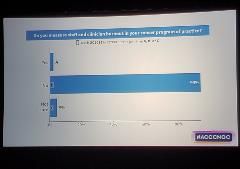
Pop-up polling 2

This scenario is something Dr. Oehlert hopes to see turn around. At Vidant Health, the “journey to promote a caring and compassionate culture,” is already underway. At the health system, she is responsible not only for the patients’ experience but also for the team members’ experience. The focus is on the “BIG E—Everyone’s Experience Matters,” she said. “How we [the healthcare team] experience each other begets the patient experience.”

___________________________________________________

ACCC President Tom Gallo’s presidential theme is “Reflect, Renew, Reignite: Building a Resilient Oncology Team in Your Community.” How is your cancer program addressing team well-being and fostering resilience? If your cancer program has a wellness initiative underway, contact us. Be sure to visit the NAM Action Collaborative Knowledge Hub for resources and tools.