ACCC association of cancer care centers
Join/Renew
Login
Join/Renew
Login
Education & Resources
ACCC eXchange LogInCorporate Member Sponsored ResourcesPresentations & AbstractsPresident's ThemeACCC Connect eLearning LogIn
Publications
Oncology IssuesPatient Assistance & Reimbursement GuideTrending Now in Cancer Care
Events
2026 ACCC Leadership SummitAnnual Meeting & Cancer Center Business SummitCapitol Hill DayNational Oncology ConferenceOncology Reimbursement MeetingsOncology State Society Meetings
Policy & Advocacy
2024 Policy Wrap-Up and ACCC 2025 Policy PrioritiesLetters & StatementsAccess, Payment & Reimbursement ReformWhite Bagging & Brown BaggingAdvocacy ResourcesCancer Moonshot
Membership
Join | RenewWho We AreMembership Types & BenefitsCorporate MembersACCC Member Portal FAQMember Directory
Partners
Oncology State SocietiesPartner OrganizationsCME
News
News ReleasesAdvocacy News ReleasesOncology News
About ACCC
Timeline / 50th Anniversary2025 Impact ReportACCC Innovator AwardsACCC FellowsACCC Senior Staff
Breast CancerMetastatic Breast Cancer
Gastrointestinal CancerBiliary Tract CancerColorectal CancerGastric CancerLiver Cancer
Genitourinary CancerBladder CancerProstate CancerRenal Cell Carcinoma
Gynecologic CancerOvarian Cancer
Head & Neck Cancer
Hematologic MalignanciesAcute Lymphocytic Leukemia (ALL)Acute Myeloid Leukemia (AML)Chronic Lymphocytic Leukemia (CLL)Mantle Cell Lymphoma (MCL)Multiple Myeloma (MM)Myelodysplastic Syndromes (MDS)
Lung CancerNon-Small Cell Lung Cancer (NSCLC)Small Cell Lung Cancer (SCLC)
Sarcoma
Skin CancerMelanomaNon-Melanoma Skin Cancers (NMSC)
Clinical Practice & TreatmentCancer DiagnosticsCare CoordinationEHR Integration for Biomarker TestingQuality Improvement Collaboration: Integration of Precision Medicine in Community OncologyTreatment
Financial NavigationFAN Boot CampFinancial Advocacy Network (FAN) Resource LibraryPatient Assistance & Reimbursement GuidePrior Authorization
Health Equity & Access3, 2, 1, Go! Practical Solutions for Addressing Cancer Care DisparitiesAppalachian Community Cancer AllianceOncology Advanced PractitionersPersonalizing Care for Patients of All BackgroundsSocial Drivers of Health
Patient-Centered CareAddressing Care Disparities for VeteransAdolescent and Young Adult (AYA)Care Action Plans for People with CancerDermatologic ToxicitiesEmpowering CaregiversGeriatric OncologyHealth LiteracyNutritionOncology PharmacyPatient NavigationPsychosocial Care in OncologyShared Decision-MakingSupportive CareSurvivorship Care
Practice Management & OperationsCancer Program FundamentalsLeadership Sustainment and Engagement VideosOncology Practice Transformation and Integration CenterOncology Team Resiliency
ResearchACCC Community Oncology Research Institute (ACORI)
Technology & InnovationTelehealth & Digital Medicine
ACCCBuzz Blog
CANCER BUZZ Podcast
Oncology Issues
Join/Renew
Login
Breast CancerMetastatic Breast Cancer
Gastrointestinal CancerBiliary Tract CancerColorectal CancerGastric CancerLiver Cancer
Genitourinary CancerBladder CancerProstate CancerRenal Cell Carcinoma
Gynecologic CancerOvarian Cancer
Head & Neck Cancer
Hematologic MalignanciesAcute Lymphocytic Leukemia (ALL)Acute Myeloid Leukemia (AML)Chronic Lymphocytic Leukemia (CLL)Mantle Cell Lymphoma (MCL)Multiple Myeloma (MM)Myelodysplastic Syndromes (MDS)
Lung CancerNon-Small Cell Lung Cancer (NSCLC)Small Cell Lung Cancer (SCLC)
Sarcoma
Skin CancerMelanomaNon-Melanoma Skin Cancers (NMSC)
Clinical Practice & TreatmentCancer DiagnosticsCare CoordinationEHR Integration for Biomarker TestingQuality Improvement Collaboration: Integration of Precision Medicine in Community OncologyTreatment
Financial NavigationFAN Boot CampFinancial Advocacy Network (FAN) Resource LibraryPatient Assistance & Reimbursement GuidePrior Authorization
Health Equity & Access3, 2, 1, Go! Practical Solutions for Addressing Cancer Care DisparitiesAppalachian Community Cancer AllianceOncology Advanced PractitionersPersonalizing Care for Patients of All BackgroundsSocial Drivers of Health
Patient-Centered CareAddressing Care Disparities for VeteransAdolescent and Young Adult (AYA)Care Action Plans for People with CancerDermatologic ToxicitiesEmpowering CaregiversGeriatric OncologyHealth LiteracyNutritionOncology PharmacyPatient NavigationPsychosocial Care in OncologyShared Decision-MakingSupportive CareSurvivorship Care
Practice Management & OperationsCancer Program FundamentalsLeadership Sustainment and Engagement VideosOncology Practice Transformation and Integration CenterOncology Team Resiliency
ResearchACCC Community Oncology Research Institute (ACORI)
Technology & InnovationTelehealth & Digital Medicine
ACCCBuzz Blog
CANCER BUZZ Podcast
Oncology Issues
    • Education & Resources
    • Publications
    • Events
    • Policy & Advocacy
    • Membership
    • Partners
    • News
    • About ACCC
ACCC association of cancer care centers
1801 Research Boulevard, Suite 400, Rockville, MD 20850
Tel: 301.984.9496 Fax: 301.770.1949 Email Us
Contact UsVolunteers
Advertise
Career Center
Terms and Conditions
Privacy Policy
ACCC Rebranding
Copyright © 2026 Association of Cancer Care Centers. All Rights Reserved.
Advertisement

Blog

Article

October 24, 2023

Improving Care Delivery for Transplant-Ineligible Patients with Acute Myeloid Leukemia

Learn about key barriers in care coordination and therapy options for patients with AML who are not eligible for transplant and how providers can address them.
Improving Care Delivery for Transplant-Ineligible Patients with Acute Myeloid Leukemia

Acute myeloid leukemia (AML) develops in the bone marrow and quickly spreads into the blood and throughout the body. Although AML is considered rare (accounting for 1% of all cancer disease), approximately 20,380 new cases are diagnosed annually. Acute myeloid leukemia is the most common type of leukemia, and it is also the most fatal type. The five-year survival rate is 29% which equates to about 11,310 deaths each year. 

The preferred treatment for many adult patients with acute myeloid leukemia is induction therapy followed by hematopoietic cell transplant. While most patients will see complete remission following chemotherapy, many patients are unable to receive an allogeneic hematopoietic stem cell transplantation which prolongs post-remission survival. There are various factors that impact eligibility for transplant including age, financial hardship, access to language services, insufficient social support, lack of health insurance, among many others.

In addition, care coordination for patients in community care settings plays a major role in the availability of treatment options and ultimately, patient outcomes. For patients diagnosed with acute myeloid leukemia, particularly those who are ineligible for transplant, care coordination can impact access to specialist care, clinical trials, and cancer programs with advanced capabilities to treat patients.

How ACCC is Helping

The Association of Community Cancer Centers (ACCC), in partnership with HealthTree Foundation for Acute Myeloid Leukemia, has launched an education program, Achieving and Maintaining Better Outcomes for Patients with Acute Myeloid Leukemia. This program explores current barriers in care coordination and therapy options for patients who are ineligible for transplant, and highlights strategies and best practice guidelines to improve outcomes for patients with AML.

To better support an informed oncology community, ACCC has curated a series of video podcasts that provide timely information on treatment options for post-induction patients with acute myeloid leukemia, the role of continuation therapy for transplant-ineligible patients, proactive management of treatment-related adverse events, and strategies to improve treatment adherence by addressing disparities such as financial, socioeconomic, or provider shortages.

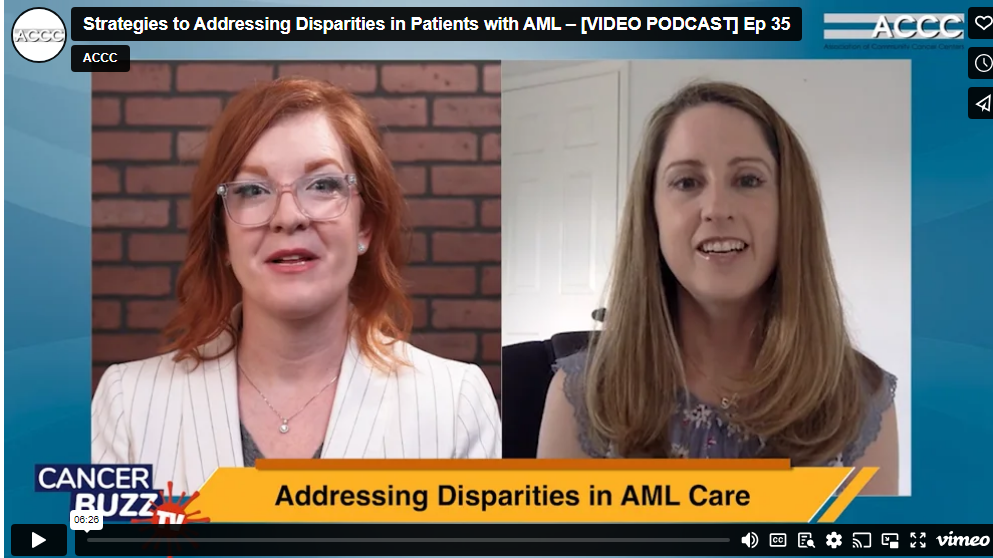
In the first video podcast of a 4-part series, CANCER BUZZ speaks with Keri Maher, DO, director of the Acute Leukemia Program and assistant professor at Virginia Commonwealth University’s Massey Cancer Center, about strategies to address disparities and optimize care and treatment options for patients with acute myeloid leukemia who do not receive a transplant. Listen in! Strategies to Addressing Disparities in Patients with AML – [VIDEO PODCAST] Ep 35

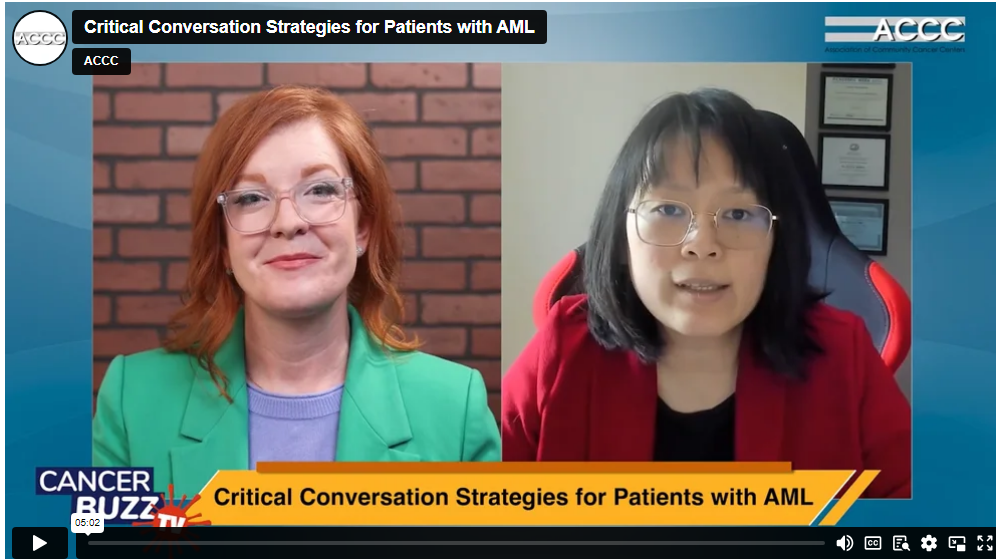
In the second video podcast of the series, CANCER BUZZ speaks with Melissa Kah Poh Loh, MBBCh, BAO, assistant professor of Geriatric Hematology and Oncology at the University of Rochester Medical Center’s Wilmot Cancer Institute about strategies to optimize critical conversations with patients with acute myeloid leukemia. Listen in! Critical Conversation Strategies for Patients with AML – [VIDEO PODCAST] Ep 37


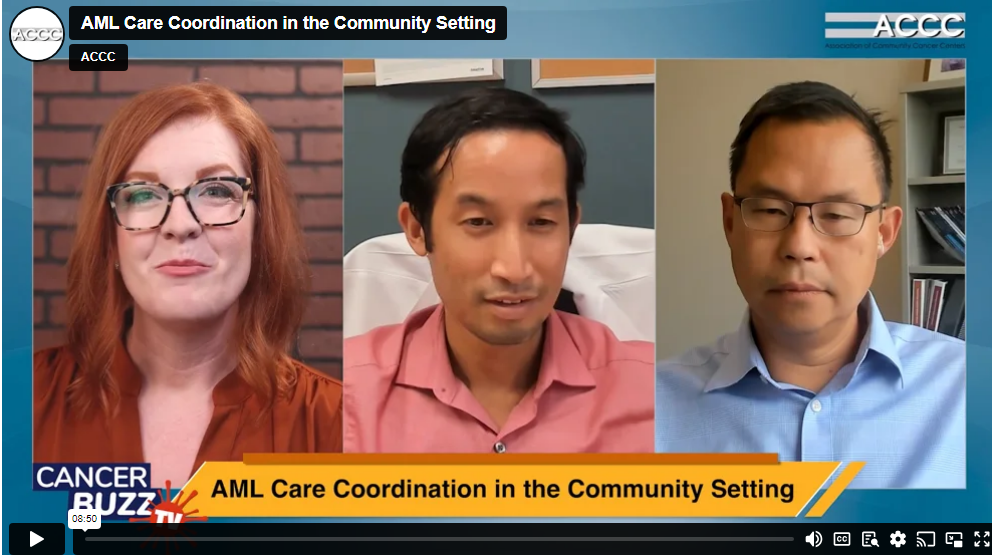
In the third video podcast, CANCER BUZZ speaks with Geoffrey Uy, MD, professor of Bone Marrow Transplantation and Leukemia at Washington University in St. Louis and Khoan Tuong Vu, MD, hematologist/oncologist at Texas Oncology, who share strategies and best practices for co-managing care for patients with acute myeloid leukemia. Listen in! AML Care Coordination in the Community Setting – [VIDEO PODCAST] Ep 39

Stay tuned for more on our fourth and final video podcast in the series by checking back on our website. You can also f ind these and other CANCER BUZZ podcasts/video podcasts on Apple Podcasts, Spotify, or wherever you get your podcasts.

This program is supported by Bristol Myers-Squibb.