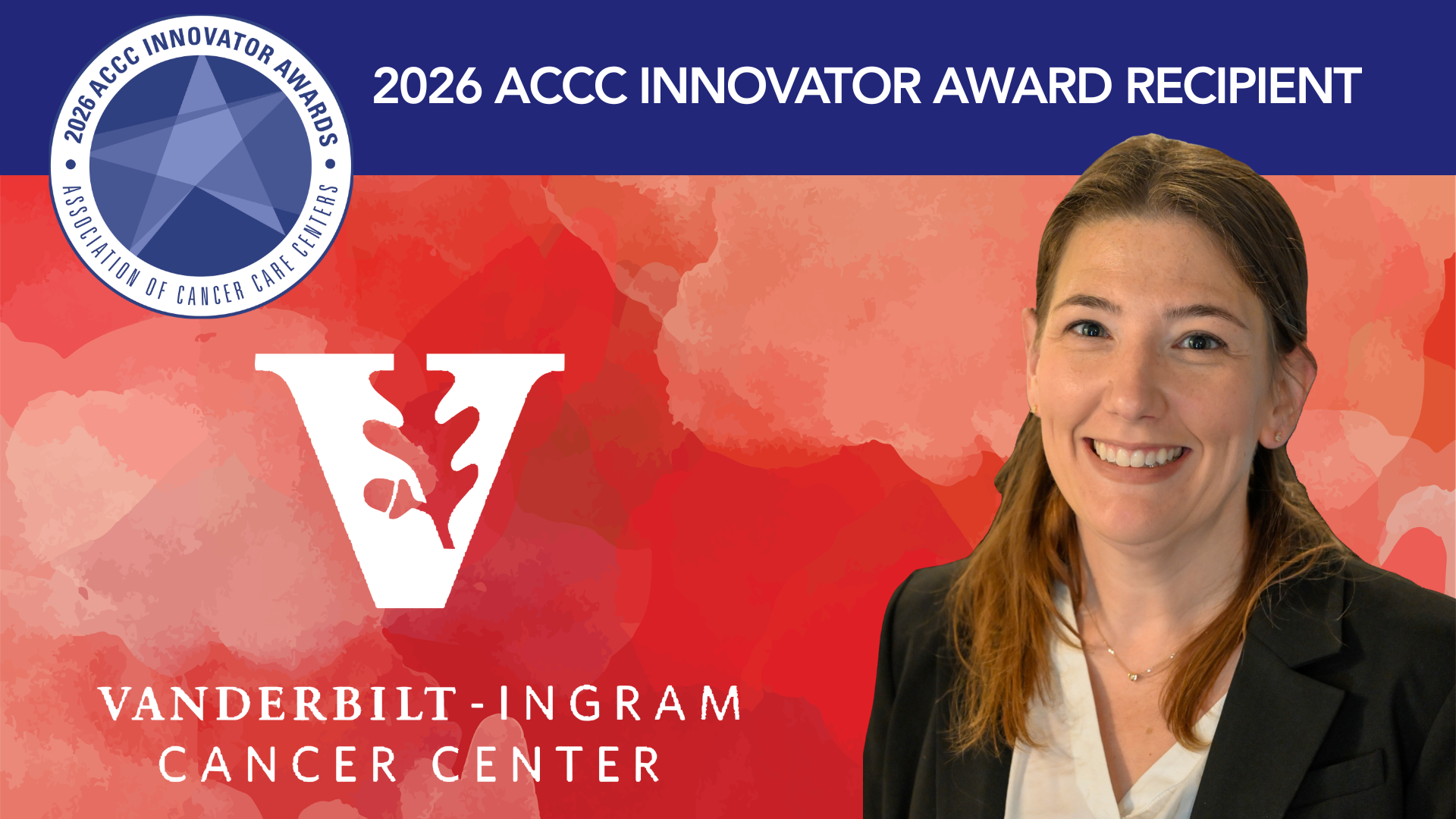
ACCCBuzz spotlights Munson Healthcare, Cowell Family Cancer Center in Traverse City, MI, one of the recipients of the 2024 ACCC Innovator Award.
This is the second blog post in a 6-part series recognizing the achievements of the 2024 ACCC Innovator Award winners before their in-depth sessions at the ACCC 41st National Oncology Conference. You can learn more about the innovations being recognized this year and those who pioneered them by joining ACCC in Minneapolis, Minnesota, from October 9-11, 2024.
The latest American Society of Clinical Oncology State of Oncology Practice in America survey revealed that only 7% of oncologists in the United States practice in rural areas. However, 20% of the oncology population resides in such communities. Consequently, these patients are subject to several health inequities—chief among them is a higher cancer-related mortality rate.
Determined to improve the quality of rural oncology care, Munson Healthcare, Cowell Family Cancer Center in Traverse City, MI, implemented a program where local, northern Michigan residents, could safely receive bispecific therapies close to home. For this initiative, the cancer center earned a 2024 Association of Cancer Care Centers (ACCC) Innovator Award. Looking forward to the ACCC 41st National Oncology Conference this fall, ACCCBuzz spoke to Courtney VanHouzen, PharmD, PGY-2 oncology resident, Munson Healthcare, Cowell Family Cancer Center to learn more about their center.
ACCCBuzz: How long has Munson Healthcare, Cowell Family Cancer Center been an ACCC member?
Dr. VanHouzen: Since the beginning, Cowell [Family Cancer Center] opened its doors in 2016 and at the beginning of 2017, we became a member.
ACCCBuzz: What do you love most about being an ACCC member?
Dr. VanHouzen: Innovation is at the heart of ACCC, and that resonates with a lot of our staff here. For example, our vice president of Cancer Care Services attended the [ACCC 39th] National Oncology Conference in 2022 and listened to one of the [ACCC Innovator Award winners] discuss their rapid diagnostic clinic, and we implemented that here last year. I was just talking to one of the nurse practitioners that run the program and they’re in the process of expanding it and hiring additional staff. We have already had approximately 133 referrals in our region through that program and we’ve rolled it out to the emergency department of most of our regional hospitals as well as our main ER [emergency room]. We are expanding it into the hospitals and then hopefully the primary care clinics [within Munson Healthcare]. Hearing what other people are doing and how they are able to be successful and in community settings is what we love the most.
ACCCBuzz: What makes your cancer center unique?
Dr. VanHouzen: Munson Healthcare is located in the top third of Michigan. We refer most of the UP [upper peninsula] as well as the upper third of Michigan, which comes out to be about the size of Delaware and Vermont combined. We have a huge region that we cover so we operate a hub-and-spoke model. Traverse City, our Munson Healthcare main center, which is where the Cowell Family Cancer Center is located is the main hub, but we have 6 infusion sites regionally within a few hours of the hub. So, we can better serve the region with those local sites, and we can conduct a lot of integrative care at our main hub. For a community cancer center, we are growing and trying to serve a very rural part of the state close to home. I think that’s a unique role we play.
ACCCBuzz: How have these traits helped you win this award?
Dr. VanHouzen: Being a community center that reaches far [in terms of distance] to serve its community, we don’t have a large academic center down the road.Because of that, I believe the multidisciplinary cancer care team must support each other.We have a lot of communication with our emergency and ICU [intensive care unit] departments, and our hospitalists,because those are going to be the providersthat come together to try and keep patients safe, local, and close to their families. I think the integrated culture we’ve fostered has allowed us to roll out bispecific therapy up here because it comes with a unique set of toxicities that medical oncologists may not be used to managing. Working together across departments to manage these patients is what allowed us to move forward with this innovation.
ACCCBuzz: ACCC President Nadine J. Barrett, PhD, MA, MS, centered her theme on Reimagining Community Engagement and Equity in Cancer. What does that look like to your program?
Dr. VanHouzen: I think this theme perfectly highlights the innovation of bispecific therapy. For our relapsed refractory myeloma and lymphoma patients, traditionally, the option was to go to CAR-T Therapy. Community cancer centers are not eager to do this as the toxicities are far more severe and require a higher degree of specialization. Our closest referral center would be Corewell Health in Grand Rapids but a lot of patients opt to go to the University of Michigan or Mayo Clinic. We serve a very rural community that lives on a fixed income, so for most of our patients, that’s simply not an option due to the financial toxicity. So, bispecific therapy is a revolution for our patients, it is equitable, and we can keep it close to home. That has always been the push behind this innovation, to be able to offer this treatment and keep patients in northern Michigan, where they want to be. The epitome of our innovation is equity.
ACCCBuzz: What can attendees expect from your session at the ACCC 41st National Oncology Conference?
Dr. VanHouzen: It is easy to say we want to do bispecific therapy in the community setting because it is more equitable and keeps people close to home, but the big question is how we do it and do it safely. There was a lot of hesitancy from our medical oncologists and rightfully so, they care for these patients and want to do good by them; they want to offer these therapies only if it’s something we can feasibly do. There is a cost element in doing any kind of new treatment, and you also worry about reimbursement. These are all elements I will address. My goal is to deliver a comprehensive tutorial on how to implement bispecific therapy treatment [in the community setting].