ACCC association of cancer care centers
Join/Renew
Login
Join/Renew
Login
Education & Resources
ACCC eXchange LogInCorporate Member Sponsored ResourcesPresentations & AbstractsPresident's ThemeACCC Connect eLearning LogIn
Publications
Oncology IssuesPatient Assistance & Reimbursement GuideTrending Now in Cancer Care
Events
2026 ACCC Leadership SummitAnnual Meeting & Cancer Center Business SummitCapitol Hill DayNational Oncology ConferenceOncology Reimbursement MeetingsOncology State Society Meetings
Policy & Advocacy
2024 Policy Wrap-Up and ACCC 2025 Policy PrioritiesLetters & StatementsAccess, Payment & Reimbursement ReformWhite Bagging & Brown BaggingAdvocacy ResourcesCancer Moonshot
Membership
Join | RenewWho We AreMembership Types & BenefitsCorporate MembersACCC Member Portal FAQMember Directory
Partners
Oncology State SocietiesPartner OrganizationsCME
News
News ReleasesAdvocacy News ReleasesOncology News
About ACCC
Timeline / 50th Anniversary2025 Impact ReportACCC Innovator AwardsACCC FellowsACCC Senior Staff
Breast CancerMetastatic Breast Cancer
Gastrointestinal CancerBiliary Tract CancerColorectal CancerGastric CancerLiver Cancer
Genitourinary CancerBladder CancerProstate CancerRenal Cell Carcinoma
Gynecologic CancerOvarian Cancer
Head & Neck Cancer
Hematologic MalignanciesAcute Lymphocytic Leukemia (ALL)Acute Myeloid Leukemia (AML)Chronic Lymphocytic Leukemia (CLL)Mantle Cell Lymphoma (MCL)Multiple Myeloma (MM)Myelodysplastic Syndromes (MDS)
Lung CancerNon-Small Cell Lung Cancer (NSCLC)Small Cell Lung Cancer (SCLC)
Sarcoma
Skin CancerMelanomaNon-Melanoma Skin Cancers (NMSC)
Clinical Practice & TreatmentCancer DiagnosticsCare CoordinationEHR Integration for Biomarker TestingQuality Improvement Collaboration: Integration of Precision Medicine in Community OncologyTreatment
Financial NavigationFAN Boot CampFinancial Advocacy Network (FAN) Resource LibraryPatient Assistance & Reimbursement GuidePrior Authorization
Health Equity & Access3, 2, 1, Go! Practical Solutions for Addressing Cancer Care DisparitiesAppalachian Community Cancer AllianceOncology Advanced PractitionersPersonalizing Care for Patients of All BackgroundsSocial Drivers of Health
Patient-Centered CareAddressing Care Disparities for VeteransAdolescent and Young Adult (AYA)Care Action Plans for People with CancerDermatologic ToxicitiesEmpowering CaregiversGeriatric OncologyHealth LiteracyNutritionOncology PharmacyPatient NavigationPsychosocial Care in OncologyShared Decision-MakingSupportive CareSurvivorship Care
Practice Management & OperationsCancer Program FundamentalsLeadership Sustainment and Engagement VideosOncology Practice Transformation and Integration CenterOncology Team Resiliency
ResearchACCC Community Oncology Research Institute (ACORI)
Technology & InnovationTelehealth & Digital Medicine
ACCCBuzz Blog
CANCER BUZZ Podcast
Oncology Issues
Join/Renew
Login
Breast CancerMetastatic Breast Cancer
Gastrointestinal CancerBiliary Tract CancerColorectal CancerGastric CancerLiver Cancer
Genitourinary CancerBladder CancerProstate CancerRenal Cell Carcinoma
Gynecologic CancerOvarian Cancer
Head & Neck Cancer
Hematologic MalignanciesAcute Lymphocytic Leukemia (ALL)Acute Myeloid Leukemia (AML)Chronic Lymphocytic Leukemia (CLL)Mantle Cell Lymphoma (MCL)Multiple Myeloma (MM)Myelodysplastic Syndromes (MDS)
Lung CancerNon-Small Cell Lung Cancer (NSCLC)Small Cell Lung Cancer (SCLC)
Sarcoma
Skin CancerMelanomaNon-Melanoma Skin Cancers (NMSC)
Clinical Practice & TreatmentCancer DiagnosticsCare CoordinationEHR Integration for Biomarker TestingQuality Improvement Collaboration: Integration of Precision Medicine in Community OncologyTreatment
Financial NavigationFAN Boot CampFinancial Advocacy Network (FAN) Resource LibraryPatient Assistance & Reimbursement GuidePrior Authorization
Health Equity & Access3, 2, 1, Go! Practical Solutions for Addressing Cancer Care DisparitiesAppalachian Community Cancer AllianceOncology Advanced PractitionersPersonalizing Care for Patients of All BackgroundsSocial Drivers of Health
Patient-Centered CareAddressing Care Disparities for VeteransAdolescent and Young Adult (AYA)Care Action Plans for People with CancerDermatologic ToxicitiesEmpowering CaregiversGeriatric OncologyHealth LiteracyNutritionOncology PharmacyPatient NavigationPsychosocial Care in OncologyShared Decision-MakingSupportive CareSurvivorship Care
Practice Management & OperationsCancer Program FundamentalsLeadership Sustainment and Engagement VideosOncology Practice Transformation and Integration CenterOncology Team Resiliency
ResearchACCC Community Oncology Research Institute (ACORI)
Technology & InnovationTelehealth & Digital Medicine
ACCCBuzz Blog
CANCER BUZZ Podcast
Oncology Issues
    • Education & Resources
    • Publications
    • Events
    • Policy & Advocacy
    • Membership
    • Partners
    • News
    • About ACCC
ACCC association of cancer care centers
1801 Research Boulevard, Suite 400, Rockville, MD 20850
Tel: 301.984.9496 Fax: 301.770.1949 Email Us
Contact UsVolunteers
Advertise
Career Center
Terms and Conditions
Privacy Policy
ACCC Rebranding
Copyright © 2026 Association of Cancer Care Centers. All Rights Reserved.
Advertisement

Blog

Article

January 31, 2018

Immuno-Oncology—Connection, Communication, Change

By Lee S. Schwartzberg, MD, FACP

Immuno-Oncology—Connection, Communication, Change

By the calendar year, we’re only a month into 2018, but the clinical landscape of immuno-oncology (I-O) continues to evolve according to its own accelerating time frame, changing the face of cancer care and advancing our understanding of the complex relationship between the immune system and cancers.

If we pause to look back through the calendar pages of 2017, we see that cancer immunotherapies realized significant responses and durable remissions with monotherapy and combination treatment across several tumors types—melanoma, non-small cell lung cancer, renal cell carcinoma, and urothelial cancer. Two CAR-T therapies captured the headlines receiving FDA approval, and complementing the expanding armamentarium of I-O agents and indications.

Yet in 2018, with more than 900 immunotherapy agents in clinical development, recruiting patients to clinical trials remains a persistent challenge.1

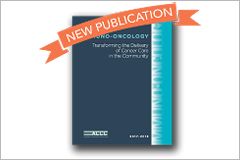
While immuno-oncology research speeds ahead and emerging therapies move from the lab bench to the academic center to the community setting, the learning continues. As described in a new ACCC report, Immuno-Oncology: Transforming the Delivery of Cancer Care in the Community, immunotherapies are more widely integrated into practice and ongoing education and resources for optimizing care coordination between the multidisciplinary and multispecialty care teams are critical to effective delivery of these innovative therapies. At the same time, cancer programs and practices must understand the impact on the total cost of care and how to make these new therapies accessible to all cancer patients for whom they are appropriate.

Immuno-Oncology: Transforming the Delivery of Cancer Care in the Community, summarizes current progress in immunotherapies, highlights emerging and on-going challenges in I-O delivery, and details effective real-world solutions for optimizing patient care.

You’ll want to read Immuno-Oncology: Transforming the Delivery of Cancer Care in the Community for:

  • A concise recap of 2017 immunotherapy clinical highlights.
  • An update on ACCC’s immunotherapy education, resources, and what to expect in 2018.
  • A snapshot of policy issues and critical concerns affecting the future of immunotherapy in practice.

Download your copy

In this rapidly changing landscape, we encourage all members of the cancer care team to connect with ACCC and explore our resources on care coordination, communication, and education in cancer immunotherapies. Our upcoming three-part webinars series focuses on critical aspects of communication and care coordination in delivering immunotherapy. Join us on Feburary 22 for the first in the series, “Testing” the Relationship Between Pathologists, Surgeons, and Oncologists. The discussion will explore the current diagnostic landscape in immuno-oncology, its value and impact on patient care, and practical approaches for optimizing coordination and communication between these clinicians. Learn more and register.

Whatever your role in caring for patients with cancer, our newest publication will provide insight and perspective on the evolving field of immuno-oncology and how it is going to be a critical and essential component of cancer care. Through ACCC, let’s continue the conversation and find the best way forward on the I-O journey together.

Reference
1. Cancer Research Institute. Comprehensive analysis of the immuno-oncology landscape. 2017. Available online at: https://www.cancerresearch.org/news/2017/cri-immuno-oncology-landscape-analysis-publication

Lee S. Schwartzberg, MD, FACP, is ACCC Immuno-Oncology Executive Committee Chair.