This cancer program adapted the University of Washington’s Collaborative Care model to embed counseling services into oncology and palliative care across six clinic locations. This model allows patients to receive counseling for depression, anxiety, or other psycho-social concerns while in active treatment and survivorship, eliminating many barriers to care.
This is the final blog post in a 6-part series highlighting the achievements of the 2023 ACCC Innovator Award winners before their in-depth sessions at the ACCC 40th National Oncology Conference. You can learn more about the innovations being recognized this year and those who pioneered them by joining ACCC in Austin, Texas, from October 4-6, 2023.
For Rochester Regional Health – Lipson Cancer Institute, the term collaborative care has a layered meaning. In 2021, the cancer program adapted the University of Washington’s Collaborative Care model to embed counseling services into oncology and palliative care across their 6 clinic locations. This billable model allows patients to receive counseling in-person or virtually for depression, anxiety, or other psycho-social concerns while in active treatment and survivorship. Given that 1 in 3 patients with cancer experience mental or emotional distress, programs such as this are key to delivering comprehensive cancer care.
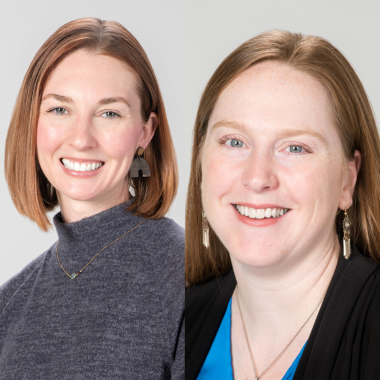
“The idea is to be able to give patients mental health care without them having to go elsewhere,” said Lauren Burling, LCSW, social work supervisor and collaborative care therapist at Rochester Regional Health – Lipson Cancer Institute. “We know that patients may not be able to follow through on recommendations for counselling for different reasons, and access to counselling can be very limited.”
Prior to launching this care model, the team at Lipson Cancer Institute decided to create a collaborative care therapist position rather than having this responsibility fall on their social workers. “We decided it made sense to have 1 person dedicated to all 6 locations, while making sure her role was clear to everyone,” Burling said. “That person was Earon.”
“At the start there was a lot of trial and error related to how we gathered patients and developed systems of operation,” said Earon Lehning, LMSW, collaborative care therapist at Rochester Regional Health – Lipson Cancer Institute. “Even now, we are still optimizing our referral process and ensuring that we are catching everyone that we are supposed to be catching.” According to Lehning, a Patient Health Questionnaire (PHQ-9) and General Anxiety Disorder (GAD-7), are conducted once a month for patients at each of the program’s locations. If a patient records a high score, the social workers at the cancer program reach out to them and determine their eligibility for this program. “If the patient is eligible for the program, the social workers can put them on my schedule for intake,” Lehning explained. Providers can also refer patients to Lehning directly. “I think one of the advantages of the program is that we can get a patient scheduled within a week or two, whereas within their health system, or elsewhere, it can take longer,” Lehning said.
Burling believes this quick and efficient access to care, has significant benefits to patients with cancer. “It is not uncommon for patients who are looking for a therapist to be told to call back in 6 weeks,” she said. “For a patient with cancer who is already struggling, that is like climbing Mount Everest—they are not going to call back in 6 weeks, and we are going to lose that person.” According to Burling, for every 20 referrals Lehning and her team receive, 17 of those patients are getting appointments and nearly 15 of them will stay in the program long-term. Once enrolled, patients have access to 3 different mental health therapists, which ensures they are afforded counseling tailored towards their unique needs.
Burling and Lehning believe this model has had a substantial impact the oncology workforce at Lipson Cancer Institute. “My theory is that if staff did not have a place to send patients who were in distress, that would be very distressing for them,” Burling said. Prior to implementing this initiative, the cancer program had only 1 social worker within their network. “I don’t know how she did it, but she did,” said Rose Michelle, MBA, practice administrator at Rochester Regional Health – Lipson Cancer Institute. Now, according to Rose, the social work staff at their program has not only grown but is grateful for the support this model provides. “The Collaborative Care program adds another layer to our multidisciplinary approach, and it gives us a more well-rounded program and meets a critical need in our community,” she said.
At the ACCC 40th National Oncology Conference this fall, Burling and Lehning will provide an in-depth analysis on how to implement a Collaborative Care model to embed counseling services into oncology and palliative care at your cancer program or practice. “I think people are curious on how develop a sustainable model that serves the patient and allows us to fund the position,” Burling said. “I think everyone knows that these services are needed, but it can be difficult to justify it in today’s healthcare market. You can learn how to do so at this conference.” To learn more about developing a program to embed counseling services into oncology and palliative care at your organization, including the infrastructure and support staff needed to find success, register to attend the 2023 ACCC National Oncology Conference in Austin, Texas, from October 4-6, 2023.