Discover how Emily Smith, MD, addresses determinants of health in her practice and best practice recommendations for high quality care.




Patients with cancer who live in rural areas face many barriers to care, which can limit both their access and adherence to care, including traveling long distances, lack of insurance coverage, and a multitude of other social and emotional determinants. Hear how to leverage the skills of a multidisciplinary team to support patients in overcoming these barriers. CANCER BUZZ speaks with Emily Smith, MD and clinical associate professor of Pathology and Dermatology at the University of Michigan on how she addresses determinants of health in her practice and best practice recommendations for high quality care.
Guest

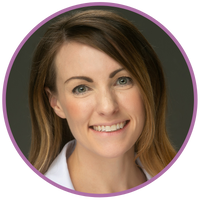
Emily Smith, MD
Clinical Associate Professor, Pathology and Dermatology
University of Michigan
Ann Arbor, MI
“There are so many factors weighing on their decision to seek care and where they are going to seek care. It can be quite complex and it takes time to sort out; we can screen all we want but sometimes it takes time beyond a screening tool to really sort out what a barrier might be and this is where conversations with [our] physicians, nursing staff, or navigators can really help to get to the bottom of each patient’s individual story and what specific needs they might have. It’s a conversation, there is no direct algorithm that we can use– every patient’s scenario is going to be unique.” –Emily Smith, MD
This is video podcast has been created in connection with the education program “Advanced Non-Melanoma Skin Cancers: Effective Practices in Multidisciplinary Care.”
Resources:
CANCER BUZZ: Welcome back to CANCER BUZZ TV. I'm your host, Summer Johnson. This show is part of a suite of resources on caring for patients with advanced non-melanoma skin cancer and the social determinants of health. Today we're looking at barriers to cancer care for these patients living in rural areas, and how to leverage the skills of a multidisciplinary team to support patients and their adherence to therapies. Dr. Emily Smith has joined us today to talk about it.
She's the clinical associate professor of pathology and dermatology at the University of Michigan. Thank you for joining the show, Dr. Smith. What barriers to care do you face working with patients in a rural population?
Emily Smith, MD: Oh, yes, absolutely. There are many challenges I think that patients and providers face when navigating patients coming in from a more Rural area. I think first and foremost, it's a time commitment and a challenge. The distance between a more remote, a Rural location and a referral center can be quite great. And so just dedicating the amount of time it takes to drive to a visit can sometimes be prohibitive, taking enough time off of work to get to a visit.
Certainly the travel is quite expensive, and so the, the greater the mileage, the greater the cost is, especially in this day and age, with gas being as expensive as it is. I think another major barrier, though, that I see in many of my patients is sort of a, a fear or a feeling of, you know, unease when it comes to traveling from a, a Rural area into a more busier or, you know, metropolitan or urban area. And so sometimes that can be enough to keep patients from seeking, you know, referral care outside of their more Rural community.
CANCER BUZZ: Can measuring social determinants of health impact patient outcomes?
Emily Smith, MD: Well, I think that patients who are experiencing, at least in, in my world, a complex skin cancer There, are so many factors weighing on their decision to seek care and where they're going to seek care. And It can be quite complex, and it takes time to sort out. We can screen all we want, but sometimes it takes time beyond a, a screening tool, a simple screening tool, to really sort out what a barrier might be. And this is where conversations with either myself as the physician or again our, our nursing staff or navigators, can really help to get to the bottom of each patient's individual story and what specific needs they might, they might have.
And again, it's a conversation. There is no direct algorithm that we can use. Every patient s scenario is going to be unique.
CANCER BUZZ: How important is it for care providers to build trust with patients?
Emily Smith, MD: Oh, I think it's huge. I mean, a patient is not going to buy into any treatment or management plan without trust, without a sense that their care team really has their best interests at heart and really understands their personal medical journey. And so building trust is something that, you know, can happen over the phone before a visit, but certainly is best established in a clinical encounter. And I think that in my opinion, 75% of a, a clinical visit often is getting to know the patients and letting them get to know you.
So then you can move forward on common ground and really have a fluid care plan. And, you know, sometimes trust is, is very difficult to, to establish.
CANCER BUZZ: Is it important to establish a relationship with the patient's referring provider?
Emily Smith, MD: I think it's very important on many different levels. So from the patient's perspective, first and foremost, I think getting back to trust, you know, the patients usually trusted the physician or the provider that referred them in. And so ensuring that we are all on the same page is really, really important. And that is comes down to communication and sometimes it's through a clinical note, sometimes it's through a quick email, a phone call. You know, being as accessible as possible to referring providers is really, really important.
And so the patients see that they, they see that their team is working together, that there aren't any discrepancies, and then they have greater trust in the system going forward. I think it's also important to, you know, getting back to the referring provider, that they feel like they are still involved in the patient's care even though they've kind of passed it on. So communication by way again of, you know, sending clinical documentation back promptly. Phone calls go a long ways and, and really making sure that that referring providers feel that their patient is getting the care that they need.
CANCER BUZZ: What advice do you have for care teams facing similar determinants to health that we've discussed today?
Emily Smith, MD: I think really leveraging the assistance of the, the multidisciplinary team is one of the most important things that we can do for those of us who are working in the care of complex cancer patients. If you are fortunate enough to work at an institution that has, you know, support such as social work, patient navigators, nurse navigators, these are the individuals to really leverage in assisting and facilitating care for these patients. Now, that's not available to everyone, unfortunately.
And so in, you know, certain scenarios, nursing staff or other clinic staff may assume some of these roles. And so I think as the care provider, it's important to know who is going to be owning that piece of the patient's care so that they can be, you know, you can engage them in taking initiative to manage these specific pieces of the patient's care.
CANCER BUZZ: Thank you Dr. Smith. If you'd like to learn more about working with patients with non melanoma skin cancer and those who live in Rural areas, you could check out the links and the show notes for more resources. You could also search the CANCER BUZZ feed for a new audio podcast out this week. The topic there is having difficult conversations with this patient population. CANCER BUZZ TV is a resource of the Association of Community Cancer Centers developed to deliver the latest in cancer care news to busy oncology professionals. On behalf of all of us here at CANCER BUZZ TV, thank you for watching. I'm Summer Johnson.
The views and opinions expressed herein are those of the author(s)/faculty member(s) and do not reflect the official policy or position of their employer(s) or the Association of Cancer Care Centers.