ACCC association of cancer care centers
Join/Renew
Login
Join/Renew
Login
Education & Resources
ACCC eXchange LogInCorporate Member Sponsored ResourcesPresentations & AbstractsPresident's ThemeACCC Connect eLearning LogIn
Publications
Oncology IssuesPatient Assistance & Reimbursement GuideTrending Now in Cancer Care
Events
2026 ACCC Leadership SummitAnnual Meeting & Cancer Center Business SummitCapitol Hill DayNational Oncology ConferenceOncology Reimbursement MeetingsOncology State Society Meetings
Policy & Advocacy
2024 Policy Wrap-Up and ACCC 2025 Policy PrioritiesLetters & StatementsAccess, Payment & Reimbursement ReformWhite Bagging & Brown BaggingAdvocacy ResourcesCancer Moonshot
Membership
Join | RenewWho We AreMembership Types & BenefitsCorporate MembersACCC Member Portal FAQMember Directory
Partners
Oncology State SocietiesPartner OrganizationsCME
News
News ReleasesAdvocacy News ReleasesOncology News
About ACCC
Timeline / 50th Anniversary2025 Impact ReportACCC Innovator AwardsACCC FellowsACCC Senior Staff
Breast CancerMetastatic Breast Cancer
Gastrointestinal CancerBiliary Tract CancerColorectal CancerGastric CancerLiver Cancer
Genitourinary CancerBladder CancerProstate CancerRenal Cell Carcinoma
Gynecologic CancerOvarian Cancer
Head & Neck Cancer
Hematologic MalignanciesAcute Lymphocytic Leukemia (ALL)Acute Myeloid Leukemia (AML)Chronic Lymphocytic Leukemia (CLL)Mantle Cell Lymphoma (MCL)Multiple Myeloma (MM)Myelodysplastic Syndromes (MDS)
Lung CancerNon-Small Cell Lung Cancer (NSCLC)Small Cell Lung Cancer (SCLC)
Sarcoma
Skin CancerMelanomaNon-Melanoma Skin Cancers (NMSC)
Clinical Practice & TreatmentCancer DiagnosticsCare CoordinationEHR Integration for Biomarker TestingQuality Improvement Collaboration: Integration of Precision Medicine in Community OncologyTreatment
Financial NavigationFAN Boot CampFinancial Advocacy Network (FAN) Resource LibraryPatient Assistance & Reimbursement GuidePrior Authorization
Health Equity & Access3, 2, 1, Go! Practical Solutions for Addressing Cancer Care DisparitiesAppalachian Community Cancer AllianceOncology Advanced PractitionersPersonalizing Care for Patients of All BackgroundsSocial Drivers of Health
Patient-Centered CareAddressing Care Disparities for VeteransAdolescent and Young Adult (AYA)Care Action Plans for People with CancerDermatologic ToxicitiesEmpowering CaregiversGeriatric OncologyHealth LiteracyNutritionOncology PharmacyPatient NavigationPsychosocial Care in OncologyShared Decision-MakingSupportive CareSurvivorship Care
Practice Management & OperationsCancer Program FundamentalsLeadership Sustainment and Engagement VideosOncology Practice Transformation and Integration CenterOncology Team Resiliency
ResearchACCC Community Oncology Research Institute (ACORI)
Technology & InnovationTelehealth & Digital Medicine
ACCCBuzz Blog
CANCER BUZZ Podcast
Oncology Issues
Join/Renew
Login
Breast CancerMetastatic Breast Cancer
Gastrointestinal CancerBiliary Tract CancerColorectal CancerGastric CancerLiver Cancer
Genitourinary CancerBladder CancerProstate CancerRenal Cell Carcinoma
Gynecologic CancerOvarian Cancer
Head & Neck Cancer
Hematologic MalignanciesAcute Lymphocytic Leukemia (ALL)Acute Myeloid Leukemia (AML)Chronic Lymphocytic Leukemia (CLL)Mantle Cell Lymphoma (MCL)Multiple Myeloma (MM)Myelodysplastic Syndromes (MDS)
Lung CancerNon-Small Cell Lung Cancer (NSCLC)Small Cell Lung Cancer (SCLC)
Sarcoma
Skin CancerMelanomaNon-Melanoma Skin Cancers (NMSC)
Clinical Practice & TreatmentCancer DiagnosticsCare CoordinationEHR Integration for Biomarker TestingQuality Improvement Collaboration: Integration of Precision Medicine in Community OncologyTreatment
Financial NavigationFAN Boot CampFinancial Advocacy Network (FAN) Resource LibraryPatient Assistance & Reimbursement GuidePrior Authorization
Health Equity & Access3, 2, 1, Go! Practical Solutions for Addressing Cancer Care DisparitiesAppalachian Community Cancer AllianceOncology Advanced PractitionersPersonalizing Care for Patients of All BackgroundsSocial Drivers of Health
Patient-Centered CareAddressing Care Disparities for VeteransAdolescent and Young Adult (AYA)Care Action Plans for People with CancerDermatologic ToxicitiesEmpowering CaregiversGeriatric OncologyHealth LiteracyNutritionOncology PharmacyPatient NavigationPsychosocial Care in OncologyShared Decision-MakingSupportive CareSurvivorship Care
Practice Management & OperationsCancer Program FundamentalsLeadership Sustainment and Engagement VideosOncology Practice Transformation and Integration CenterOncology Team Resiliency
ResearchACCC Community Oncology Research Institute (ACORI)
Technology & InnovationTelehealth & Digital Medicine
ACCCBuzz Blog
CANCER BUZZ Podcast
Oncology Issues
    • Education & Resources
    • Publications
    • Events
    • Policy & Advocacy
    • Membership
    • Partners
    • News
    • About ACCC
ACCC association of cancer care centers
1801 Research Boulevard, Suite 400, Rockville, MD 20850
Tel: 301.984.9496 Fax: 301.770.1949 Email Us
Contact UsVolunteers
Advertise
Career Center
Terms and Conditions
Privacy Policy
ACCC Rebranding
Copyright © 2026 Association of Cancer Care Centers. All Rights Reserved.
Advertisement

Blog

Article

June 3, 2024

Addressing Inequitable Access to Clinical Trials in Cancer Research

ACCC recognizes National Cancer Research Month.

Addressing Inequitable Access to Clinical Trials in Cancer Research

Clinical trials play an essential role in testing new, potentially life-saving drugs and treatments for patients with cancer. Consequently, the opportunity to take part in clinical research can build hope for patients facing a new diagnosis and provide treatment options that would be otherwise unavailable.

Unfortunately, unequal representation of certain groups is a historic problem in clinical research, due to various social drivers of health. The result is a mismatch between the populations participating in clinical trials and the cancer patient population at large, leading researchers to extrapolate findings to these underrepresented groups based on limited information.

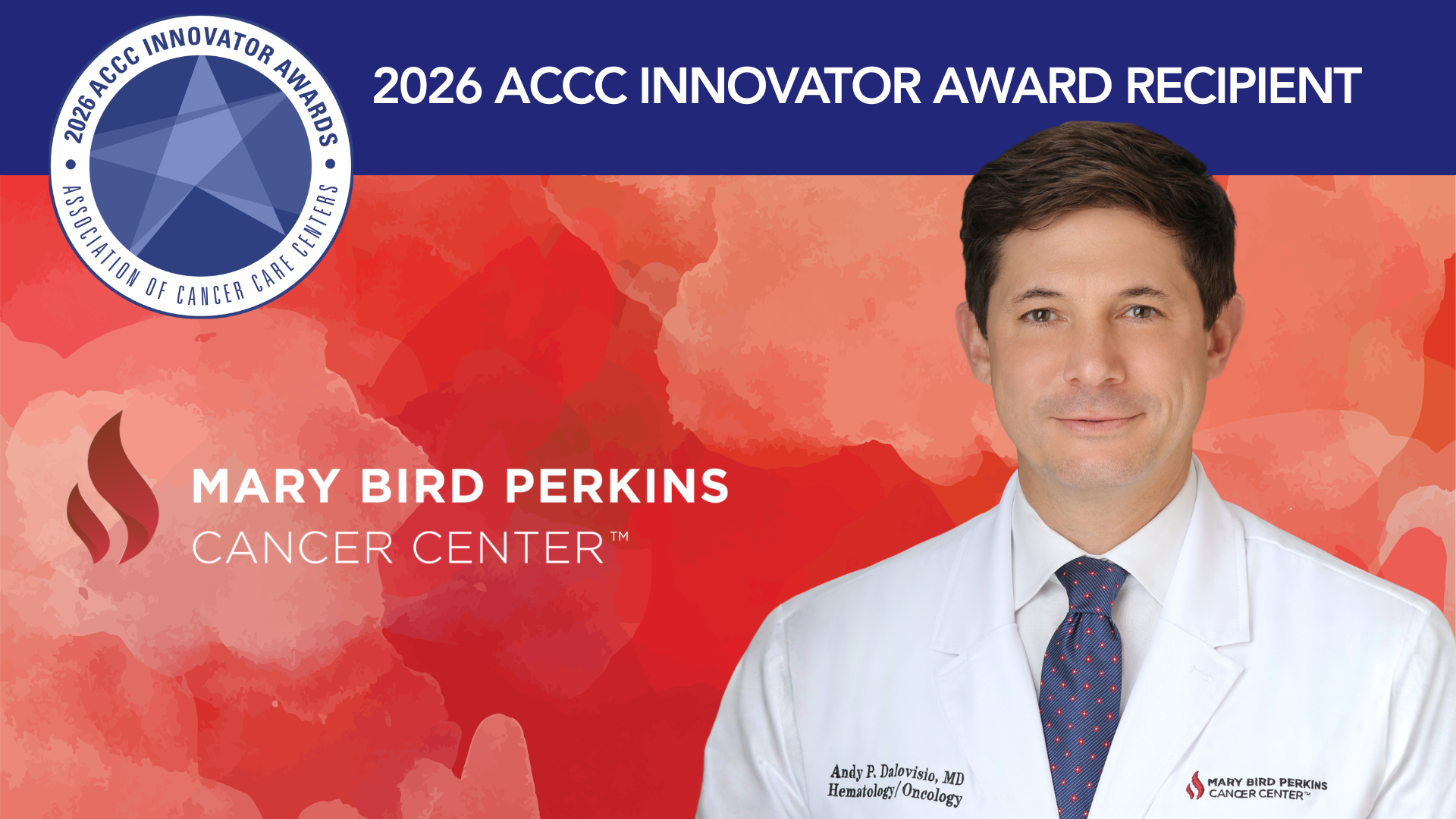
In recognition of May as National Cancer Research Month, ACCCBuzz spoke with Renea Duffin, MPA, FACCC, vice president of cancer support and outreach at Mary Bird Perkins Cancer Center in Baton Rouge, La., to learn more about the center’s commitment to educating, screening, and treating underserved populations in their community.

ACCCBuzz: Discuss your role at Mary Bird Perkins Cancer Center.

Duffin: I am vice president of cancer support, outreach and clinical trials. I’m responsible for several areas, one being our clinical research program, the other being a wholly owned subsidiary of the organization called Cancer Services, which provides supportive care services for patients living with cancer.

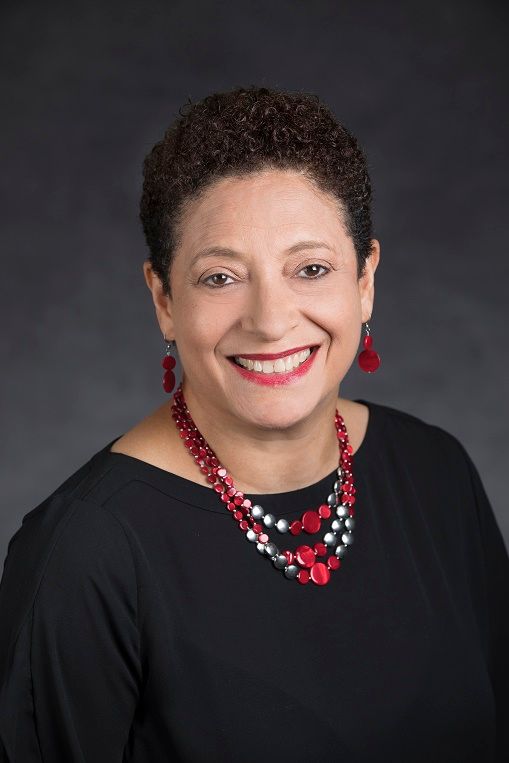
I’m also responsible for our Prevention on the Go program, which utilizes 3 mobile medical clinics to provide 5 different types of cancer screening across a 41-parish service area in the state of Louisiana. We screen for breast, skin, prostate, colorectal and oral cavity cancers, and have done so for over 20 years now. Since 2002, we have provided over 125,000 free screenings, thanks to community philanthropy. I’m also responsible for community education and governmental affairs.

ACCCBuzz: What does cancer research mean at Mary Bird Perkins Cancer Center?

Duffin: Mary Bird Perkins Cancer Center is a cancer-focused organization with clinical research serving as a key component to our mission-based programs. Without clinical trials, we wouldn’t have the advancements in cancer care that we see today. Our board of directors is committed to providing these services in a community-based setting. This service is supported by philanthropic individuals, corporations, and other entities.

ACCCBuzz: Why is recognizing National Cancer Research Month important?

Duffin: It’s important because we need to highlight the importance of clinical trials, as well as bring awareness about clinical research, because it’s helping save lives. Today’s clinical trials become tomorrow’s treatments.

ACCCBuzz: What are some of the most notable barriers to equitable access to cancer screenings and participation in clinical trials?

Duffin: First and foremost, knowledge about the importance of being screened and the importance of participating in clinical trials. Knowledge is key, so we try to increase that awareness by providing community education and one-on-one education.

A lot of people don’t know when they’re supposed to be screened, what they should be screened for or how often they should be screened. We have had some women ask for a prostate screening. It’s simply a lack of knowledge of their bodies. It’s the same with clinical trials. They’ve all heard the stories and the bad experiences of others throughout the years, so there’s this great mistrust of the health care system. At Mary Bird Perkins, we screen every patient to determine if they are eligible for a trial.

Low health literacy is another barrier. People do not understand how to ask questions, how to question what a clinical professional says to them, or when to ask for a clinical trial or cancer screening. In Louisiana, many lack access to quality health insurance. Even though our state expanded access to Medicaid coverage, many still lack access to health care because providers often don’t accept Medicaid.

In clinical trials, trial design is a major barrier. Many of the trials are not made for marginalized groups who may be experiencing several medical conditions. As a result of that, those individuals don’t qualify for the trials.

ACCCBuzz: How have you mitigated some of these barriers? What would you recommend to other practices like yours?

Duffin: We screen all our patients for clinical trials. We’ve been able to put the basic eligibility criteria for every trial that we have open into our EMR [electronic medical record], so we can do an automatic screen for every patient with a diagnosis for all open trials. Then, if a patient meets the general eligibility criteria, our research coordinators and research nurses can do a deeper dive to determine if they truly are eligible for that trial. If they are, the patient’s physician is notified so they can discuss the trial and the process with the patient. This eliminates the physician having to try to remember all the eligibility criteria for every single trial.