ACCC President Dr. David Penberthy, honors the 2022 ACCC Award winners for their significant contributions to the oncology community. Speakers share key strategies to enhance the role of the oncology pharmacist and prepare for population health in oncology.

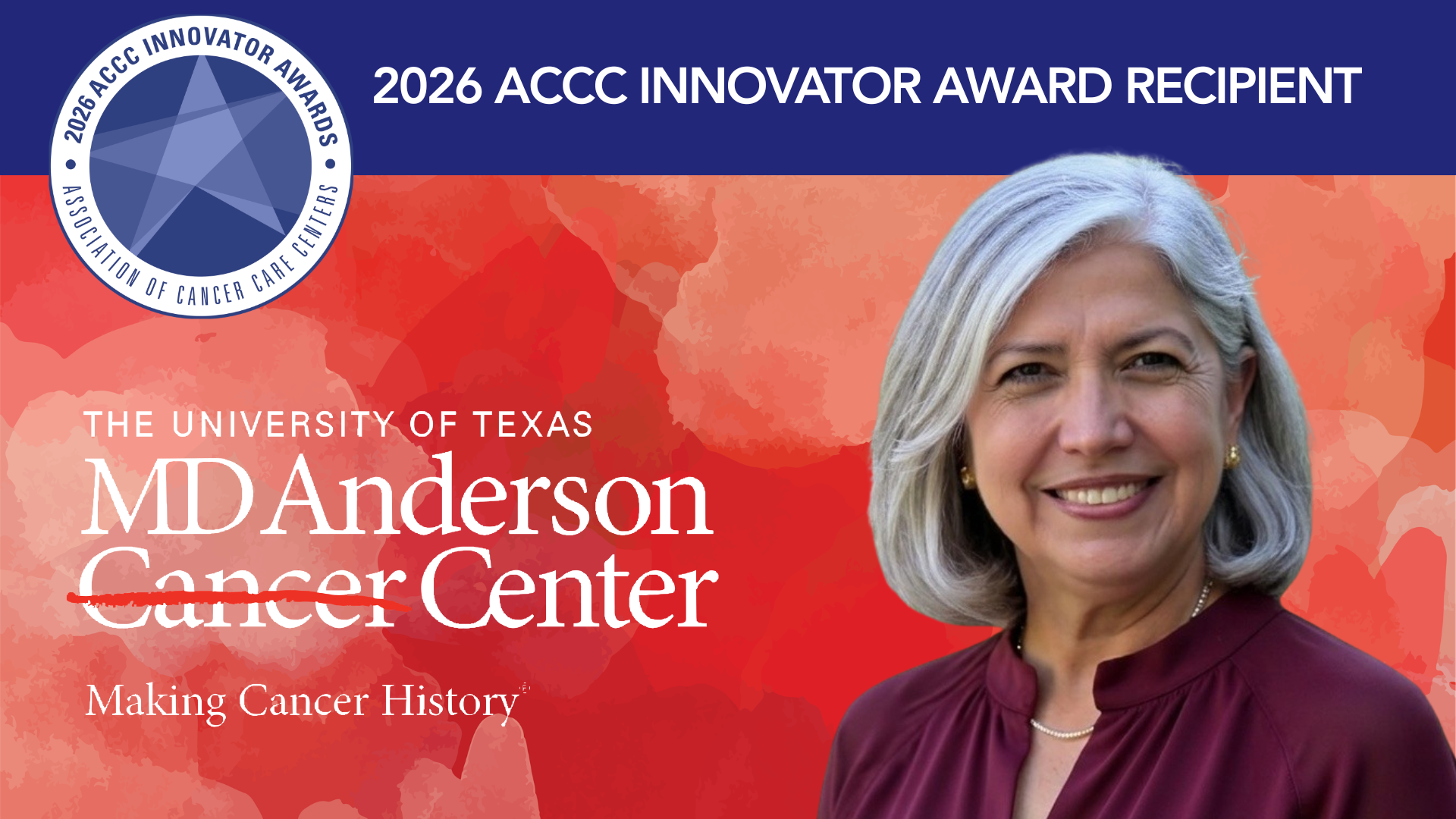
The Friday (October 14) morning session of ACCC 39th National Oncology Conference (#ACCCNOC) opened with a welcome message from ACCC President Dr. David Penberthy, honoring the 2022 ACCC Award winners. These individuals were recognized for their significant contributions to patient care, the practice of clinical care and research, and the greater oncology community.
The Clinical Research Award was presented to Carmen Guerra, MD, MSCE, FACP, Ruth C. and Raymond G. Perelman professor of medicine at the Perelman School of Medicine, University of Pennsylvania. Dr. Guerra’s research has focused on developing and evaluating interventions to increase the participation of underserved populations in cancer screening and clinical trials.
According to Dr. Guerra, three to five percent of patients diagnosed with cancer participate in clinical trials. And only a fraction of those are underrepresented groups, though they make up 38 percent of the population. Additionally, she found that more than 85 percent of patients are prevented from participating—because they are not being asked. “There’s a very complex, and long-standing problem in cancer clinical trials,” she said. “I call it an onion because there are a lot of layers of barriers: patient, provider, and institutional.”
Dr. Guerra’s presentation included updates on the ASCO (American Society of Clinical Oncology)-ACCC Initiative, where she serves as member of the initiative’s steering group, as well as co-chair for the ASCO-led Site Self-Assessment Working Group and ACCC-led Implicit Bias Training Program Working Group.
Goals of the initiative included:
The David King Community Clinical Scientist Award was presented to Leana Cabrera Chien, MSN, RN, GCNS-BC, GNP-BC, nurse practitioner at the City of Hope Center for Cancer and Aging. She presented on her work with implementing a comprehensive geriatric assessment into practice and enhancing the care of older adults with cancer. Goals of her work included:
Results found that telehealth-delivered multidisciplinary care based on geriatric assessment-driven recommendations can improve outcomes for patients who generally would not have access to these personalized care services in a community setting (with an advanced practice nurse via telehealth). “We had high patient satisfaction,” Chien said. “Ninety-five percent of patients.”
The Annual Achievement Award was presented to Lola Fashoyin-Aje, MD, MPH, medical oncologist and deputy director in the Division of Oncology 3 in the Office of Oncologic Diseases at the U.S. Food and Drug Administration’s (FDA’s) Center for Drug Evaluation and Research.
Dr. Fashoyin-Aje leveraged her role at the FDA to ensure the development of new clinical drugs is applied to diverse populations. She wants equitable access to clinical trials. In presenting on her work, Dr. Fashoyin-Aje found:
She also found that contributing factors to these disparities in clinical trial participation included:
“Why are we comfortable as a cancer community with a paradigm that does not enroll a diverse population in clinical trials that matches the general population?” she asked. “Clinical trials provide access to potentially promising medical products.” Dr. Fashoyin-Aje oversees Project Equity, which aims to ensure that data submitted for approval of oncology medical products reflect the demographic representation of patients for whom these products are intended.
Mike Koroscik, MBA, MHA, vice president of Oncology at Allina Health Cancer Institute, Allina Health presented on population health’s role in oncology—a near future for the specialty.
Koroscik shared key activities for preparation, including:
Some lessons learned included:
Sepideh Shayani, PharmD, BCOP, executive director of Pharmacy Enterprise, and Wafa Samara, PharmD, vice president and chief pharmacy officer, at City of Hope Pharmacy Enterprise shared how they’ve enhanced the role of the pharmacist using career ladders to improve career satisfaction among team members. To do so required a complete restructuring of the City of Hope Pharmacy Department, decentralizing clinical services, and consolidating and centralizing operational activities.
Lessons learned included:
Results showed improved career satisfaction, as well as a significant increase in staff involvement with activities, such as discharge medication reconciliation, patient and provider education, transition of care, double clinical verification of chemotherapy and biotherapy orders, involvement with clinical pathway development, and oral chemotherapy management. In addition, the number of clinical and safety interventions reported by the pharmacy staff increased significantly. From an operations perspective, the restructure improved efficiency by consolidating activities and leveraging technology—freeing staff to focus on more meaningful activities.
Look out for our final blog on #ACCCNOC that will cover leadership and leveraging data analytics for the oncology workforce.