ACCC association of cancer care centers
Join/Renew
Login
Join/Renew
Login
Education & Resources
ACCC eXchange LogInCorporate Member Sponsored ResourcesPresentations & AbstractsPresident's ThemeACCC Connect eLearning LogIn
Publications
Oncology IssuesPatient Assistance & Reimbursement GuideTrending Now in Cancer Care
Events
2026 ACCC Leadership SummitAnnual Meeting & Cancer Center Business SummitCapitol Hill DayNational Oncology ConferenceOncology Reimbursement MeetingsOncology State Society Meetings
Policy & Advocacy
2024 Policy Wrap-Up and ACCC 2025 Policy PrioritiesLetters & StatementsAccess, Payment & Reimbursement ReformWhite Bagging & Brown BaggingAdvocacy ResourcesCancer Moonshot
Membership
Join | RenewWho We AreMembership Types & BenefitsCorporate MembersACCC Member Portal FAQMember Directory
Partners
Oncology State SocietiesPartner OrganizationsCME
News
News ReleasesAdvocacy News ReleasesOncology News
About ACCC
Timeline / 50th Anniversary2025 Impact ReportACCC Innovator AwardsACCC FellowsACCC Senior Staff
Breast CancerMetastatic Breast Cancer
Gastrointestinal CancerBiliary Tract CancerColorectal CancerGastric CancerLiver Cancer
Genitourinary CancerBladder CancerProstate CancerRenal Cell Carcinoma
Gynecologic CancerOvarian Cancer
Head & Neck Cancer
Hematologic MalignanciesAcute Lymphocytic Leukemia (ALL)Acute Myeloid Leukemia (AML)Chronic Lymphocytic Leukemia (CLL)Mantle Cell Lymphoma (MCL)Multiple Myeloma (MM)Myelodysplastic Syndromes (MDS)
Lung CancerNon-Small Cell Lung Cancer (NSCLC)Small Cell Lung Cancer (SCLC)
Sarcoma
Skin CancerMelanomaNon-Melanoma Skin Cancers (NMSC)
Clinical Practice & TreatmentCancer DiagnosticsCare CoordinationEHR Integration for Biomarker TestingQuality Improvement Collaboration: Integration of Precision Medicine in Community OncologyTreatment
Financial NavigationFAN Boot CampFinancial Advocacy Network (FAN) Resource LibraryPatient Assistance & Reimbursement GuidePrior Authorization
Health Equity & Access3, 2, 1, Go! Practical Solutions for Addressing Cancer Care DisparitiesAppalachian Community Cancer AllianceOncology Advanced PractitionersPersonalizing Care for Patients of All BackgroundsSocial Drivers of Health
Patient-Centered CareAddressing Care Disparities for VeteransAdolescent and Young Adult (AYA)Care Action Plans for People with CancerDermatologic ToxicitiesEmpowering CaregiversGeriatric OncologyHealth LiteracyNutritionOncology PharmacyPatient NavigationPsychosocial Care in OncologyShared Decision-MakingSupportive CareSurvivorship Care
Practice Management & OperationsCancer Program FundamentalsLeadership Sustainment and Engagement VideosOncology Practice Transformation and Integration CenterOncology Team Resiliency
ResearchACCC Community Oncology Research Institute (ACORI)
Technology & InnovationTelehealth & Digital Medicine
ACCCBuzz Blog
CANCER BUZZ Podcast
Oncology Issues
Join/Renew
Login
Breast CancerMetastatic Breast Cancer
Gastrointestinal CancerBiliary Tract CancerColorectal CancerGastric CancerLiver Cancer
Genitourinary CancerBladder CancerProstate CancerRenal Cell Carcinoma
Gynecologic CancerOvarian Cancer
Head & Neck Cancer
Hematologic MalignanciesAcute Lymphocytic Leukemia (ALL)Acute Myeloid Leukemia (AML)Chronic Lymphocytic Leukemia (CLL)Mantle Cell Lymphoma (MCL)Multiple Myeloma (MM)Myelodysplastic Syndromes (MDS)
Lung CancerNon-Small Cell Lung Cancer (NSCLC)Small Cell Lung Cancer (SCLC)
Sarcoma
Skin CancerMelanomaNon-Melanoma Skin Cancers (NMSC)
Clinical Practice & TreatmentCancer DiagnosticsCare CoordinationEHR Integration for Biomarker TestingQuality Improvement Collaboration: Integration of Precision Medicine in Community OncologyTreatment
Financial NavigationFAN Boot CampFinancial Advocacy Network (FAN) Resource LibraryPatient Assistance & Reimbursement GuidePrior Authorization
Health Equity & Access3, 2, 1, Go! Practical Solutions for Addressing Cancer Care DisparitiesAppalachian Community Cancer AllianceOncology Advanced PractitionersPersonalizing Care for Patients of All BackgroundsSocial Drivers of Health
Patient-Centered CareAddressing Care Disparities for VeteransAdolescent and Young Adult (AYA)Care Action Plans for People with CancerDermatologic ToxicitiesEmpowering CaregiversGeriatric OncologyHealth LiteracyNutritionOncology PharmacyPatient NavigationPsychosocial Care in OncologyShared Decision-MakingSupportive CareSurvivorship Care
Practice Management & OperationsCancer Program FundamentalsLeadership Sustainment and Engagement VideosOncology Practice Transformation and Integration CenterOncology Team Resiliency
ResearchACCC Community Oncology Research Institute (ACORI)
Technology & InnovationTelehealth & Digital Medicine
ACCCBuzz Blog
CANCER BUZZ Podcast
Oncology Issues
    • Education & Resources
    • Publications
    • Events
    • Policy & Advocacy
    • Membership
    • Partners
    • News
    • About ACCC
ACCC association of cancer care centers
1801 Research Boulevard, Suite 400, Rockville, MD 20850
Tel: 301.984.9496 Fax: 301.770.1949 Email Us
Contact UsVolunteers
Advertise
Career Center
Terms and Conditions
Privacy Policy
ACCC Rebranding
Copyright © 2026 Association of Cancer Care Centers. All Rights Reserved.
Advertisement
Home / Education And Resources / Patient Centered Care / Health Literacy / Lets Be Clear

LET'S BE CLEAR: COMMUNICATING TO IMPROVE THE CANCER PATIENT EXPERIENCE

The Centers for Disease Control defines health literacy as “the degree to which an individual has the capacity to obtain, communicate, process, and understand basic health information and services to make appropriate health decisions.”

Although many cancer programs have made significant headway in providing patient-friendly materials in recent years, health literacy related to cancer diagnosis, treatment, and post-treatment follow-up requires on-going attention. For patients with cancer, poor health literacy may result in facing increased risk of medical errors, chronic disease recurrence that leads to higher hospitalization rates, and sub-optimal health outcomes.

Why Being a Health Literate Organization Matters

Health literate healthcare organizations can better deliver patient-centered care and meet requirements for certification and reimbursement. The Institute of Medicine (now National Academy of Medicine) Roundtable on Health Literacy has acknowledged 10 attributes of health literate healthcare organizations. While various factors can lead to ineffective health communication, a common factor for many patients is difficulty understanding and interpreting information about their disease when communicating with health professionals. Creating and using resources so that patients better understand basic health information can lead to patients making appropriate health decisions and improved communication with their healthcare team.

Project Goals

With this education project, ACCC seeks to help cancer programs across the country to assess and improve their health literacy through the application principles identified through the National Academy of Medicine [formerly, the Institute of Medicine (IOM)] Roundtable on Health Literacy's attributes of health literate healthcare organizations. The goals include:

  • Helping cancer programs and practices evaluate their current health literacy efforts and prioritize steps for improvement.
  • Advancing the delivery of patient-centered care by integrating key attributes of a health literate healthcare program.
  • Giving actionable steps for identifying educational needs and pinpointing areas where targeted education could improve patient care.

Interactive eCourse

Health Literacy & Clear Communication is a dynamic eCourse that delivers simple methods to improve patient-provider communications. Engage with oncology-specific exercises, activities, and situations and receive real-time feedback and suggestions to put evidence-based strategies into practice.

Explore the eCourse

Ask Me 3® Tool

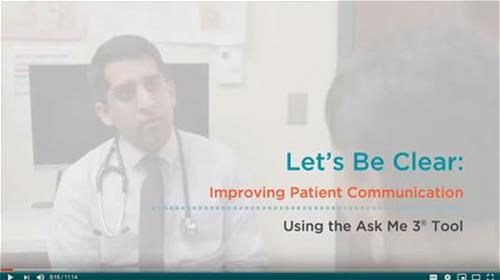
Ask Me 3® is a tool that encourages patients to ask three simple questions each time they talk to a care team member. As we all know, communication is a two-way street. This video shows how your responses to patients’ concerns as members of their cancer care team can clearly, empathetically, and appropriately engage them and promote effective communication throughout the care continuum.

Watch Video

On-Demand Webinar

Gain a deeper understanding of why evaluation of your cancer program's health literacy efforts is important. Identify areas where simple quality improvement measures can lead to more effective communication, and learn about an easy-to-implement gap assessment tool that will help improve health literate communications throughout the cancer care continuum.

Access Webinar

Gap Assessment Tool

This tool is intended to help cancer programs advance their delivery of patient-centered care by integrating key attributes of a health literate healthcare program. By completing the assessment tool, cancer programs can identify educational needs and pinpoint areas where targeted education could improve patient care.

Access Your Program

For more information on this project, please contact the ACCC Provider Education department