The overall aim of this project is to analyze and summarize existing dispensing models and effective practices in the care of patients with multiple myeloma.
As the number of oral anticancer medications continues to increase, new challenges for education, delivery, and adherence are also increasing. The changing landscape of how these therapies are dispensed in the community introduces additional complexities and potential obstacles to both access and treatment adherence.
Within existing dispensing models, cancer programs and practices must assess how to most effectively achieve timely, effective delivery of therapies to their patients.
ACCC is conducting this education program to understand how the current dispensing landscape is affecting delivery of oral therapies for patients with multiple myeloma. To better understand the impact on providers and patients, ACCC is conducting a series of focus group discussions that will explore:
This research will help to identify case examples of efficient, effective dispensing models, which will inform development of a toolkit of resources and furnish topics for a live webinar series that will review existing dispensing models, discuss obstacles and effective practices, and provide opportunity for Q&A.
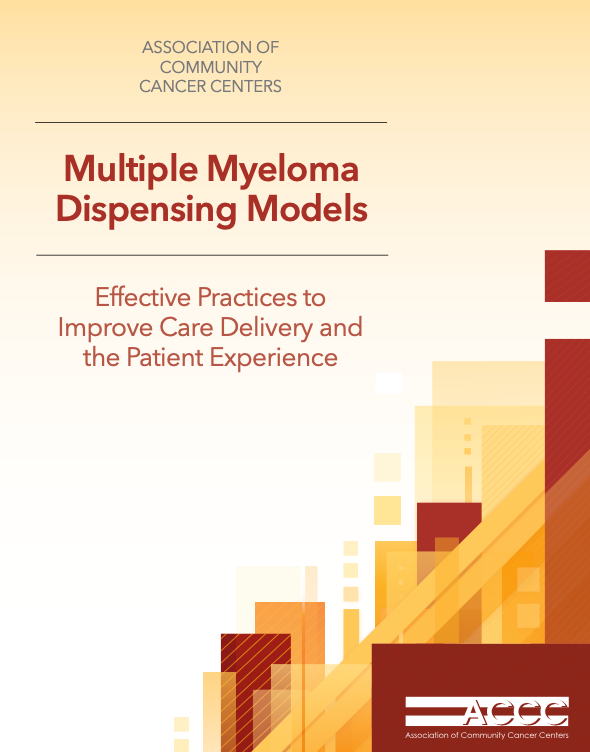
The Association of Community Cancer Centers (ACCC) Oncology Pharmacy Education Network (OPEN) has conducted a Multiple Myeloma Dispensing Models education program to understand how the current dispensing landscape is affecting delivery of oral therapies for patients with Multiple Myeloma.
To better understand the impact on providers and patients, this publication features real-world case studies from three cancer programs that analyze and summarize their existing dispensing models and practices in caring for patients with multiple myeloma. The publication addresses the dispensing of oral oncolytics in relation to:
Designed with all members of the multidisciplinary care team in mind, this publication offers how-to strategies to effectively achieve the safe, timely delivery of oral therapies to this patient population.
Kirollos S. Hanna, PharmD, BCPS, BCOP, Oncology Pharmacy Manager, M Health Fairview - Maple Grove; Assistant Professor of Pharmacy, Mayo Clinic College of Medicine discusses Emerging Therapies in Management of Multiple Myeloma and Best Practices for Implementing Care.
Kirollos Hanna, PharmD, BCPS, BCOP, assistant professor of pharmacy at the Mayo Clinic College of Medicine and the oncology pharmacy manager at M Health Fairview - Maple Grove, discusses the potential impact of ACCC's Multiple Myeloma Dispensing Project on the field.