The Most Favored Nation Mandate: What the President’s Drug Pricing Push Means for the Pharmaceutical Industry, Payers, and Patients
A panel of industry leaders gathered to unpack the potential impacts of the administration’s actions relating to Most Favored Nation (MFN) drug pricing, offering insight into what MFN could mean for pharmaceutical companies, payers, and patients.
Targeted Therapies and Testing: A New Era in Gynecologic Malignancy Management
September is Gynecologic Cancer Awareness Month, a chance to highlight cancers that originate in the endometrium, ovary, and cervix, and to recognize efforts to improve patient outcomes for cancer types with poor prognoses and limited treatment options.
Supporting AYAs Across the Cancer Continuum
Supporting AYAs with cancer truly takes a village. Multidisciplinary collaboration, community partnerships, survivorship champions, and patient voices are all essential to building programs that meet the needs of this diverse population.
Maximizing the Role of APPs in Oncology Care
Advanced practice providers (APPs) are essential members of the cancer care team with roles that vary depending on institutional policies and state regulations. Empowering APPs to work at the top of their scope leads to stronger care delivery.
A Day in the Life of an Oncology APP Across Various Practice Settings
The second episode in the state oncology APP webinar series brought together 4 experienced APPs to offer an in-depth look into their roles, responsibilities, and challenges across academic institutions, community-based practices, and rural centers.
Setting Up for Success: Best Practices for Oncology APP Onboarding
APPs are playing an increasingly vital role in delivering high-quality, team-based cancer care. But even the most skilled clinicians need the right support and structure when stepping into the complex world of oncology.
Oncology Pharmacy Virtual Office Hours Highlight Emerging Strategies for Implementing Bispecific Antibodies
This spring, ACCC hosted 2 virtual office hours sessions featuring oncology pharmacists with expertise in using bispecific antibodies. Participants shared practical insights, challenges, and strategies for implementing BsAb care models.
Transforming Oncology Care Through Technological Innovation
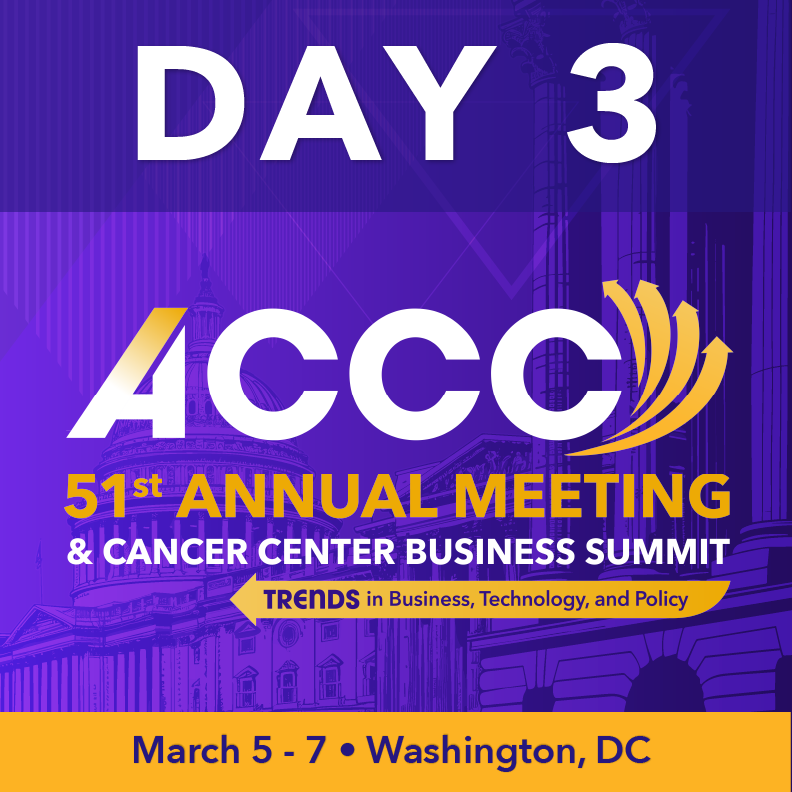
Attendees of the 51st AMCCBS had the opportunity to attend 2 expert-led breakfast tech sessions that addressed the integration of technology and AI into oncology and their future in the cancer care continuum.
#AMCCBS: Health Care Leadership, Market Dynamics, and Women’s Oncology
The final day of the 51st AMCCBS focused on evidence-based decision-making, competitive oncology strategies, and integrating women’s health with oncology to address rising cancer rates.
Cancer Prevention Month: The Importance of Genetic Testing and Early Patient-Provider Conversations
In recognition of February as National Cancer Prevention Month, ACCC shares strategies to reduce the risk of cancer, including prioritizing genetic testing and early conversations with a health care provider.
Improving Equitable Access to Care: Unpacking Medicare’s New Documentation, Coding, and Billing Requirements
Examine the new Medicare reimbursement codes for community health integration, social determinants of health risk assessment, and principal illness navigation codes, as well as Medicare’s ongoing focus on enabling equitable access to high-quality care.
Acknowledging Breast Cancer Awareness Month
October marks National Breast Cancer Awareness Month, an opportunity and a call to reflect on the latest research and deepen understanding of this pervasive disease.
Advancing DEI in the Cancer Workforce: A Policy Summit
DEI in cancer care is essential for ensuring that all patients receive high-quality, personalized treatment and support. A diverse workforce brings a variety of perspectives and experiences that can enhance understanding of patients’ unique cultural backgrounds and health needs.
ACCC Recognizes National Prostate Cancer Awareness Month
With September being National Prostate Cancer Awareness Month, it's important to recognize one of the most prevalent malignancies affecting men worldwide.