ACCC association of cancer care centers
Join/Renew
Login
Join/Renew
Login
Education & Resources
ACCC eXchange LogInCorporate Member Sponsored ResourcesPresentations & AbstractsPresident's ThemeACCC Connect eLearning LogIn
Publications
Oncology IssuesPatient Assistance & Reimbursement GuideTrending Now in Cancer Care
Events
2026 ACCC Leadership SummitAnnual Meeting & Cancer Center Business SummitCapitol Hill DayNational Oncology ConferenceOncology Reimbursement MeetingsOncology State Society Meetings
Policy & Advocacy
2024 Policy Wrap-Up and ACCC 2025 Policy PrioritiesLetters & StatementsAccess, Payment & Reimbursement ReformWhite Bagging & Brown BaggingAdvocacy ResourcesCancer Moonshot
Membership
Join | RenewWho We AreMembership Types & BenefitsCorporate MembersACCC Member Portal FAQMember Directory
Partners
Oncology State SocietiesPartner OrganizationsCME
News
News ReleasesAdvocacy News ReleasesOncology News
About ACCC
Timeline / 50th Anniversary2025 Impact ReportACCC Innovator AwardsACCC FellowsACCC Senior Staff
Breast CancerMetastatic Breast Cancer
Gastrointestinal CancerBiliary Tract CancerColorectal CancerGastric CancerLiver Cancer
Genitourinary CancerBladder CancerProstate CancerRenal Cell Carcinoma
Gynecologic CancerOvarian Cancer
Head & Neck Cancer
Hematologic MalignanciesAcute Lymphocytic Leukemia (ALL)Acute Myeloid Leukemia (AML)Chronic Lymphocytic Leukemia (CLL)Mantle Cell Lymphoma (MCL)Multiple Myeloma (MM)Myelodysplastic Syndromes (MDS)
Lung CancerNon-Small Cell Lung Cancer (NSCLC)Small Cell Lung Cancer (SCLC)
Sarcoma
Skin CancerMelanomaNon-Melanoma Skin Cancers (NMSC)
Clinical Practice & TreatmentCancer DiagnosticsCare CoordinationEHR Integration for Biomarker TestingQuality Improvement Collaboration: Integration of Precision Medicine in Community OncologyTreatment
Financial NavigationFAN Boot CampFinancial Advocacy Network (FAN) Resource LibraryPatient Assistance & Reimbursement GuidePrior Authorization
Health Equity & Access3, 2, 1, Go! Practical Solutions for Addressing Cancer Care DisparitiesAppalachian Community Cancer AllianceOncology Advanced PractitionersPersonalizing Care for Patients of All BackgroundsSocial Drivers of Health
Patient-Centered CareAddressing Care Disparities for VeteransAdolescent and Young Adult (AYA)Care Action Plans for People with CancerDermatologic ToxicitiesEmpowering CaregiversGeriatric OncologyHealth LiteracyNutritionOncology PharmacyPatient NavigationPsychosocial Care in OncologyShared Decision-MakingSupportive CareSurvivorship Care
Practice Management & OperationsCancer Program FundamentalsLeadership Sustainment and Engagement VideosOncology Practice Transformation and Integration CenterOncology Team Resiliency
ResearchACCC Community Oncology Research Institute (ACORI)
Technology & InnovationTelehealth & Digital Medicine
ACCCBuzz Blog
CANCER BUZZ Podcast
Oncology Issues
Join/Renew
Login
Breast CancerMetastatic Breast Cancer
Gastrointestinal CancerBiliary Tract CancerColorectal CancerGastric CancerLiver Cancer
Genitourinary CancerBladder CancerProstate CancerRenal Cell Carcinoma
Gynecologic CancerOvarian Cancer
Head & Neck Cancer
Hematologic MalignanciesAcute Lymphocytic Leukemia (ALL)Acute Myeloid Leukemia (AML)Chronic Lymphocytic Leukemia (CLL)Mantle Cell Lymphoma (MCL)Multiple Myeloma (MM)Myelodysplastic Syndromes (MDS)
Lung CancerNon-Small Cell Lung Cancer (NSCLC)Small Cell Lung Cancer (SCLC)
Sarcoma
Skin CancerMelanomaNon-Melanoma Skin Cancers (NMSC)
Clinical Practice & TreatmentCancer DiagnosticsCare CoordinationEHR Integration for Biomarker TestingQuality Improvement Collaboration: Integration of Precision Medicine in Community OncologyTreatment
Financial NavigationFAN Boot CampFinancial Advocacy Network (FAN) Resource LibraryPatient Assistance & Reimbursement GuidePrior Authorization
Health Equity & Access3, 2, 1, Go! Practical Solutions for Addressing Cancer Care DisparitiesAppalachian Community Cancer AllianceOncology Advanced PractitionersPersonalizing Care for Patients of All BackgroundsSocial Drivers of Health
Patient-Centered CareAddressing Care Disparities for VeteransAdolescent and Young Adult (AYA)Care Action Plans for People with CancerDermatologic ToxicitiesEmpowering CaregiversGeriatric OncologyHealth LiteracyNutritionOncology PharmacyPatient NavigationPsychosocial Care in OncologyShared Decision-MakingSupportive CareSurvivorship Care
Practice Management & OperationsCancer Program FundamentalsLeadership Sustainment and Engagement VideosOncology Practice Transformation and Integration CenterOncology Team Resiliency
ResearchACCC Community Oncology Research Institute (ACORI)
Technology & InnovationTelehealth & Digital Medicine
ACCCBuzz Blog
CANCER BUZZ Podcast
Oncology Issues
    • Education & Resources
    • Publications
    • Events
    • Policy & Advocacy
    • Membership
    • Partners
    • News
    • About ACCC
ACCC association of cancer care centers
1801 Research Boulevard, Suite 400, Rockville, MD 20850
Tel: 301.984.9496 Fax: 301.770.1949 Email Us
Contact UsVolunteers
Advertise
Career Center
Terms and Conditions
Privacy Policy
ACCC Rebranding
Copyright © 2026 Association of Cancer Care Centers. All Rights Reserved.
Advertisement

Blog

Article

August 23, 2024

Community Engagement: Increasing Access to Supportive Care Services

Equitable access to supportive care services is crucial for patients with cancer to ensure that their needs are met and they can achieve the best treatment outcomes possible.
Community Engagement: Increasing Access to Supportive Care Services

Supportive care services play a pivotal role in providing high quality, person-centered care for patients with cancer. These services help to:

  • Improve access to care and social support (eg, patient navigation, financial advocacy).
  • Engage patients in care planning and defining goals of care (eg, genetic counseling, palliative care).
  • Prevent and reduce symptoms and adverse effects (eg, counseling for psychosocial and spiritual needs, oncodermatology, nutritional support, exercise oncology).

It is imperative that cancer centers prioritize equitable access to these services, as patients undergoing treatment who have unmet supportive care needs are at risk for worse clinical outcomes than those whose needs are met; in addition, they are subject to a diminished quality of life.1 Meaningful community engagement is key to achieving equitable access to all cancer care services.

Answering President Barrett’s Call to Action

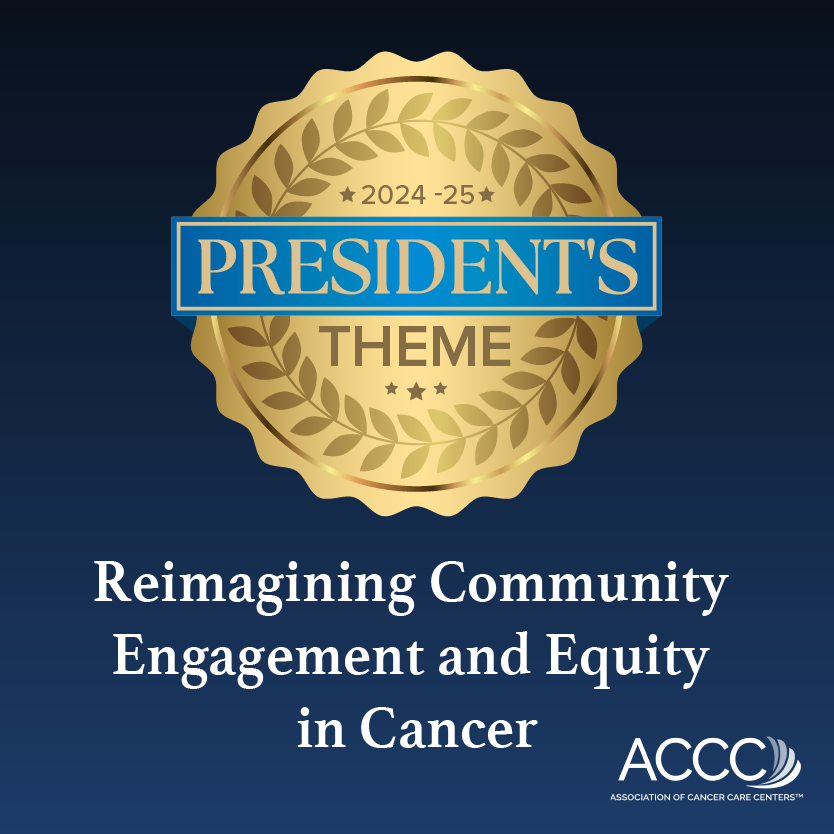
The Association of Cancer Care Centers (ACCC) president and senior associate dean for Community Engagement and Equity in Research at the Wake Forest University School of Medicine and Atrium Health, Nadine Barrett, PhD, MA, MS, issued a call to action for cancer centers as part of her 2024-2025 president’s theme, Reimagining Community Engagement and Equity in Cancer. Dr Barrett said, “[Put] the patient and the community center in the work that we do…and continue to move forward in advancing equity in cancer [care].” She has also challenged the common language of “underserved” or “hard-to-reach” communities and instead she urges cancer care teams to change the narrative to “hardly-reached.”

In the spirit of this year’s president’s theme, ACCC is partnering with Living Beyond Breast Cancer (LBBC), Cancer Support Community, and 3 cancer centers to reduce barriers to supportive care services, with a focus on people living with breast cancer.

Three Centers Taking the Lead

AtlantiCare Cancer Institute in New Jersey, Bon Secours St. Francis Cancer Center in South Carolina, and The Queen’s Medical Center in Hawaii were selected to participate in the initiative based on their strong commitment to addressing barriers to receiving supportive care services. As part of a virtual, expert-led quality improvement program, the centers are learning and applying strategies to incorporate patient and community input into the design, delivery, and expansion of supportive care services.

Teams from each cancer center are working with faculty members Jiajoyce Conway, DNP, CRNP, AOCNP, nurse practitioner at Penn State Health, Andrews Patel Hematology/Oncology group in Pennsylvania; and Jennifer Bires, MSW, LCSW, OSW-C, executive director of Life with Cancer at Inova Schar Cancer Center in Virginia, to design and implement their quality improvement projects. Each center prioritized a different quality improvement focus area that aligns with their communities’ needs, such as:

  • Providing exercise oncology services
  • Expanding image recovery services
  • Hardwiring referrals and processes for supportive care services.

Practical Strategies to Engage Communities Served

During a virtual cohort meeting, faculty and stakeholders discussed practical strategies to improve community engagement and involve all partners in meaningful ways from the start. Faculty stressed that before embarking on a new initiative, it is important to have data that:

  • Reflect the communities served
  • Support the need for the project
  • Inform how to proceed with the project.

Bires reiterated the importance of proactively seeking voices and perspectives that are not already engaged in a particular service. Using a cancer center’s existing image recovery sessions as an example, she explains: “People who already attend these sessions will be great to engage and ask what topics they’re most interested in. And then certainly, you don’t want to stop there because there may be folks who don’t come to those sessions for whatever reason, and you want to make sure that you’re being inclusive of the needs of all people who the image recovery program will serve.”

Additional recommendations from Bires and Conway to inform a quality improvement project with community input include:

  • Consult the program’s Patient and Family Advisory Council throughout the project.
  • Conduct interviews or focus groups with patients, caregivers, and community-based organizations to identify needs, barriers, and solutions.
  • Identify community-based organizations and local businesses that would provide valuable perspectives and/or opportunities for collaboration.
  • Ask clinical and nonclinical staff what feedback they hear from patients and their families.
  • Gather feedback at community outreach and screening events.
  • Review community needs assessments.
  • Analyze aggregate data from social drivers of health (SDOH) and distress screening tools.

Cohort members reflected on the importance and benefits of community engagement and what happens when engagement and input is not sought. One participant shared an example: they were working to increase survivorship care services and developed a session they thought patients would benefit from, but it was poorly attended. They noted that if they had engaged patients and community members up front, before designing the session, they could have developed a program that resonated with the communities they serve, as well as selected a day and time that was more convenient and accessible for people who work during regular business hours.

How has your cancer center effectively engaged community members as part of quality improvement or service delivery design? Share your thoughts in the comments section below.

References

  1. Penedo FJ, Natori A, Fleszar-Pavlovic SE, et al. Factors associated with unmet supportive care needs and emergency department visits and hospitalizations in ambulatory oncology. JAMA Netw Open. 2023;6(6):e2319352. doi:10.1001/jamanetworkopen.2023.19352