ACCC association of cancer care centers
Join/Renew
Login
Join/Renew
Login
Education & Resources
ACCC eXchange LogInCorporate Member Sponsored ResourcesPresentations & AbstractsPresident's ThemeACCC Connect eLearning LogIn
Publications
Oncology IssuesPatient Assistance & Reimbursement GuideTrending Now in Cancer Care
Events
2026 ACCC Leadership SummitAnnual Meeting & Cancer Center Business SummitCapitol Hill DayNational Oncology ConferenceOncology Reimbursement MeetingsOncology State Society Meetings
Policy & Advocacy
2024 Policy Wrap-Up and ACCC 2025 Policy PrioritiesLetters & StatementsAccess, Payment & Reimbursement ReformWhite Bagging & Brown BaggingAdvocacy ResourcesCancer Moonshot
Membership
Join | RenewWho We AreMembership Types & BenefitsCorporate MembersACCC Member Portal FAQMember Directory
Partners
Oncology State SocietiesPartner OrganizationsCME
News
News ReleasesAdvocacy News ReleasesOncology News
About ACCC
Timeline / 50th Anniversary2025 Impact ReportACCC Innovator AwardsACCC FellowsACCC Senior Staff
Breast CancerMetastatic Breast Cancer
Gastrointestinal CancerBiliary Tract CancerColorectal CancerGastric CancerLiver Cancer
Genitourinary CancerBladder CancerProstate CancerRenal Cell Carcinoma
Gynecologic CancerOvarian Cancer
Head & Neck Cancer
Hematologic MalignanciesAcute Lymphocytic Leukemia (ALL)Acute Myeloid Leukemia (AML)Chronic Lymphocytic Leukemia (CLL)Mantle Cell Lymphoma (MCL)Multiple Myeloma (MM)Myelodysplastic Syndromes (MDS)
Lung CancerNon-Small Cell Lung Cancer (NSCLC)Small Cell Lung Cancer (SCLC)
Sarcoma
Skin CancerMelanomaNon-Melanoma Skin Cancers (NMSC)
Clinical Practice & TreatmentCancer DiagnosticsCare CoordinationEHR Integration for Biomarker TestingQuality Improvement Collaboration: Integration of Precision Medicine in Community OncologyTreatment
Financial NavigationFAN Boot CampFinancial Advocacy Network (FAN) Resource LibraryPatient Assistance & Reimbursement GuidePrior Authorization
Health Equity & Access3, 2, 1, Go! Practical Solutions for Addressing Cancer Care DisparitiesAppalachian Community Cancer AllianceOncology Advanced PractitionersPersonalizing Care for Patients of All BackgroundsSocial Drivers of Health
Patient-Centered CareAddressing Care Disparities for VeteransAdolescent and Young Adult (AYA)Care Action Plans for People with CancerDermatologic ToxicitiesEmpowering CaregiversGeriatric OncologyHealth LiteracyNutritionOncology PharmacyPatient NavigationPsychosocial Care in OncologyShared Decision-MakingSupportive CareSurvivorship Care
Practice Management & OperationsCancer Program FundamentalsLeadership Sustainment and Engagement VideosOncology Practice Transformation and Integration CenterOncology Team Resiliency
ResearchACCC Community Oncology Research Institute (ACORI)
Technology & InnovationTelehealth & Digital Medicine
ACCCBuzz Blog
CANCER BUZZ Podcast
Oncology Issues
Join/Renew
Login
Breast CancerMetastatic Breast Cancer
Gastrointestinal CancerBiliary Tract CancerColorectal CancerGastric CancerLiver Cancer
Genitourinary CancerBladder CancerProstate CancerRenal Cell Carcinoma
Gynecologic CancerOvarian Cancer
Head & Neck Cancer
Hematologic MalignanciesAcute Lymphocytic Leukemia (ALL)Acute Myeloid Leukemia (AML)Chronic Lymphocytic Leukemia (CLL)Mantle Cell Lymphoma (MCL)Multiple Myeloma (MM)Myelodysplastic Syndromes (MDS)
Lung CancerNon-Small Cell Lung Cancer (NSCLC)Small Cell Lung Cancer (SCLC)
Sarcoma
Skin CancerMelanomaNon-Melanoma Skin Cancers (NMSC)
Clinical Practice & TreatmentCancer DiagnosticsCare CoordinationEHR Integration for Biomarker TestingQuality Improvement Collaboration: Integration of Precision Medicine in Community OncologyTreatment
Financial NavigationFAN Boot CampFinancial Advocacy Network (FAN) Resource LibraryPatient Assistance & Reimbursement GuidePrior Authorization
Health Equity & Access3, 2, 1, Go! Practical Solutions for Addressing Cancer Care DisparitiesAppalachian Community Cancer AllianceOncology Advanced PractitionersPersonalizing Care for Patients of All BackgroundsSocial Drivers of Health
Patient-Centered CareAddressing Care Disparities for VeteransAdolescent and Young Adult (AYA)Care Action Plans for People with CancerDermatologic ToxicitiesEmpowering CaregiversGeriatric OncologyHealth LiteracyNutritionOncology PharmacyPatient NavigationPsychosocial Care in OncologyShared Decision-MakingSupportive CareSurvivorship Care
Practice Management & OperationsCancer Program FundamentalsLeadership Sustainment and Engagement VideosOncology Practice Transformation and Integration CenterOncology Team Resiliency
ResearchACCC Community Oncology Research Institute (ACORI)
Technology & InnovationTelehealth & Digital Medicine
ACCCBuzz Blog
CANCER BUZZ Podcast
Oncology Issues
    • Education & Resources
    • Publications
    • Events
    • Policy & Advocacy
    • Membership
    • Partners
    • News
    • About ACCC
ACCC association of cancer care centers
1801 Research Boulevard, Suite 400, Rockville, MD 20850
Tel: 301.984.9496 Fax: 301.770.1949 Email Us
Contact UsVolunteers
Advertise
Career Center
Terms and Conditions
Privacy Policy
ACCC Rebranding
Copyright © 2026 Association of Cancer Care Centers. All Rights Reserved.
Advertisement

Blog

Article

March 23, 2023

ACCC Spotlights Critical Lung Cancer Screening Needs in Appalachia

ACCC held a LinkedIn live event on March 13, 2023, with subject matter experts, who shared strategies for tackling lung cancer disparities in the Appalachian Region and beyond.
ACCC Spotlights Critical Lung Cancer Screening Needs in Appalachia

The Appalachian Region encompasses 13 states, covering over 206,000 square miles. Home to nearly 26 million people, the region has the highest cancer mortality rates in the United States. In fact, central Appalachia has a mortality rate that is 32 percent higher than the rest of the U.S. Additionally, lung, cervical, and colorectal cancers’ incidence and mortality rates are higher in the Appalachian areas of Ohio, Kentucky, Pennsylvania, Virginia, and West Virginia, when compared to any other part of the nation. “[A] confluence of factors like access, smoking rates, [and] other social factors…contribute to [the] lack of access to screening,” said Mary E. Reid, PhD, MSPH, BSN, chief of cancer screening, survivorship, and mentorship at Roswell Park Comprehensive Cancer Center in Buffalo, N.Y.

The Appalachian Community Cancer Alliance

The Association of Cancer Care Centers (ACCC) joined six oncology state societies from throughout the region (Kentucky, North Carolina, South Carolina, Tennessee, Virginia, and West Virginia) to create the Appalachian Community Cancer Alliance. This alliance seeks to provide residents of the Appalachian Region and beyond with interdisciplinary, patient-centered approaches to cancer care from prevention through survivorship, with an emphasis on enhanced quality of life.

One of the key initiatives of the alliance is to impact rural health equity and improve access and quality of care by focusing on lung cancer screenings. The Rural Appalachian Lung Cancer Screening Initiative looks to collaborate with multidisciplinary providers to increase guideline-concordant lung cancer screenings, as well as promote education and communication strategies to overcome informational, literacy, and cultural barriers.

Recently, the White House, under President Biden’s direction, prioritized cancer screening under the Cancer Moonshot initiative. With over 10 million missed cancer screenings due to the COVID-19 pandemic, the time for increased cancer prevention and screening efforts has never been more imperative.

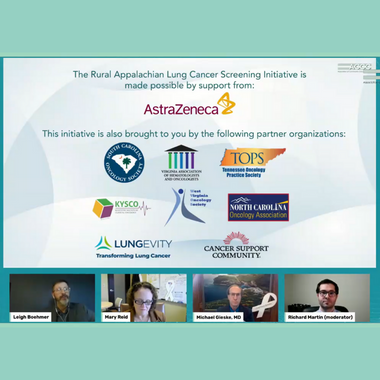
ACCC held a LinkedIn live event on March 13, 2023: “From Awareness to Action: Tackling Lung Cancer Disparities in the Appalachian Region.” The event was moderated by Richard L. Martin III, MD, MPH, medical oncologist and medical director, Health Equity and Community Engagement, at Tennessee Oncology, in Chattanooga, Tenn., and featured several speakers, including Reid and Michael R. Gieske, MD, director of lung cancer screening at St. Elizabeth Cancer Center in Erlanger, Ky.

The live event highlighted the need for guideline-concordant healthcare, such as what is outlined by the United States Preventive Services Task Force that was released in March 2021, which includes shared decision-making with patients and their caregivers, as well as education and referrals for individuals to access smoking cessation programs. “[You] can do more harm than benefit if [you are] not following guidelines for lung screenings,” Dr. Gieske said.

Next Steps to Improve Cancer Screenings

Speakers first identified the need to educate primary care providers on the importance of lung cancer screenings. Marketing to the community is also very important. Cancer programs and practices should engage their local community organizations, such as community health workers and faith-based organizations, to get the necessary health-related education out into their community.

Next, speakers suggested facilitating referrals to the right place. That is, healthcare providers should use nurse navigators and clinical navigators to garner buy-in from their community’s primary care providers, who can work with nodule review boards.

For more information on the work of the Appalachian Community Cancer Alliance and Rural Appalachian Lung Cancer Screening Initiative visit the ACCC website. If you’d like to receive up-to-date notices on the Alliance and lung cancer screening initiatives, complete the form listed on left side of the webpage.

The ACCC Appalachian Community Cancer Alliance is supported by Bristol Myers Squibb, and the Rural Appalachian Lung Cancer Screening Initiative is supported by AstraZeneca.