To fill a care gap, The James Cancer Hospital opened a new set of front doors to its facility—The James Cancer Diagnostic Center—to ensure all patients with a concern for cancer could be quickly evaluated, even if they didn’t have a confirmed diagnosis.
This blog post is the third of a five-part series highlighting the achievements of the 2022 ACCC Innovator Award winners before their in-depth presentations at the ACCC 39th National Oncology Conference. You can learn more about the innovations being recognized this year and the people who pioneered them by joining ACCC in West Palm Beach, Fla., on October 12-14, 2022.
The COVID-19 pandemic led many cancer programs and practices across the United States to innovate their care delivery to meet patients where they are at, and Arthur G. James Cancer Hospital and Richard J. Solove Research Institute (OSUCCC – James) in Columbus, Ohio, is no outlier.
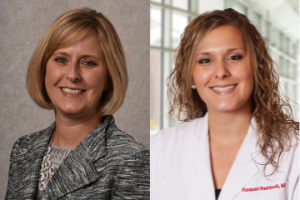
In the summer of 2020, staff at The James Cancer Hospital realized that many patients experiencing symptoms for cancer and those who needed further evaluation to reach a diagnosis were now actively avoiding the hospital given the pandemic. The underlying concern: the global pandemic might result in more patients presenting with late-stage disease that could have been diagnosed earlier. To fill this care gap, The James Cancer Hospital opened a new set of front doors to its facility, The James Cancer Diagnostic Center. “We wanted to ensure all patients with a concern for cancer could be quickly evaluated, even if they didn’t have a confirmed diagnosis. We are now able to rapidly evaluate patients in person or virtually, get the needed testing, and then refer patients to the appropriate sub-specialist in a timely manner,” explains Raquel Reinbolt, MD, medical director at The James Cancer Hospital.
Patients no longer have to return to their primary care provider or another healthcare professional to be evaluated and diagnosed—all these services are now available under one roof. “Another advantage of the [cancer diagnostic center] is that patients can self-refer,” Dr. Reinbolt said. “That, again, makes sure that our front doors are wide open for all who need evaluation for a concern for cancer, even those who aren’t well established in the healthcare system.”
Cancer Center Integration
This rapid-access diagnostic center was inspired by another cancer program. After learning about the diagnostic services at Dana Farber Cancer Institute, David E. Cohn, MD, MBA, FACHE, interim chief executive officer at The James Cancer Hospital, told his staff, “I don’t like telling patients no, they can’t come to our center until they have had these tests done. Not everyone has access to these tests or the ability to get to that point.” Instead of turning people away, the goal of The James Cancer Diagnostic Center is to offer in-house care for anyone who walks through the front doors with a particular symptom or an abnormality from a lab or imaging scan that that needs to be further evaluated to rule out a cancer diagnosis. For those in need of cancer screening services that are considered routine care (e.g., mammograms), they are directed to their primary care provider or other healthcare provider who offers these services.
“We are the experts in cancer care,” said Erin Heuser, MBOE, RT(R)(T), LSSBB, CCMP, lead process engineer at The James Cancer Hospital. “We know how and what tests to give individuals.” Because the diagnostic center is located within The James Cancer Hospital and its staff are all dedicated oncology professionals, they can assist patients in completing and understanding why a certain test or evaluation is required to confirm a cancer diagnosis.
In developing this innovation, the team at The James Cancer Diagnostic Center needed to collaborate closely with the health system’s information technology, patient access, finance, physician, advanced practice provider (APP), and nursing teams. APPs and nurses with hematologic and oncologic expertise were specifically identified to provide care in the diagnostic center. Though the start of the COVID-19 pandemic put plans on hold, it only took about three weeks to fully implement The James Diagnostic Center once all stakeholders agreed that patients needed this service right away.
Realizing Success
For Dr. Reinbolt, one of the keys to the diagnostic center’s success was engaging oncology providers at The James Cancer Hospital from the start. “We want to do all the necessary diagnostic evaluation, make that pathologic diagnosis or whatever confirmation test is necessary, and serve it in a nicely wrapped package to our specialist, so they're not having to spend time on the diagnostic process,” she explains. “Instead, our cancer experts are able to focus on developing a treatment plan and getting that patient to treatment as rapidly as possible.” Further, Dr. Reinbolt and her team were clear when defining the diagnostic clinic’s testing strategies and aligning results with the information their oncologists or specialists need to begin effective treatment planning.
For Heuser, engagement from the nursing and provider team is what continues to drive the diagnostic center’s success. “They are touching base with the patient, from the time that referral comes in until they are actively engaged with either their primary care provider or our sub-specialist,” she explains. “Every step along the way, our nursing and provider team is engaged with patients.” This navigation style ensures no patient falls through the cracks and that all patients completely understand the healthcare process upon entering the clinic—regardless or not of a cancer diagnosis.
To learn more about The James Cancer Diagnostic Center, including an in-depth look at its structure and the services provided to patients, register to attend the ACCC 39th National Oncology Conference this fall. “There will be a great discussion on ways to personalize and rapidly provide cancer diagnostics and care delivery. We will also share the way our program has tried to ensure that patients’ fears related to signs or symptoms that could be concerning for cancer are addressed as promptly as possible,” Dr. Reinbolt said. “I think the more we can personalize the care we're delivering and provide good communication between our patients, the diagnostic providers, and our cancer specialists, the better the patient experience and quality of care delivered.”