
ACCC association of cancer care centers
Join/Renew
Login
Join/Renew
Login
Education & Resources
ACCC eXchange LogInSponsored Education from ACCC Corporate PartnersACCC eLearning LogInPresentations & Abstracts
Publications
Oncology IssuesPatient Assistance & Reimbursement GuideTrending Now in Cancer CareBusiness Case Studies for Hiring New Staff
Events
2026 ACCC Leadership SummitAnnual Meeting & Cancer Center Business SummitCapitol Hill DayNational Oncology ConferenceOncology Reimbursement MeetingsOncology State Society Meetings
Policy & Advocacy
ACCC 2026 Policy PrioritiesLetters & StatementsAccess, Payment & Reimbursement ReformWhite Bagging & Brown BaggingAdvocacy ResourcesCancer Moonshot
Membership
Join | RenewWho We AreMembership Types & BenefitsCorporate MembersACCC Member Portal FAQMember Directory
Partners
Oncology State SocietiesPartner OrganizationsCME
News
News ReleasesAdvocacy News ReleasesOncology News
About ACCC
Timeline / 50th Anniversary2025 Impact ReportPresident's ThemeACCC Innovator AwardsACCC FellowsBoard of TrusteesACCC Senior Staff
Breast CancerMetastatic Breast Cancer
Gastrointestinal CancerBiliary Tract CancerColorectal CancerGastric CancerLiver Cancer
Genitourinary CancerBladder CancerProstate CancerRenal Cell Carcinoma
Gynecologic Cancer
Head & Neck Cancer
Hematologic MalignanciesAcute Lymphocytic Leukemia (ALL)Acute Myeloid Leukemia (AML)Chronic Lymphocytic Leukemia (CLL)Mantle Cell Lymphoma (MCL)Multiple Myeloma (MM)Myelodysplastic Syndromes (MDS)
Lung CancerNon-Small Cell Lung Cancer (NSCLC)Small Cell Lung Cancer (SCLC)
Sarcoma
Skin CancerMelanomaNon-Melanoma Skin Cancers (NMSC)
Clinical Practice & TreatmentCancer DiagnosticsCare CoordinationEHR Integration for Biomarker TestingQuality Improvement Collaboration: Integration of Precision Medicine in Community OncologyTreatment
Financial NavigationFAN Boot CampFinancial Advocacy Network (FAN) Resource LibraryPatient Assistance & Reimbursement GuidePrior Authorization
Health Equity & Access3, 2, 1, Go! Practical Solutions for Addressing Cancer Care DisparitiesAppalachian Community Cancer AllianceOncology Advanced PractitionersPersonalizing Care for Patients of All BackgroundsSocial Drivers of Health
Patient-Centered CareAddressing Care Disparities for VeteransAdolescent and Young Adult (AYA)Care Action Plans for People with CancerDermatologic ToxicitiesEmpowering CaregiversGeriatric OncologyHealth LiteracyNutritionOncology PharmacyPatient NavigationPsychosocial Care in OncologyShared Decision-MakingSupportive CareSurvivorship Care
Practice Management & OperationsCancer Program FundamentalsLeadership Sustainment and Engagement VideosOncology Practice Transformation and Integration CenterOncology Team Resiliency
ResearchACCC Community Oncology Research Institute (ACORI)
Technology & InnovationTelehealth & Digital Medicine
ACCCBuzz Blog
CANCER BUZZ Podcast
Oncology Issues
Join/Renew
Login
Breast CancerMetastatic Breast Cancer
Gastrointestinal CancerBiliary Tract CancerColorectal CancerGastric CancerLiver Cancer
Genitourinary CancerBladder CancerProstate CancerRenal Cell Carcinoma
Gynecologic Cancer
Head & Neck Cancer
Hematologic MalignanciesAcute Lymphocytic Leukemia (ALL)Acute Myeloid Leukemia (AML)Chronic Lymphocytic Leukemia (CLL)Mantle Cell Lymphoma (MCL)Multiple Myeloma (MM)Myelodysplastic Syndromes (MDS)
Lung CancerNon-Small Cell Lung Cancer (NSCLC)Small Cell Lung Cancer (SCLC)
Sarcoma
Skin CancerMelanomaNon-Melanoma Skin Cancers (NMSC)
Clinical Practice & TreatmentCancer DiagnosticsCare CoordinationEHR Integration for Biomarker TestingQuality Improvement Collaboration: Integration of Precision Medicine in Community OncologyTreatment
Financial NavigationFAN Boot CampFinancial Advocacy Network (FAN) Resource LibraryPatient Assistance & Reimbursement GuidePrior Authorization
Health Equity & Access3, 2, 1, Go! Practical Solutions for Addressing Cancer Care DisparitiesAppalachian Community Cancer AllianceOncology Advanced PractitionersPersonalizing Care for Patients of All BackgroundsSocial Drivers of Health
Patient-Centered CareAddressing Care Disparities for VeteransAdolescent and Young Adult (AYA)Care Action Plans for People with CancerDermatologic ToxicitiesEmpowering CaregiversGeriatric OncologyHealth LiteracyNutritionOncology PharmacyPatient NavigationPsychosocial Care in OncologyShared Decision-MakingSupportive CareSurvivorship Care
Practice Management & OperationsCancer Program FundamentalsLeadership Sustainment and Engagement VideosOncology Practice Transformation and Integration CenterOncology Team Resiliency
ResearchACCC Community Oncology Research Institute (ACORI)
Technology & InnovationTelehealth & Digital Medicine
ACCCBuzz Blog
CANCER BUZZ Podcast
Oncology Issues
    • Education & Resources
    • Publications
    • Events
    • Policy & Advocacy
    • Membership
    • Partners
    • News
    • About ACCC
ACCC association of cancer care centers
5425 Wisconsin Ave #600, Chevy Chase, MD 20815
Tel: 301.984.9496 Email Us
Contact UsVolunteers
Advertise
Career Center
Terms and Conditions
Privacy Policy
ACCC Rebranding
Copyright © 2026 Association of Cancer Care Centers. All Rights Reserved.
HomeACCCBuzz Blog

Pandemic Puts Financial Squeeze on Patients

May 28, 2020

Pandemic Puts Financial Squeeze on Patients

In April 2020, the U.S. unemployment rate reached an all-time high of 14.7 percent. By May 28, more than 40 million people in the U.S. had filed for unemployment insurance as the COVID-19 pandemic led to the shuttering of business after business.

In an employer-based healthcare system, the repercussions of this massive unemployment can have a devastating effect on the ability to obtain healthcare services. Although it is too early to accurately gauge the long-term impact on healthcare of the unemployment brought on by recent business closures, the Kaiser Family Foundation estimated in May 2020 that nearly 27 million people in the U.S. may have lost employer-sponsored insurance since the dawn of COVID-19.

Before the Pandemic

To understand how this widespread loss of insurance may affect individual patients, it is helpful to know the state of financial need among patients before the pandemic hit. The arrival of COVID-19 took place against a backdrop of skyrocketing healthcare costs. Today’s consumers are expected to pay an increasing amount of their healthcare costs out of pocket, with rising co-pays, coinsurance, and deductibles resulting in fewer and fewer people able to fully afford their care.

Physicians and researchers have long observed that a patient’s insurance status can affect the quality of care they receive and their ultimate outcomes. To better understand how coverage status can influence the treatment of patients with cancer, researchers conducted a review of studies of health insurance coverage disruptions and cancer care published between 1980 and 2019.

The results of that review, conducted before the COVID-19 pandemic began and published in the Journal of the National Cancer Institute, found that health insurance coverage disruptions—defined as gaps in coverage or transitions between types of coverage or between specific health insurance plans—are common and adversely associated with the receipt of cancer care and survival.

The extent of that association is jarring. Researchers determined that from 4.3 percent to 32.8 percent of the adults in the reviewed studies experienced coverage disruptions. These people were less likely to receive cancer prevention or screening (31 percent), less likely to receive treatment (13.8 percent), and less likely to receive end-of-life care (10.3 percent). They were also more likely to be diagnosed at a later stage (44.8 percent) and have a lower rate of survival (20.7 percent), leading the study’s authors to conclude, “Lack of health insurance coverage is one of the strongest predictors of poor cancer outcomes in the United States.”

Currently compounding this situation is the fact that many people have gone without preventive cancer care during the pandemic. A report in April 2020 found that cancer scans are down precipitously as the pandemic continues to disrupt routine care. The report, based on medical claims data, found that diagnostic panels and cancer screenings typically performed during annual physician visits fell by as much as 68 percent nationally.

In May 2020, the electronic medical records vendor Epic reported that appointments for cervix, colon, and breast cancer screenings were down between 86 percent and 94 percent in March 2020, compared to average volumes in the three years before the first confirmed case of COVID-19 in the U.S. As many people emerge from the pandemic out of work and uninsured, there is the danger that they will not resume routine care, leading to current cancers remaining undiagnosed until they manifest at a later stage.

Strained Resources

Rifeta Kajdic, the oncology program manager at St. Luke’s Cancer Institute in Boise, Idaho, and a member of the ACCC Financial Advocacy Network (FAN) Advisory Committee, says projections of large numbers of newly uninsured patients will manifest in increased demand for financial aid. “The pandemic has caused a lot of fallout for patients who are in the middle of treatment, but who are now without insurance due to being laid off or furloughed,” says Kajdic. “We anticipate a surge of patients who need serious assistance, and there will be a higher demand for financial advocates to find resources. At the same time, resources will likely be more limited due to the pandemic’s economic fallout.”

A survey conducted by the American Cancer Society Cancer Action Network of 1,200 cancer patients and survivors between March 25 and April 8, 2020 indicates that patients are under increasing financial strain to pay for their treatment. Nearly 4 in 10 (38 percent) survey respondents say COVID-19 is having a notable effect on their ability to afford their care, due mostly to reduced work hours. Of the respondents who report that they or a family member living with them has lost a job, 43 percent had employer-sponsored coverage. Of those who report that they or a family member had their hours reduced, 58 percent had employer-sponsored health insurance.

In her capacity, Kajdic manages oncology patient financial advocates across five sites operated by St. Luke’s. She says the healthcare system employs 19 financial advocates across those sites, totaling 15 FTEs. “At all sites combined, we might see about 400 new patients a month,” says Kajdic. “We meet with an average of 70 patients per week. Demand for our services is only increasing, and we expect it to increase a lot more. Already, the resources that are available are being pulled in all directions.”

ACCC’s Financial Advocacy Network (FAN) helps multidisciplinary teams step up to these challenges with education and resources needed to provide financial services to patients and their families. FAN’s Financial Advocacy Boot Camp delivers training modules that increase advocates’ ability to maximize insurance coverage and external assistance, and ACCC’s Patient Assistance and Reimbursement Guide contains directions for enrolling patients in financial assistance programs.

Related Content

Decentralized Clinical Trials in Community Oncology: Advancing Access Requires More Than TechnologyACCCBuzz Blog

Decentralized Clinical Trials in Community Oncology: Advancing Access Requires More Than Technology

September 10, 2026

Highlights From Volume 41, Number 4 Oncology IssuesACCCBuzz Blog

Highlights From Volume 41, Number 4 Oncology Issues

Gabrielle Stearns

August 20, 2026

Transforming Access to Care Through Pre-Intake Navigation

Upcoming Events

ACCC 43rd National Oncology Conference

ACCC 43rd National Oncology Conference

In Person October 21, 2026 at 8:00 AM EDT450 Summer St, Boston, MA 02210, USAOmni Boston Hotel at the Seaport, Boston
Register Now!
ACCC Oncology Reimbursement Meeting | Reno

ACCC Oncology Reimbursement Meeting | Reno

In Person November 4, 2026 at 8:00 AM EST255 North Virginia Street, Reno, NV, USAWhitney Peak Hotel Reno, Tapestry Collection by Hilton,
Register Now!
ACCC Oncology Reimbursement Meeting | Providence

ACCC Oncology Reimbursement Meeting | Providence

In Person November 10, 2026 at 8:00 AM EST5 Avenue of the Arts, Providence, RI, USARenaissance Providence Downtown Hotel,
Register Now!
TxSCO 2026 Annual Conference
Oncology

TxSCO 2026 Annual Conference

In Person Conference & ConventionSeptember 18, 2026 at 6:00 PM CDT501 Gaylord Trail, Grapevine, TX, USAGaylord Texan Resort & Convention Center, Grapevine
Register Now!
KYSCO 2026 Fall Oncology Review
Oncology

KYSCO 2026 Fall Oncology Review

In Person Conference & ConventionSeptember 19, 2026 at 7:00 AM EDT500 S 4th St, Louisville, KY, USAThe Seelbach Hilton Louisville, Louisville
Register Now!
ESHOS Horizons 2026
Oncology

ESHOS Horizons 2026

In Person Conference & ConventionSeptember 19, 2026 at 7:30 AM EDT1 Liberty Street, New York, NY, USAConvene at One Liberty Plaza, New York
Register Now!
MSOS 2026 Bozeman Meeting
Oncology

MSOS 2026 Bozeman Meeting

In Person Meeting & NetworkingSeptember 22, 2026 at 5:30 PM EDT5 W Mendenhall St suite 102, Bozeman, MT 59715, USA Urban Kitchen, Bozeman
Register Now!
MSCO 2026 Fall Conference
Oncology

MSCO 2026 Fall Conference

In Person Conference & ConventionSeptember 22, 2026 at 5:00 PM CDT1500 Park Pl Blvd, Minneapolis, MN, USADoubleTree by Hilton Hotel Minneapolis - Park Place, Minneapolis
Register Now!
HSCO 2026 September Dinner Symposium
Oncology

HSCO 2026 September Dinner Symposium

In Person Conference & ConventionSeptember 23, 2026 at 5:30 PM HST3660 Waialae Ave, Honolulu, HI, USA3660 On The Rise, Honolulu
Register Now!
RIOS Fall Meeting
Oncology

RIOS Fall Meeting

In Person Conference & ConventionSeptember 25, 2026 at 5:30 PM EDT139 Mathewson Street, Providence, RI, USAHotel Providence, Providence
Register Now!
Advertisement
Advertisement

Trending Now on
ACCCBuzz Blog

Decentralized Clinical Trials in Community Oncology: Advancing Access Requires More Than Technology

Decentralized Clinical Trials in Community Oncology: Advancing Access Requires More Than Technology

Decentralized clinical trial approaches, including remote consent, telehealth, local laboratory and imaging services, and more, can help reduce some of the many barriers that prevent eligible patients from participating in trials. But as the participants in ACCC’s Advancing Decentralized Clinical Trials in the Community Setting Roundtable Series emphasized, implementing DCT elements is not simply a matter of adopting new technology. Doing so successfully requires thoughtful workflows and oversight structures that consider equity, scalability, and sustainability.

Highlights From Volume 41, Number 4 Oncology Issues

Highlights From Volume 41, Number 4 Oncology Issues

From precision medicine to psychosocial care to navigation for a diverse population, the latest issue Oncology Issues brings insights into not just institutional and administrative barriers to treatment, but areas of care that directly impact the lived experience of those navigating the cancer care continuum.

ACCCBuzz Blog

Transforming Access to Care Through Pre-Intake Navigation

Rachel Radwan

August 6, 2026

An APP-Led Outpatient Bispecific Antibody ClinicACCCBuzz Blog

An APP-Led Outpatient Bispecific Antibody Clinic

Rachel Radwan

August 4, 2026

Advancing Critical Priorities at the State Level: Louisiana, Iowa, and Washington Awarded for Their Efforts at 2026 ASCO Annual MeetingACCCBuzz Blog

Advancing Critical Priorities at the State Level: Louisiana, Iowa, and Washington Awarded for Their Efforts at 2026 ASCO Annual Meeting

Rachel Radwan

July 29, 2026

Designing a Safe, Fully Outpatient CAR T-Cell Program in the CommunityACCCBuzz Blog

Designing a Safe, Fully Outpatient CAR T-Cell Program in the Community

Rachel Radwan

July 27, 2026

Local Staff, Lasting Impact: A New Model for Rural Cancer PreventionACCCBuzz Blog

Local Staff, Lasting Impact: A New Model for Rural Cancer Prevention

Rachel Radwan

July 16, 2026

A Pharmacist-Led Strategy to Improve Care With Oncolytic Virus TreatmentsACCCBuzz Blog

A Pharmacist-Led Strategy to Improve Care With Oncolytic Virus Treatments

Rachel Radwan

July 14, 2026

Transforming Access to Care Through Pre-Intake Navigation

Transforming Access to Care Through Pre-Intake Navigation

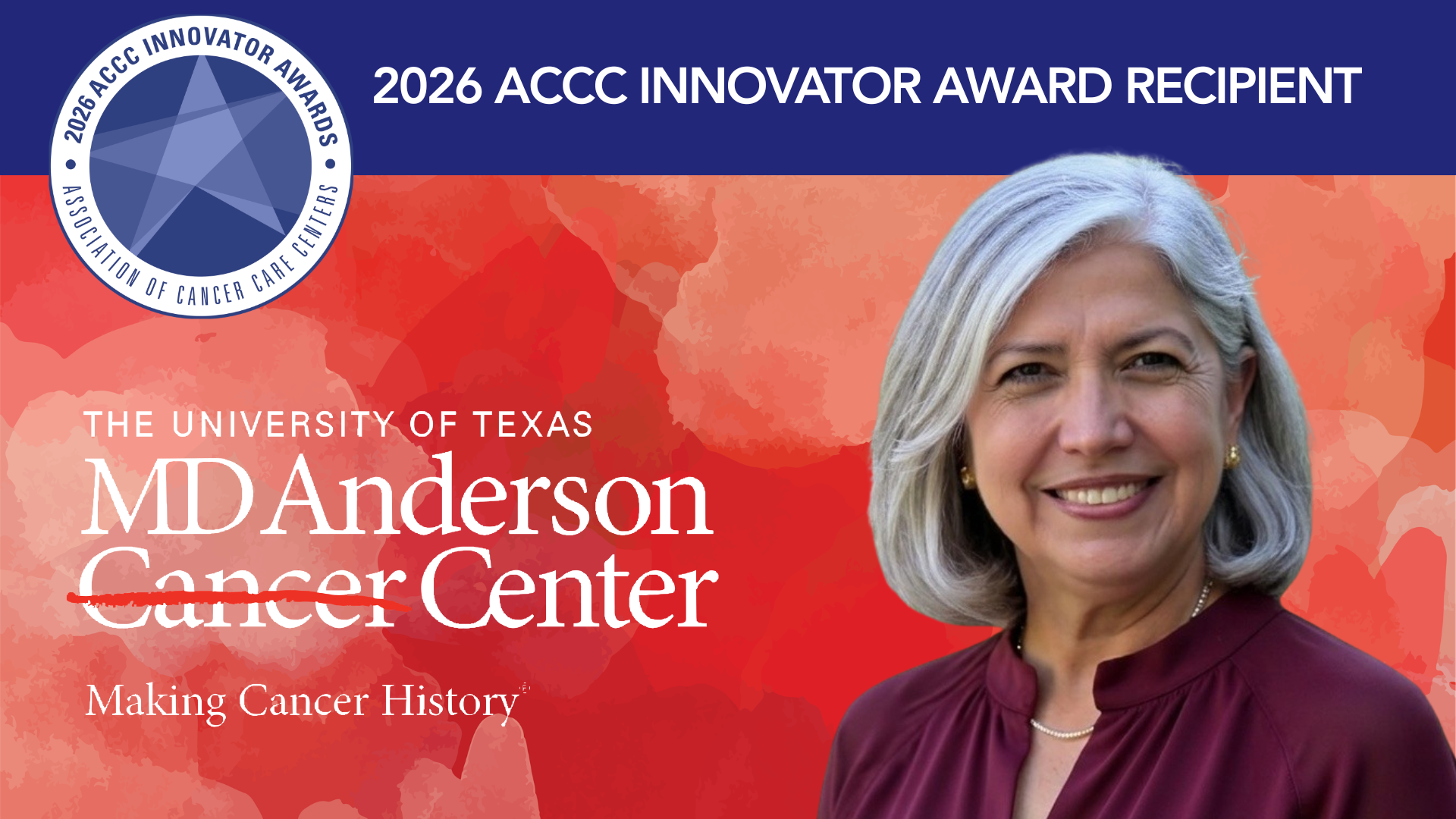
The University of Texas MD Anderson Cancer Center in Houston, Texas, developed a novel Pre-Intake Navigation (PIN) program, which identifies and resolves early financial and insurance barriers, enabling patients to access timely, high-quality cancer care with less anxiety and fewer delays. PIN shifts financial navigation from a late-stage, reactive task to an early, standardized, patient‑centered process embedded in the call center workflow.

An APP-Led Outpatient Bispecific Antibody Clinic

An APP-Led Outpatient Bispecific Antibody Clinic

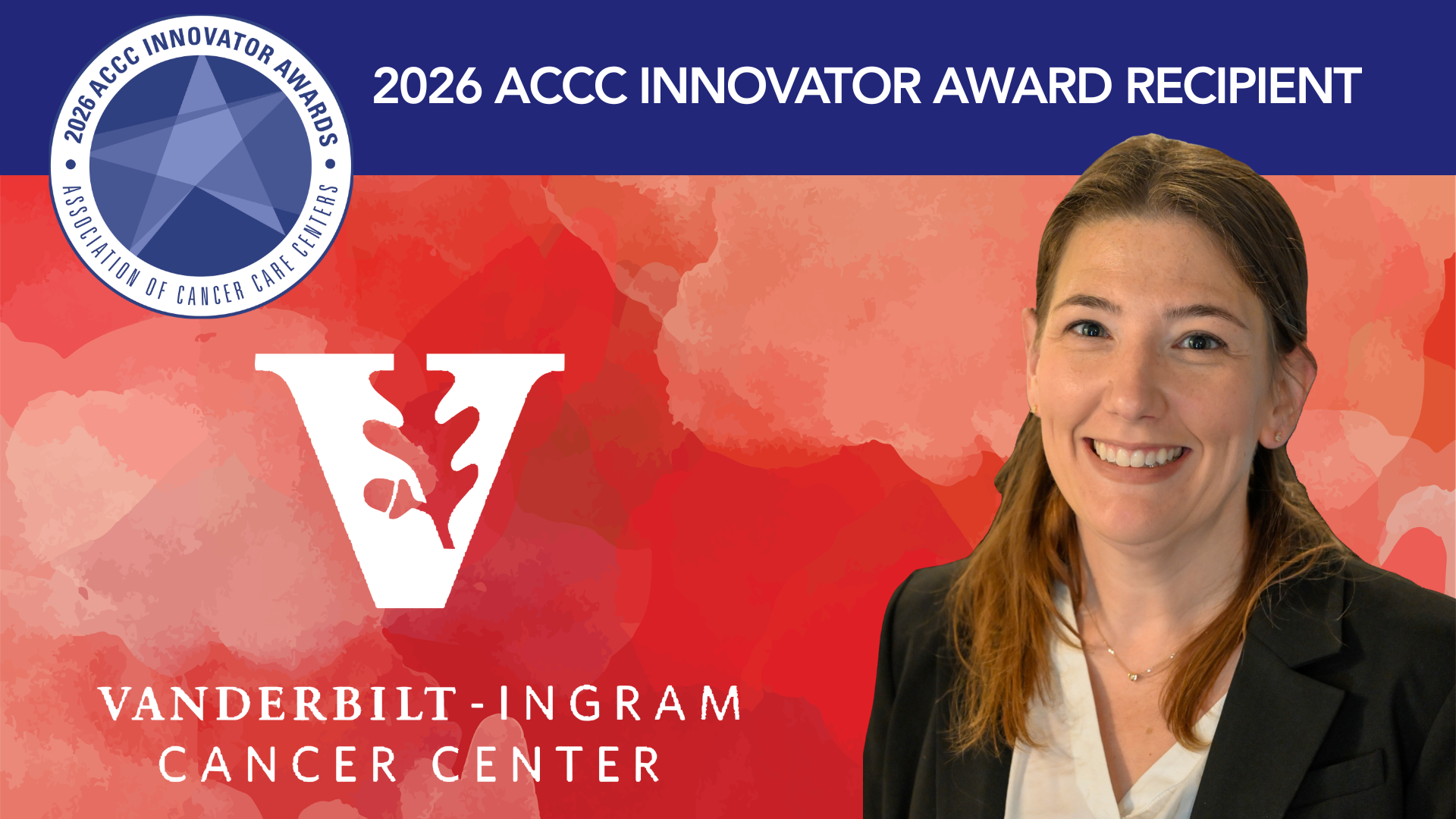
Understanding both the benefits to be had from offering BsAb therapy to its community and the scope of this undertaking, Vanderbilt-Ingram Cancer Center took a novel approach with its APP-led BsAb step-up dosing clinic, which won the program a 2026 ACCC Innovator Award.

View All ACCCBuzz Blogs

Recently Heard on
CANCER BUZZ Podcast

Embedding Local Expertise in Rural Cancer Prevention - Podcast [Ep. 241]

From Reactive to Proactive: Improving Access to Cancer Care Through Pre-Intake Navigation - [Podcast] Ep. 240

Real-World Oncology Decentralized Trials - [Video Podcast] Ep. 66

The Real Cost of Cancer: Financial Toxicity, Transportation Challenges, and Access Gaps – [Video Podcast] Ep. 65

View All Podcasts

Latest from Oncology Issues

August 2026
August 2026
June 2026
April 2026
February 2026
December 2025
View All Oncology Issues

Join the Conversation

ACCC eXchange Digital Banner
Login