ACCC association of cancer care centers
Join/Renew
Login
Join/Renew
Login
Education & Resources
ACCC eXchange LogInCorporate Member Sponsored ResourcesPresentations & AbstractsPresident's ThemeACCC Connect eLearning LogIn
Publications
Oncology IssuesPatient Assistance & Reimbursement GuideTrending Now in Cancer Care
Events
2026 ACCC Leadership SummitAnnual Meeting & Cancer Center Business SummitCapitol Hill DayNational Oncology ConferenceOncology Reimbursement MeetingsOncology State Society Meetings
Policy & Advocacy
2024 Policy Wrap-Up and ACCC 2025 Policy PrioritiesLetters & StatementsAccess, Payment & Reimbursement ReformWhite Bagging & Brown BaggingAdvocacy ResourcesCancer Moonshot
Membership
Join | RenewWho We AreMembership Types & BenefitsCorporate MembersACCC Member Portal FAQMember Directory
Partners
Oncology State SocietiesPartner OrganizationsCME
News
News ReleasesAdvocacy News ReleasesOncology News
About ACCC
Timeline / 50th Anniversary2025 Impact ReportACCC Innovator AwardsACCC FellowsACCC Senior Staff
Breast CancerMetastatic Breast Cancer
Gastrointestinal CancerBiliary Tract CancerColorectal CancerGastric CancerLiver Cancer
Genitourinary CancerBladder CancerProstate CancerRenal Cell Carcinoma
Gynecologic CancerOvarian Cancer
Head & Neck Cancer
Hematologic MalignanciesAcute Lymphocytic Leukemia (ALL)Acute Myeloid Leukemia (AML)Chronic Lymphocytic Leukemia (CLL)Mantle Cell Lymphoma (MCL)Multiple Myeloma (MM)Myelodysplastic Syndromes (MDS)
Lung CancerNon-Small Cell Lung Cancer (NSCLC)Small Cell Lung Cancer (SCLC)
Sarcoma
Skin CancerMelanomaNon-Melanoma Skin Cancers (NMSC)
Clinical Practice & TreatmentCancer DiagnosticsCare CoordinationEHR Integration for Biomarker TestingQuality Improvement Collaboration: Integration of Precision Medicine in Community OncologyTreatment
Financial NavigationFAN Boot CampFinancial Advocacy Network (FAN) Resource LibraryPatient Assistance & Reimbursement GuidePrior Authorization
Health Equity & Access3, 2, 1, Go! Practical Solutions for Addressing Cancer Care DisparitiesAppalachian Community Cancer AllianceOncology Advanced PractitionersPersonalizing Care for Patients of All BackgroundsSocial Drivers of Health
Patient-Centered CareAddressing Care Disparities for VeteransAdolescent and Young Adult (AYA)Care Action Plans for People with CancerDermatologic ToxicitiesEmpowering CaregiversGeriatric OncologyHealth LiteracyNutritionOncology PharmacyPatient NavigationPsychosocial Care in OncologyShared Decision-MakingSupportive CareSurvivorship Care
Practice Management & OperationsCancer Program FundamentalsLeadership Sustainment and Engagement VideosOncology Practice Transformation and Integration CenterOncology Team Resiliency
ResearchACCC Community Oncology Research Institute (ACORI)
Technology & InnovationTelehealth & Digital Medicine
ACCCBuzz Blog
CANCER BUZZ Podcast
Oncology Issues
Join/Renew
Login
Breast CancerMetastatic Breast Cancer
Gastrointestinal CancerBiliary Tract CancerColorectal CancerGastric CancerLiver Cancer
Genitourinary CancerBladder CancerProstate CancerRenal Cell Carcinoma
Gynecologic CancerOvarian Cancer
Head & Neck Cancer
Hematologic MalignanciesAcute Lymphocytic Leukemia (ALL)Acute Myeloid Leukemia (AML)Chronic Lymphocytic Leukemia (CLL)Mantle Cell Lymphoma (MCL)Multiple Myeloma (MM)Myelodysplastic Syndromes (MDS)
Lung CancerNon-Small Cell Lung Cancer (NSCLC)Small Cell Lung Cancer (SCLC)
Sarcoma
Skin CancerMelanomaNon-Melanoma Skin Cancers (NMSC)
Clinical Practice & TreatmentCancer DiagnosticsCare CoordinationEHR Integration for Biomarker TestingQuality Improvement Collaboration: Integration of Precision Medicine in Community OncologyTreatment
Financial NavigationFAN Boot CampFinancial Advocacy Network (FAN) Resource LibraryPatient Assistance & Reimbursement GuidePrior Authorization
Health Equity & Access3, 2, 1, Go! Practical Solutions for Addressing Cancer Care DisparitiesAppalachian Community Cancer AllianceOncology Advanced PractitionersPersonalizing Care for Patients of All BackgroundsSocial Drivers of Health
Patient-Centered CareAddressing Care Disparities for VeteransAdolescent and Young Adult (AYA)Care Action Plans for People with CancerDermatologic ToxicitiesEmpowering CaregiversGeriatric OncologyHealth LiteracyNutritionOncology PharmacyPatient NavigationPsychosocial Care in OncologyShared Decision-MakingSupportive CareSurvivorship Care
Practice Management & OperationsCancer Program FundamentalsLeadership Sustainment and Engagement VideosOncology Practice Transformation and Integration CenterOncology Team Resiliency
ResearchACCC Community Oncology Research Institute (ACORI)
Technology & InnovationTelehealth & Digital Medicine
ACCCBuzz Blog
CANCER BUZZ Podcast
Oncology Issues
    • Education & Resources
    • Publications
    • Events
    • Policy & Advocacy
    • Membership
    • Partners
    • News
    • About ACCC
ACCC association of cancer care centers
1801 Research Boulevard, Suite 400, Rockville, MD 20850
Tel: 301.984.9496 Fax: 301.770.1949 Email Us
Contact UsVolunteers
Advertise
Career Center
Terms and Conditions
Privacy Policy
ACCC Rebranding
Copyright © 2026 Association of Cancer Care Centers. All Rights Reserved.
Advertisement
Home / Education And Resources / Clinical Practice Treatment / Treatment / Bispecific Antibodies

BISPECIFIC ANTIBODIES

In the rapidly advancing field of immuno-oncology, T-cell redirecting bispecific antibodies—engineered to simultaneously bind 2 different antigens—are an innovative and emerging platform in cancer immunotherapy.¹ The application of bispecific antibodies may soon expand beyond hematologic malignancies to treat solid tumors, including small cell lung, prostate, and gastrointestinal cancers. As the use of bispecific antibodies continues to expand, addressing barriers such as treatment-related toxicities and other practical considerations is essential for their successful implementation in community cancer care.

Featured Resources

1/4

Blueprint for Successful Integration of Bispecific Antibodies

Explore a quick guide developed to support the operationalization of bispecific antibodies (BsAbs) in the community oncology setting. Receive suggestions for how each member of the multidisciplinary care team can be involved in building organizational capacity to treat eligible patients with BsAbs.
Download Now
Blueprint for Successful Integration of Bispecific Antibodies

On-Demand Webinars

Expanding Access to Cellular and Bispecific Therapies: Considerations and Recommendations

ACCC and SITC gathered experts Allison Betof Warner, MD, PhD, of Stanford University School of Medicine; Syed Haider, MD, of Aurora St. Luke's Medical Center; and Robert Richards, MS, MBA, of Penn Medicine, to review the 3 areas of focus: Education, Coordination, and Facilitation in the Expanding Access to Cellular and Bispecific Therapies Report.

Foundations of Bispecific Antibodies (BsAbs)

This educational recording reviews the basics of bispecific antibodies, their clinical applications, and FDA-approved treatments. It also provides practical strategies for managing adverse events, patient education and the financial and operational factors essential for successful integration into clinical practice.
From the ACCCBuzz Blog

Hands Holding Paper Says Support_ACCCBuzz_Square

Supporting Patient Information and Resource Needs for Bispecific Antibody Treatments

Nov 5th 2024

ACCC is committed to helping cancer care team members, patients, and caregivers understand how bispecific antibody treatments fit within the cancer care continuum, how they differ from CAR T-cell therapy, and the education and resources available to patients and their families.

From Oncology Issues

Readiness for Bispecific Antibody Therapy: Initiation and Maintenance Phases

Readiness for Bispecific Antibody Therapy: Initiation and Maintenance Phases

Explore insights gained from a landscape analysis and focus group discussions detailing how community oncology programs can address barriers, build capacity, raise awareness, and embrace collaboration to integrate BsAb therapy into clinical practice.
Publications

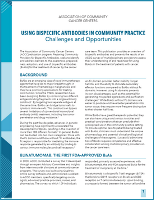
Using Bispecific Antibodies in Community Practice: Challenge and Opportunities

Using Bispecific Antibodies in Community Practice: Challenge and Opportunities

Read an overview of bispecific antibodies (BsAbs) and the results of an ACCC survey of multidisciplinary providers which assessed their understanding of—and readiness for—using BsAbs in the treatment of patients with cancer.
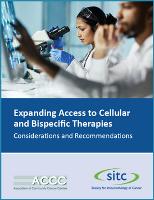
Considerations and Recommendations for Expanding Access to Cellular Bispecific Therapies

Considerations and Recommendations for Expanding Access to Cellular Bispecific Therapies

Read this comprehensive guide developed between the Society for Immunotherapy of Cancer (SITC) and the ACCC for best practices and strategies to implement a sustainable immunotherapy program.
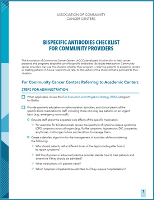
Bispecific Antibodies Checklist for Community Providers

Bispecific Antibodies Checklist for Community Providers

Community cancer providers may use this checklist whether their program is referring patients to academic centers or treating patients in-house. Refer to the section of the checklist that is pertinent to your situation.

References

  1. National Cancer Institute. Bispecific antibodies. Definition of Cancer Terms. Last accessed May 20, 2020.