Financial toxicity in oncology is a long-standing issue for patients with cancer. As increasing costs related to cancer care put financial strain on patients, so too do the indirect costs of a cancer diagnosis and treatment—travel, childcare, and other daily living needs. Learn how 2021 ACCC Innovator Award winner Dr. Lauren Hamel at Wayne State University School of Medicine; Karmanos Cancer Institute has set out to address current trends in treatment-related cost discussions between patients and their care team members through a mobile app to make these conversations a vital part of patients’ treatment plans.
This blog post is the second of a seven-part series highlighting the achievements of the 2021 ACCC Innovator Award winners before their in-depth sessions at the ACCC 38th [Virtual] National Oncology Conference. You can learn more about the innovations being recognized this year and the people who pioneered them by joining us live on November 9-10, 2021.
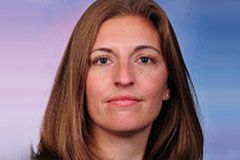
Financial toxicity in oncology is a long-standing issue for patients with cancer. As increasing costs related to cancer care put financial strain on patients, so too do the indirect costs of a cancer diagnosis and treatment—travel, childcare, and other daily living needs. Lauren Hamel, PhD, assistant professor in the department of oncology at Wayne State University School of Medicine; Karmanos Cancer Institute, says “the issue of financial toxicity is one that's multifaceted and long term. We need to apply a plethora of solutions to it.”
Dr. Hamel likens the level of solutions to an inverted triangle. At the highest, top portion are oncology and healthcare legislative policy, followed by insurance-related issues in the middle, and lastly the healthcare organization itself and patient point of care at the triangle’s point. This concept is as relevant to the national conversation about cancer care as it is to individual patient experiences at local cancer programs and practices. The larger issues at the top and middle of the inverted triangle influence the organizational and individual patient needs at the bottom of the inverted triangle, and vice versa.
With a focus on clinical communication, Dr. Hamel set out to address current trends in treatment-related cost discussions between patients and their care team members and make these conversations a vital part of patients’ treatment plans. “We started out wanting to get a better understanding of how often treatment costs are brought up, when these conversations happen, and how they go,” she explains. With help from her team, Dr. Hamel developed a mobile application called the DIScussions of COst (DISCO) app that educates patients about the risk of financial toxicity via a video, asks them about their own financial characteristics via a survey, and based on those survey responses, tailors a list of questions for patients to address with their oncologist and other providers.
The DISCO app has the potential to reduce patients’ healthcare costs by helping to connect them to crucial resources early on, reducing the likelihood of uncompleted treatments and increasing the likelihood of more efficient use of cancer program resources. “Based on our and others’ research, I think patients are concerned about treatment costs, but may be hesitant to bring it up in conversations with their physicians,” says Dr. Hamel. “We want to help patients ask constructive questions about their potential out-of-pocket expenses and any indirect costs of their care, and to feel comfortable doing so.”
When starting the development of this app-based intervention in 2017, Dr. Hamel brought together members of the community, including cancer survivors and caregivers, to ensure the tool prompted productive patient-provider conversations. “I wanted to make sure that it wasn't just feasible to implement, but that it also made sense for patients and included what they thought would be useful,” says Dr. Hamel. “I was able to distill a lot of this community-based feedback really early on in the development process, which is why I think the tool has been as successful as it is.”
Dr. Hamel also worked with the nurses, social workers, financial navigators, oncologists at Karmanos Cancer Institute, and collaborators at the Dana-Farber Cancer Institute. Working with this team, she identified project partners to champion the app into design and testing, including the scripting and shooting of the educational video on financial toxicity. Dr. Hamel also worked with a software design firm to enhance the quality of the app and the education video patients watch prior to completing the tailored questionnaire portion.
In 2018, Dr. Hamel began testing the app at the cancer institute and continues to test it in the hematology-oncology clinic. As she reviews data from this testing, Dr. Hamel continues to improve the education and question list components of the tool. In 2020, the American Cancer Society announced funding for a five-year clinical trial of the DISCO app to test its effectiveness for patients with solid tumors. Dr. Hamel expects patient recruitment for the trial to begin soon. Patients who participated in the first trial found the DISCO app useful to them and helped them put their cost-related concerns into questions for their providers.
Because the DISCO app can be used on any tablet or smartphone, Dr. Hamel expects it to be easily adopted by other cancer programs and practices. And as the use of telehealth continues to grow in oncology care, Dr. Hamel hopes to expand the app for use in patients' homes. "I think in patients’ homes. “I think there's ample opportunity to implement this in other settings without a lot of additional work,” she says.
Attend the ACCC 38th [Virtual] National Oncology Conference to learn more about the DISCO app and how Dr. Hamel and her team garnered community input to design and implement this tool, improving patient-provider communication about cancer-related treatment costs.